


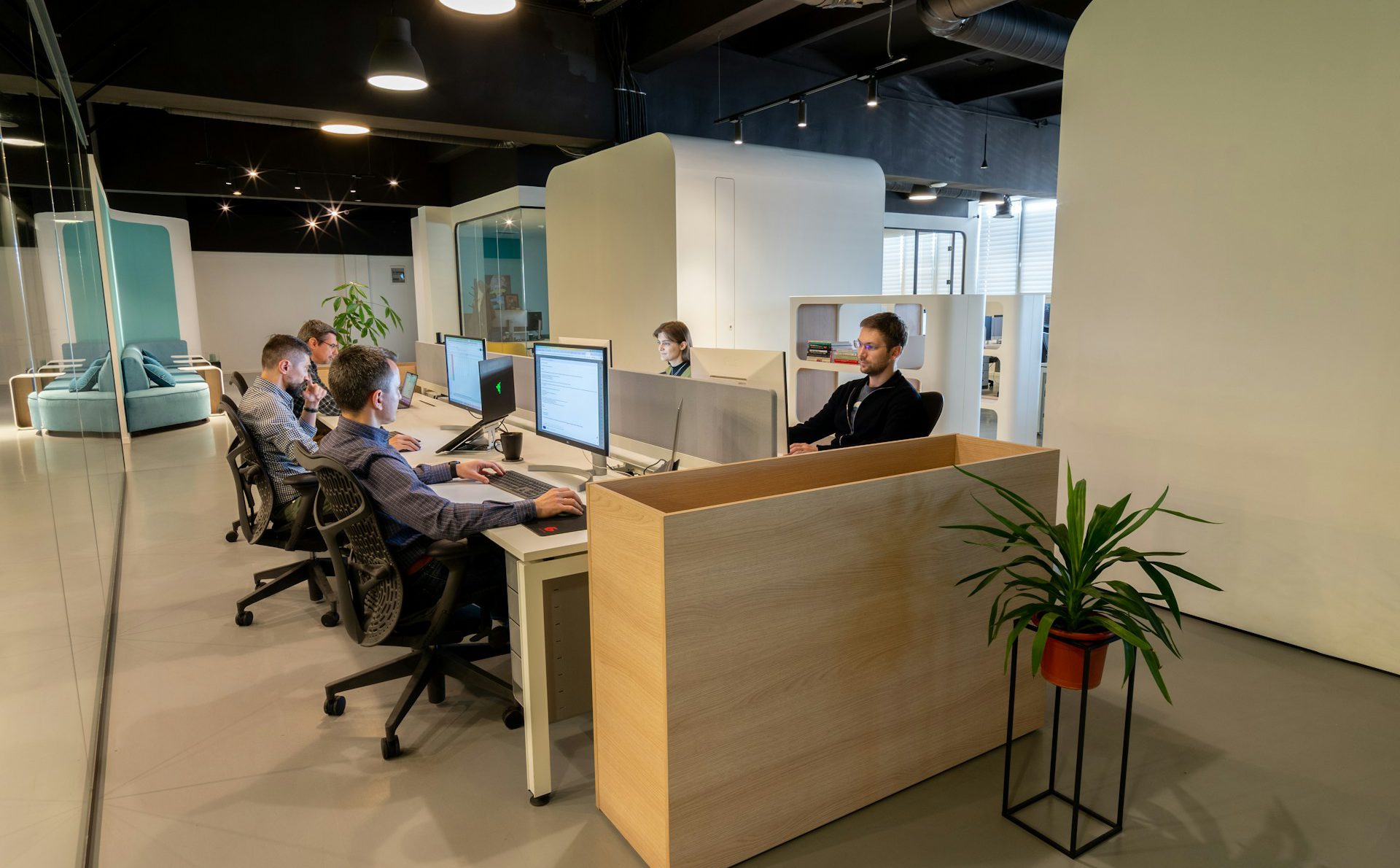
Employees are becoming increasingly positive about returning to the office, yet they also feel that workplaces are not properly equipped to accommodate hybrid work arrangements, a study has found.
Remote work has been a prominent topic in the business space over recent years, and as companies continued to recover from the COVID-19 pandemic, they have gradually encouraged employees to switch their desks at home to those at the office, utilising hybrid work arrangements.
Many employees have expressed their desire to continue working remotely, leading to a number of companies from all around the globe to request their staff to return to the office, facing consequences if they opt not to do so.
However, a new study by tech giant Cisco, released this week, has revealed that employees are starting to feel more positive about returning to the office, embracing a hybrid work model.
The study is based on survey results from 4,500 employees and 1,050 employers in the UK, France, Germany, the Netherlands, Italy, Poland, and Spain, and highlighted the reality of how the in-office experience compares to employee expectations.
79 per cent of employers are mandating a full or partial return to the office, citing team communication, productivity, and workplace culture as the primary reasons behind such decisions.
Interestingly, employees were on the same boat, with 74 per cent stating that they are positive about return to in-office work, stating that it enables them to collaborate, brainstorm, and foster a sense of belonging more.
When one thinks about it, this does not come as too much of a surprise, as employees want to reconnect with their colleagues after the pandemic-induced stint of working in isolation. This is the crucial reason why workers on hybrid work arrangements are genuinely take the time and spending the money to go to the office, rather than work on their own at home.
However, while both employers and employees are ready to return to the office, they feel that the workplace is still not fully equipped to support hybrid work.
The survey found that over 50 per cent of office space is still dedicated to personal working spaces, and many consider this to be counterproductive in terms of fostering collaboration and strong team cultures.
Additionally, 73 per cent of employees surveyed do not feel that current meeting rooms enhance in-office productivity, while 71 per cent of employers highlighted that the experience of remote participants is inconsistent with that of in-office ones.
Employers have recognised that these are all hindering productivity and workplace well-being, and thus are planning to conduct overhauls to the office.
65 per cent of employers surveyed revealed that they are planning to redesign workspaces within the next 24 months, particularly focusing on updating meeting spaces, deploying hybrid work technology and infrastructure, modernising office layouts and seating, and also building sustainable, eco-friendly features.
The vast majority (85 per cent) of employers also feel that such workplace enhancements will go a long way in retaining and attracting talent, an issue that has been prevalent both globally and locally.




‘Business must not become shorthand for questionable dealings’, says Quinco Holdings Executive Chairman
Norman Aquilina calls for a clear distinction between legitimate business and improper conduct.

Eurocargo Logistics integrated into Gollcher Group as Luke Vassallo takes on new role
Luke Vassallo joins Gollcher Group as Freight Manager.

Grant Thornton Managing Director says offshoring can help manage economic growth
George Vella says financial services sectors can grow without straining the infrastucture.

Ioannis Mavroudis Mavridis to serve as interim CFO at GO’s Cablenet
This announcement comes as Velisarios Masouras steps down from CFO in October.
