


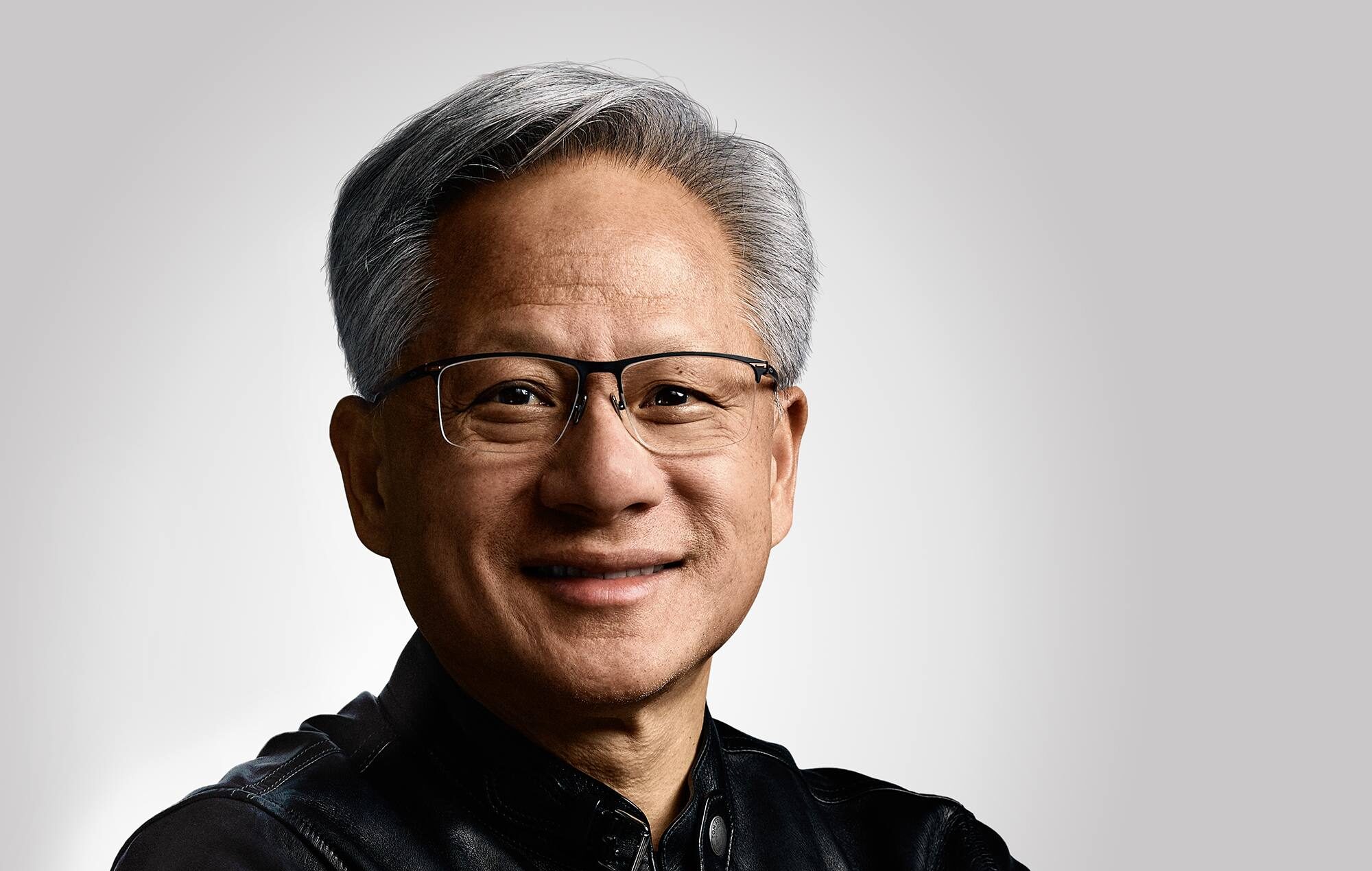
What do artificial intelligence, an alleged Chinese spy, extramarital affairs, billions of dollars and internet memes have in common? Jensen Huang.
It has been quite the week for the former Nvidia CEO, whose personal life has become the subject of international headlines, financial market turmoil and, naturally, an endless supply of memes.
For those who have somehow managed to avoid the drama or want a better understanding of it, Mr Huang, the billionaire co-founder of the AI chip giant, resigned on Thursday (12th November) following revelations of extramarital affairs, including one involving Alice Huang, a businesswoman whom US intelligence officials suspect of spying for China.
The allegations have raised serious national security concerns, particularly given Nvidia’s position at the centre of the global AI industry and ongoing tensions surrounding US chip exports to China.
Mr Huang, who had led Nvidia for more than three decades, acknowledged being unfaithful to his wife. Nvidia also launched an investigation into whether he had been targeted by a foreign intelligence operation. The espionage allegations remain unproven.
And while the internet was busy making jokes, Wall Street was considerably less amused.
Personal decisions become a billion-dollar problem
When US markets opened on 12th November, Nvidia shares plunged by around 13 per cent, briefly pushing the company's market valuation below $4 trillion.
Although the stock recovered some ground, it ended the session down approximately 4.3 per cent, at $166.19 per share.
The uncertainty also weighed on the wider market, with the S&P 500 declining 0.35 per cent and the Nasdaq Composite falling 0.39 per cent.
It is a rather extraordinary reminder that the personal decisions of one individual can have consequences extending far beyond their immediate circle.
Among the memes circulating online were image-based posts titled ‘5 signs your girlfriend is a Chinese spy’ – very important information for people to know, especially those in positions like Mr Huang.
The speed with which a corporate scandal involving billions of dollars became internet entertainment says something about how we consume news today, even more so with the use of AI video generation. For those who were worrying about Mr Huang's career prospects, they needn't worry, as apparently he has already found a position in a company who wants to go AI-first: Dunder Mifflin.
And the parodies didn't stop there. Remember the Astronomer CEO who was caught on a jumbotron embracing the company's Chief People Officer? That incident has been recreated using AI with Mr Huang himself and the alleged Chinese spy.
But what if Jensen Huang were a woman?
Perhaps one of the most interesting aspects of this entire ordeal has been the discussion surrounding gender and leadership.
It has been refreshing to see feminist commentators questioning the different standards society applies to men and women in positions of power.
Consider this: if Nvidia's CEO were a woman, would she be criticised for being too emotional, irrational or incapable of leading? Would her personal choices become ammunition against feminism, with critics using her behaviour to question women's suitability for leadership altogether? And would people question her priorities as a wife and mother?
For the sake of brevity, I will limit myself to these three questions, although there are certainly more, and I suspect we know the answers.
This is not to suggest that Mr Huang has escaped criticism. Quite the opposite. His actions have attracted international scrutiny and ultimately coincided with the end of his leadership at Nvidia. But there is an important distinction between holding an individual accountable and using their behaviour to make sweeping judgements about an entire gender.
When a man in power makes a mistake, the discussion often centres on his individual judgement. When a woman does, her actions can become evidence in a much broader argument about whether women belong in positions of authority, and that is a double standard worth challenging.
Colette Kress, who has served as the company's Chief Financial Officer since 2013, has stepped into the top position during one of the most turbulent periods in its history.
A woman taking charge of one of the world's most influential technology companies is significant in itself, particularly in an industry where women remain underrepresented in senior leadership.
Yet she now faces the challenge of restoring confidence in a company shaken by the decisions of her male predecessor, and one cannot help but notice the irony.
Main image: Jensen Huang / Nvidia.com



‘Remove the risk and there is nothing left to make’: Crispy Studio Co-Founder reflects on creative sectors
The Culture Minister has recently described his first months overseeing the culture portfolio as “traumatic”.
Tina Lombardi takes charge of MIA’s Traffic Development Department
Her expanded role follows the departure of Alex Cardona.

Natasha Giorgio appointed Chief Commercial Officer at SoftConstruct
She brings extensive experience in commercial strategy, business development and the iGaming industry.

Nicolai Portelli named CEO of Charles de Giorgio Ltd
He brings extensive management experience, having held senior positions across many industries.
