


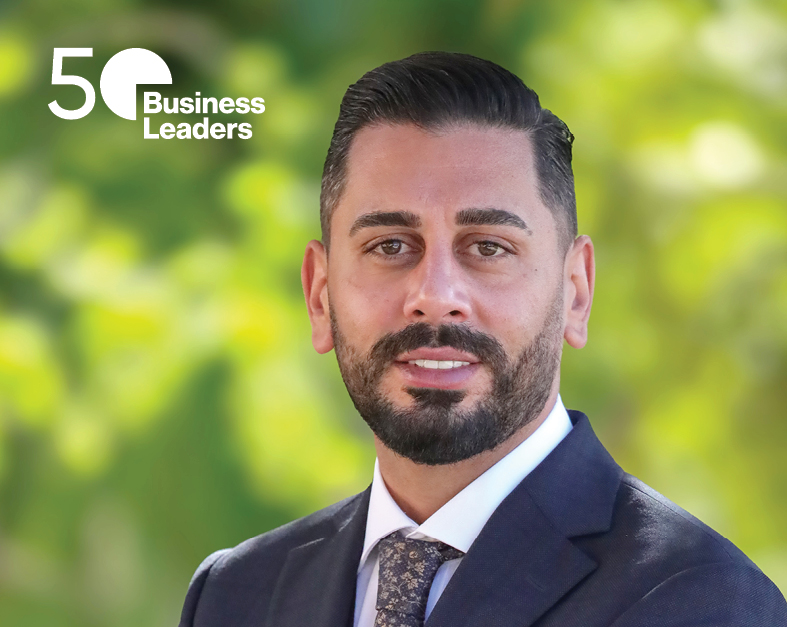
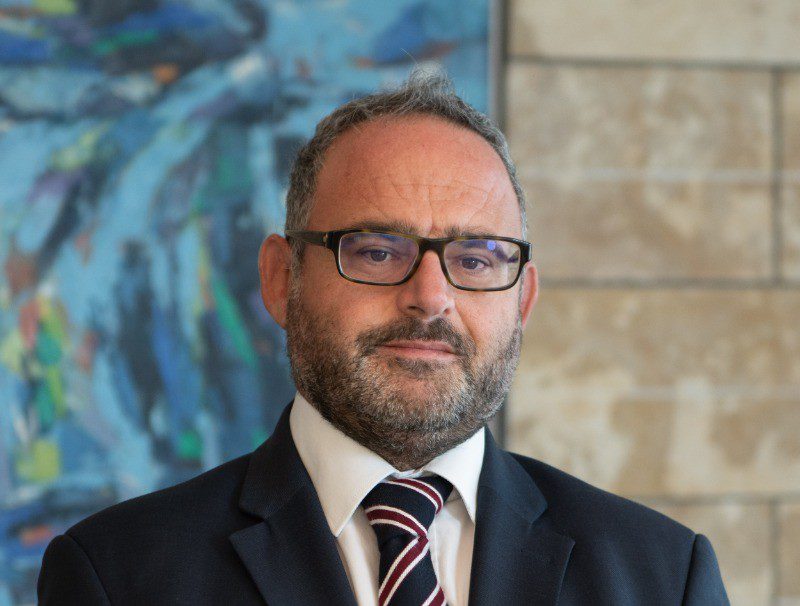
The success of Ciantar Group founder and CEO Darren Ciantar belies his age. At just 37, he has established and grown a conglomerate of companies operating within the property development sphere, with the Group this year celebrating a decade in operation. Such a milestone, Mr Ciantar believes, has been possible because of his willingness to venture into uncharted waters, even when the horizons are not clear.
“I have a strong appetite for risk. When it comes to business, I’m more likely to take a chance because I recognise the potential rewards that come with every opportunity. Risk may bring a certain level of stress, but if you want to grow, being in a position of discomfort is part and parcel of the journey,” he asserts.
The only exception to this axiom, he insists, is reputational risk: “I don’t take risks with my reputation. I can allow financial risk in business since there is always a solution. You just need to think about it. But you cannot regain your reputation once that is lost. And I believe that money follows if you build a reputable brand with a structure around it.”
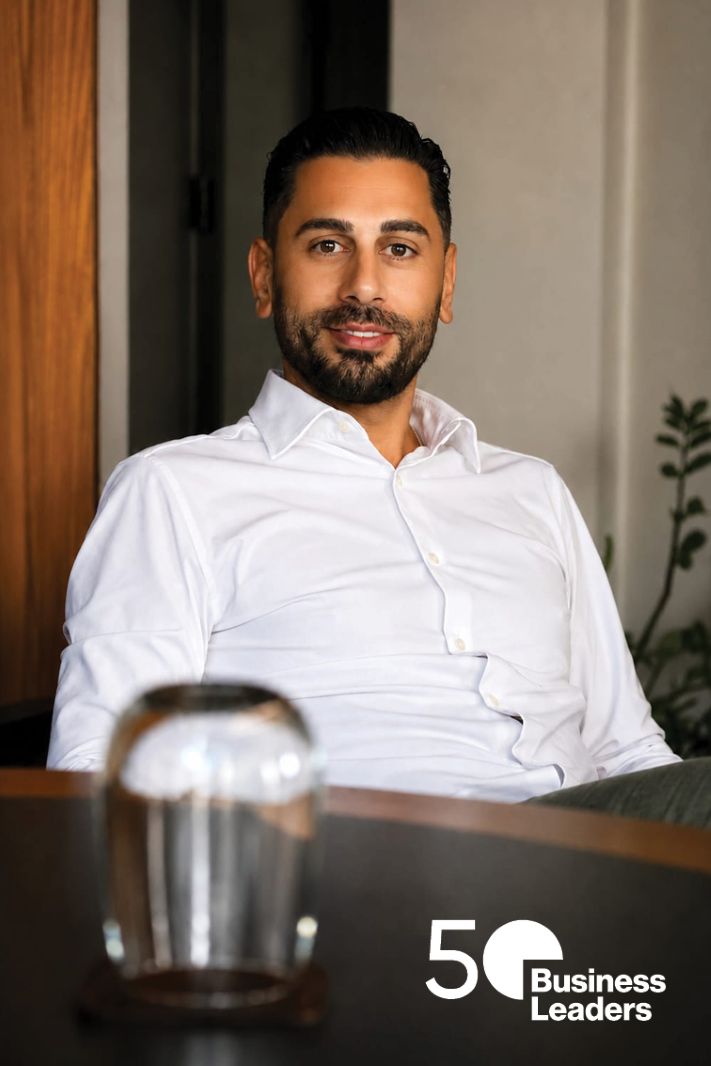
Mr Ciantar first ventured into business when he was still a university student, working in property finishing while completing his formal education in engineering and architecture. “I took a decision, from a young age, to learn a trade and keep that going while I studied. I felt that I needed the knowledge and hands-on experience, apart from the theory. As a teenager, I got the chance to work with a finishing contractor. It was something none of my friends really wanted to do, since it was dirty and physically demanding. But I was raised in this sector, and I saw it as an honest way of making some money, so I took the job without realising where this could lead,” he recalls.
Over the months and years, the work increased and Mr Ciantar started taking on projects of his own, building a team to help him cope with the workload while also trying to manage his studies.
“I didn’t want to give up the course since I felt that my academic studies gave me the supporting knowledge I needed to understand what was happening on site. When you combine academic understanding with real-life experience, things start to make sense,” he explains, adding that, to this day, he firmly believes in the necessity of connecting industry and theoretical understanding.
Eventually, the workload forced him to make a choice: “Whilst not ideal, I left university as I was not willing to spend another year designing something without actually building it. I wanted to move beyond theory and turn ideas into something real. While I was working, I felt I was doing something tangible. If you want to dream, if you want to change things, sometimes you have to get out there and take action,” the CEO says.
Ciantar Group, established in 2016, evolved from this conviction. “I became a contractor. I defined the company”. After “three or four years” executing the designs of other contractors, Mr Ciantar shifted the company’s ambitions towards the development, building and finishing of in-house designs.
Today, the Group comprises nine corporate entities, with each company established to fulfil a different specialisation, including the management and oversight of industrial projects, hospitality and residential developments. “Each company controls an asset and moves differently, although still in tandem with the overall Group. This structure has helped us ringfence each discipline while retaining a cohesive mentality and culture,” the CEO explains.
For Mr Ciantar, the firm’s landmark moments have emerged from the “decisions I took”. One of the most crucial of these, he says, was the choice to “take the risk and stop building other people’s work. We started investing in our own projects”. He explains that the first two of these new projects consisted of a development boasting over 40 units. In outlining the drive to scale up so quickly, Mr Ciantar says that “my ambition has not been simply to get into property development for the sake of it, but to create and design. So, I was not interested in building apartment blocks, for example. I want every project to have a sense of scope and purpose.”
Asked how he feels this squares up with current public disquiet over the increasing take-up of land and space for construction and property development, Mr Ciantar insists that “people are not bothered by the number of units, but by the result of what the creation of those units implies.” He points out that “development is not always made with love, and the developer often does not understand the impact of the project. Many contractors are only focused on the financial outcome. In my opinion, if that’s your priority, you should leave the sector,” he says without mincing his words.
The way space is used has a direct impact on quality of life, he continues. “In my opinion, a great country has to provide a quality living environment where people can be happy. There is no point to a massive project that is out of proportion to its surroundings and without thought to its design. Otherwise, you could end up with a street where every six metres there is a different style, a different-coloured facade and a host of other inconsistencies,” he notes.
In this regard, Mr Ciantar insists that the priority for the Group is to “build communities and create a lifestyle”, an approach that respects the large investment people make when buying a property, he says. “Our focus is to start a working relationship based on trust and reputation: we need to respect the investment our buyers are making, and that means being accountable for our projects and delivering what we promise. This also means paying attention to detail, being reachable and listening to complaints if and when they arise while understanding the expectations we need to meet,” he explains.
Looking ahead, Mr Ciantar wants to ensure the Group continues to deliver quality consistently. “When I think about the next ten years, our ambition is for our clients to purchase one of our properties because they trust us and know the value of what we provide. We’re intent on creating new neighbourhoods through, for example, gated communities, which we believe will elevate lifestyles. We are also determined to continue building a reputable business, one that is supported by a solid portfolio of assets that helps us deliver on that reputation. “We had a mission, now we have an ambition,” he concludes.
This interview forms part of the 50 Business Leaders project. The online serialisation on MaltaCEOs.mt will feature 50 distinguished business leaders, CEOs, and emerging business minds to create debate and encourage business leaders to share their journey with our readers.
Want to know more? Please drop us a line at info@maltaceos.mt


Legal certainty and targeted AI incentives among business priorities for Budget 2027
Andreas Ditsche and Jordan Bonello Gauci speak with MaltaCEOs.mt ahead of Monday's budget.
Getting everyone on board – the real challenge of Project Management
As President of the Project Management Institue Malta Chapter, Jonathan Spiteri talks about the real challenge of project management.
‘Invest in young people, not just one-off measures’ – JA Malta CEO on Budget 2027
Matthew Caruana calls for financial literacy in schools, a national entrepreneurship education policy and greater support for small businesses and ...
‘Man and machine, not man versus machine’ – Malta Employers’ Association DG on AI use
The association has made a number of proposals for the upcoming Budget related to AI.
