


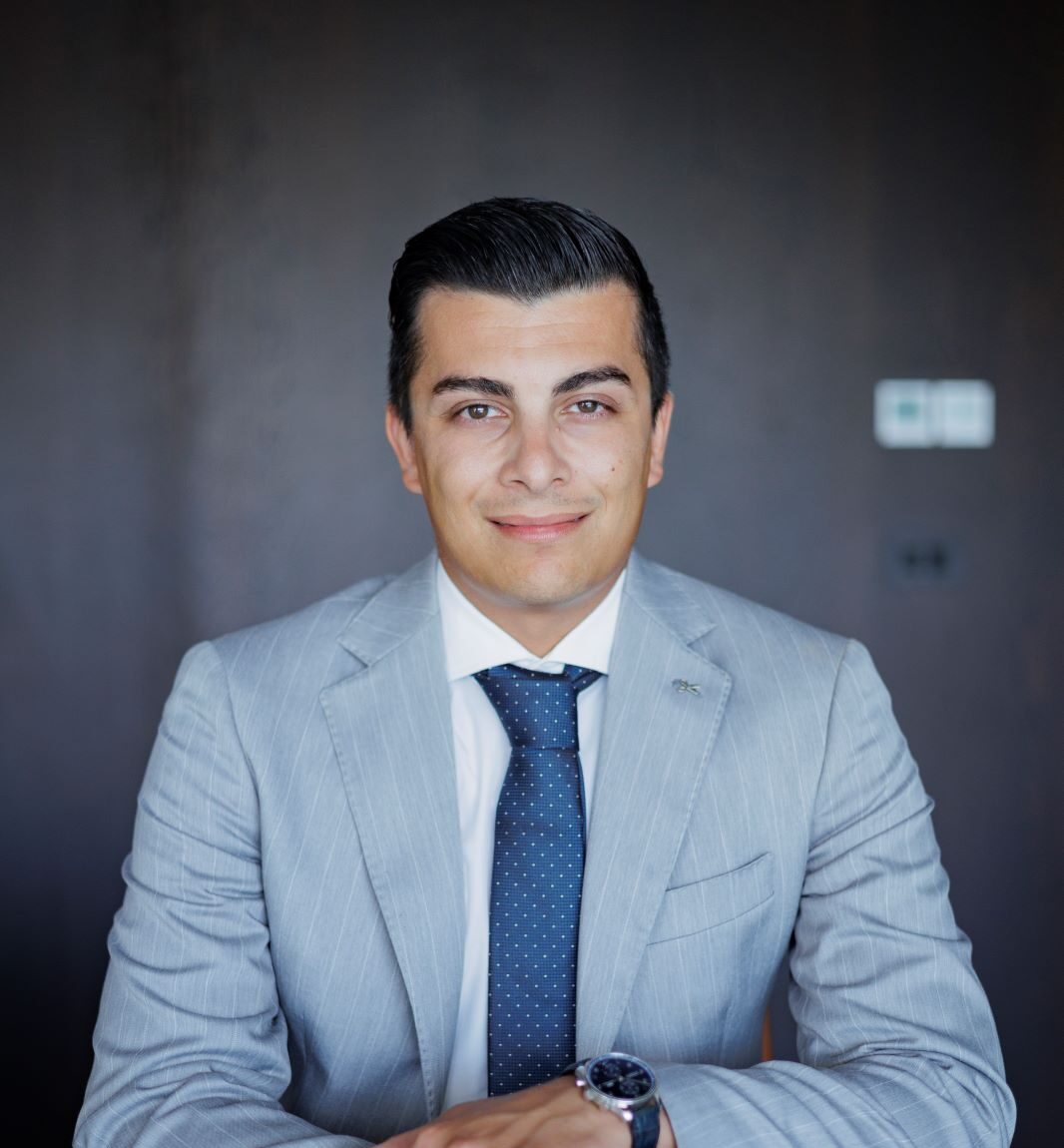
Fifteen years ago, Jean Claude Fenech joined db Group, owners of dozens of hospitality brands, including the Seabank Resort & Spa, AKI, and the San Antonio Resort & Spa.
Mr Fenech started out as a waiter, working tables, interacting with customers, and learning the on-the-ground logistics of the business. This experience, he underscores, was one of the key factors which contributed to his steep rise to the role of the firm’s Chief Financial Officer, a role he took on in 2019.
“My stint as a waiter gave me very solid grounding in the operational side of hospitality. You learn very quickly that business success is built through thousands of individual interactions,” he explains. The lessons he learnt included best practices on “how customers are greeted, and how teams communicate.” Crucially, he also understood ways and approaches to “resolving problems under pressure.”
Fundamentally, he underscores, “my journey is proof of what happens when a company recognises potential, and when an individual is geared to keep on learning.” In this regard, and over the years, Mr Fenech was given the opportunity to take on more, and greater, responsibilities at db Group. In parallel studying accountancy at the University of Malta, he moved up to being an accounts clerk. In 2017 he graduated with a master’s degree in accountancy. His thesis, not quite surprisingly, was on the implications of the all-inclusive resort model on food cost practices.
Mr Fenech's work at db Group allowed him to develop a much broader understanding of the business. “I’m proud of the fact that someone can join a company in an operational role – as I did – and eventually form part of its executive leadership,” he highlights, noting that over the years, he has witnessed the company grow substantially.
In the financial year ended 31st March 2026, revenue rose 12 per cent to €111.3 million – up €12.1 million on the prior year's €99.2 million, and the highest ever recorded by the Group. Hotel occupancy climbed to 87 per cent, while food and beverage turnover grew to €44.2 million from €38.7 million. Net profit after tax stood at €17.4 million, and total assets reached €750 million.
Today, Mr Fenech's role extends far beyond accounting. “I am involved in financial strategy, investment evaluations, financing, risk management, and governance as well as oversight on support systems for a group which is becoming considerably larger and more international. The scale of my responsibilities has changed but the fundamental lesson has remained the same,” he insists, specifying that: “numbers only make sense when you understand the people and the operations behind them.”
Mr Fenech’s day-to-day is underpinned by a particular perspective. “My focus is ensuring that the ambition of the firm is supported by financial discipline. We’re currently delivering on major projects and my responsibility is to ensure that our goals are driven by well-thought out plans which are properly financed and governed. This means that I constantly have to balance growth, liquidity, investment, operational performance and risk. The finance function at the Group, which I oversee, must provide reliable information and always look ahead. We must challenge assumptions and make sound decisions,” the CFO explains, adding that these responsibilities are underpinned by his early experiences working on-the-ground across the Group’s businesses.
That discipline was tested during the year. In 2026 SD Finance p.l.c., the Group's financing arm, concluded an unsecured bond programme of up to €60 million, guaranteed by SD Holdings Limited.
"Proceeds are supporting our developments and general corporate requirements,” Mr Fenech says.
Notably, Mr Fenech credits the firm’s fostering of growth and mentorship for his phenomenal career trajectory. “I believe that my story really says something of the culture at db Group,” where, he insists, “human resources are not simply an operational issue, but also a strategic and financial priority.”
Elaborating, he explains that “the cost of failing to attract, retain, mentor and develop the right people – the right team members – can be considerably greater than the direct cost of investing in them,” he says. This is because failure to invest in talent and loyalty impacts “service quality, productivity, employee turnover, recruitment costs, and, of course, ultimately, and more importantly, the reputation of the business.”
As a result, db’s response has been to “improve recruitment, invest in training, strengthen management structures and create clearer opportunities for internal progression. My own journey within the Group shows the value of developing people who already understand the business and its culture,” he underlines.
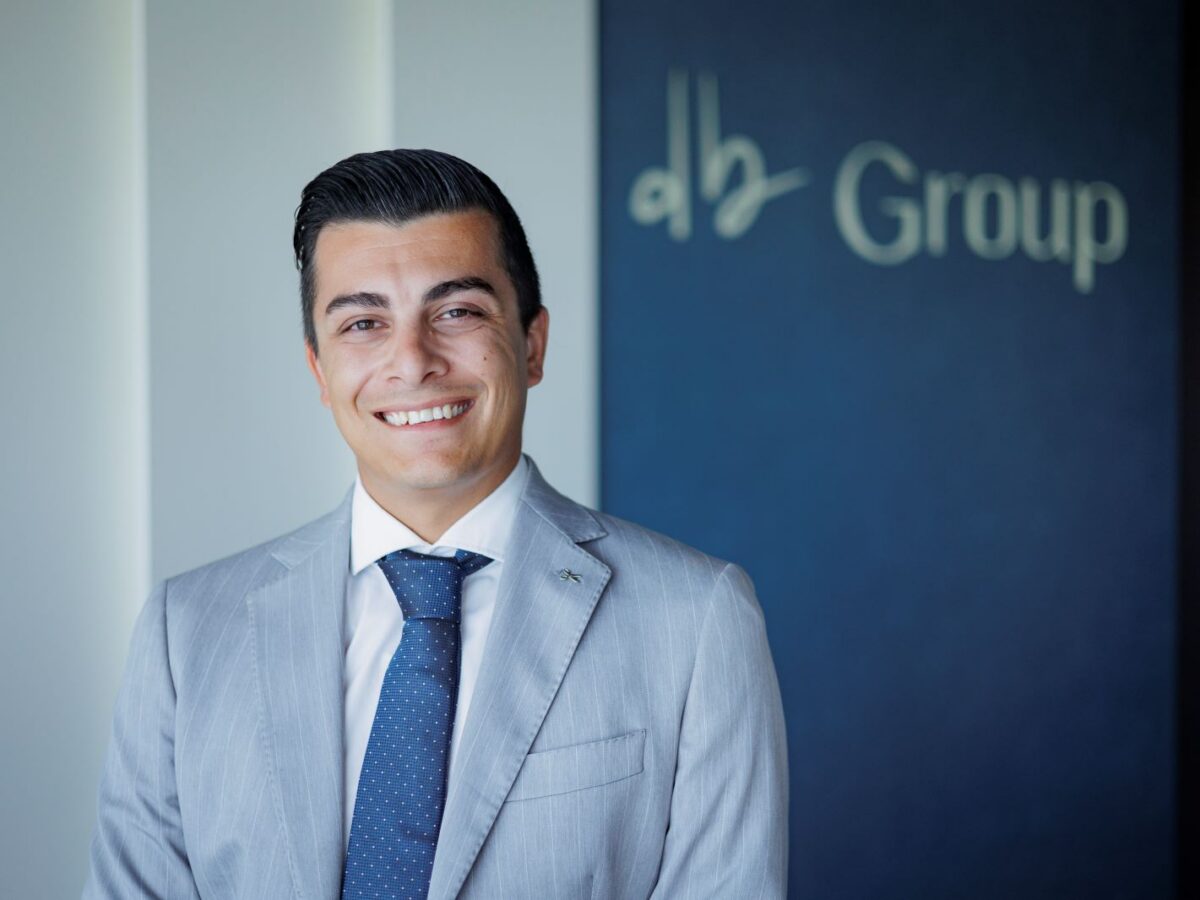
Such a perspective to human resources is also tied to the Group’s drive to think more globally, Mr Fenech points out. “We need to remain internationally competitive. Today’s professionals assess organisations on salary but also on career mobility, culture, development and exposure to meaningful projects.”
Such projects are also being driven by DB Group’s drive to import global brands to Malta – such as with the forthcoming opening of the Hard Rock Hotel in St George’s Bay – as well as export local offerings to the international market, including Aki, a homegrown venture which has recently opened up its doors in London and has already been included in the Michelin Guide.
“Malta provides an excellent base from which to build an international and networked competitive business. The economy is quite agile, practically everyone speaks English, we are EU members and we’re well-connected to several major markets. Malta’s limitation is scale, and internationalisation helps Maltese companies to overcome such a structural handicap without abandoning their roots. It allows us to diversify revenue streams, reach larger markets, attract international expertise as well as justify investment across talent and technology – for instance in AI-driven processes,” the Group’s CFO notes.
Mr Fenech points to the growth of the AKI brand, a restaurant which “we created and built in Malta” and which “we perfected for the heart of London, one of the most competitive restaurant markets in the world.” The success of AKI shows, he continues, the way that “Malta can produce more than a local tourism product. It can also produce hospitality concepts capable of competing internationally.”
Integral to these ambitions is the Hard Rock Hotel Malta, in St George’s Bay, part of a 300-million-euro investment which is set to open its doors soon. “This is much more than a conventional hotel investment. It also includes the St George’s Mall, ORA residences, restaurants like TATEL, Tanvi and Matto, entertainment, parking, the beach lido, and it is based on a financial model that is supported by several, complementary revenue streams.”
Moreover, in a joint venture with Marjan, the master developer of Al Marjan Island, the Group is bringing the Hard Rock Hotel and Branded Residences to Ras Al Khaimah, one of the Middle East's fastest-growing tourism destinations. In this regard, the Group has “always tried to find opportunities in emerging markets”, says Mr Fenech, adding that the RAK market possesses a lot of development potential: “We believe that as an investment the area, especially the Al Marjan islands, is set to become one of the most important spaces in the UAE in the years to come.”
Looking ahead, Mr Fenech sees the company as continue diversifying and consolidating its successes. “Our immediate priority is the execution and successful delivery of the projects already underway, particularly the Hard Rock Hotel Malta. It is certainly our core focus over the next months.” The Group, he says, is also continuing to evaluate opportunities: “We’re particularly interested in contributing more than capital. Any future investment is measured against a clear and vision-driven set of criteria. The broader goal is to continue to push the hospitality and investment envelope which originated in Malta but now possesses a carefully selected international footprint.”


Malta Ship Registry’s positive reputation ‘stood out’ at Monaco Yacht Show – TM CEO
Leonid McKay said the Monaco Yacht Show highlighted the strong regard for the Malta Ship Registry.
What can business leaders wear this autumn? 10 workplace trends for autumn 2026
For Fall/Winter 2026 old trends are being re-imagined.
Turks and Caicos marks ‘important step’ in growth, says Corinthia Group CEO
This development on Grace Bay in Turks and Caicos is in partnership with Carolina Partners Ltd.
MACM President Charles Xuereb urges companies to report payment defaults as uncertainty increases
His comments come as the Malta Association for Credit Management marks its 25th anniversary.
