


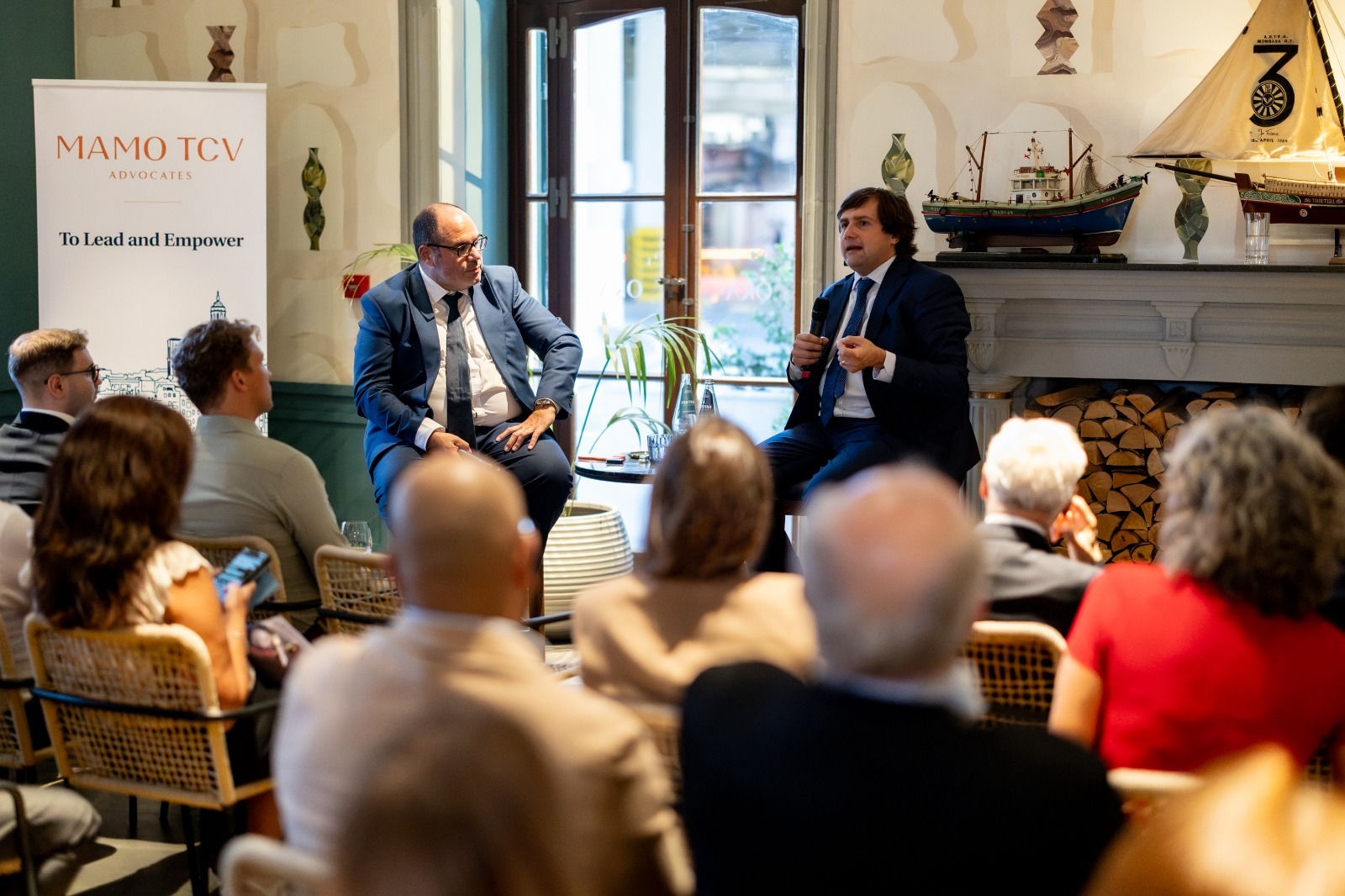
AeroItalia's founding team launched the airline with an initial capital outlay of just €5 million, capitalising on the collapse of other Italian carriers to build a business that would go on to sell three million tickets in 2025.
Speaking during a Malta Business Network event, AeroItalia Vice President Marco Carcioffo offered insights into the strategy behind the airline's creation and the aircraft leasing dynamics that supported its growth.
Founded in 2022, AeroItalia emerged during a period of significant distress within the Italian aviation market. According to Mr Carcioffo, the company was established to absorb entire branches and offices, as well as employees and aircraft, from Italian airlines that had collapsed around the same period.
While many within the industry had discussed pursuing a similar consolidation strategy, he said few had actually put such a plan into practice.
AeroItalia's founding team did so with an initial capital investment of €5 million – an amount Mr Carcioffo described as remarkably low in view of the scale of the opportunity.
The relative simplicity of the strategy was one of its strengths, he suggested, allowing the company to execute its plans while larger and more complicated projects stalled.
AeroItalia has since expanded considerably. The carrier reached three million tickets sold in 2025 and now operates 43 routes between Italy and other European destinations, serving 26 airports, of which 22 are in Italy.
Mr Carcioffo also provided business leaders attending the event with an insight into the economics underpinning the aviation sector, particularly the role of aircraft leasing.
An aircraft, he explained, is a depreciating asset, losing value simply through being flown.
This creates an important consideration for leasing companies. If an airline fails, the lessor may recover an aircraft worth materially less than when it was initially handed over, meaning that deterioration has to be factored into the original leasing agreement.
Mr Carcioffo also outlined the differences between operating dry leases and financing dry leases, including how commercial and residual-value risks are distributed under the different structures.
For AeroItalia, the failure of competing Italian airlines created another significant opportunity: unutilised aircraft became available on favourable terms.
The collapsed carriers had largely operated aircraft through operating leases and had weak liquidity positions, creating circumstances in which assets were available to businesses with sufficient capital and a strategy to deploy them.
Mr Carcioffo's comments were made a discussion moderated by Mamo TCV Partner Nicholas Valenzia as Malta prepares changes to its own aircraft financial leasing framework.
Malta is expected to introduce a notification-based regime for lessors as an alternative to existing full licensing requirements, aimed at reducing administrative burdens while maintaining regulatory oversight.
The Malta Business Network event was sponsored by Mamo TCV.


Two masterpieces, one remarkable instrument
Michael Pantalleresco explores the poetry, passion and brilliance of the clarinet in works by Mozart and Weber.
‘A setting we couldn’t be prouder of’: db CEO on Hard Rock Hotel’s new rooftop restaurant
Cyana’s head chef is Spiros Tzilis, a Greek chef who has worked at Michelin-starred restaurants.

‘AI might be faster and cheaper, but at what cost?’ – Aramis Capital MD
He warns that businesses risk sacrificing service quality, human judgement and accountability in their pursuit of greater efficiency through artificial ...

‘We’re already late’: Employers chief calls for cross-party mass transport agreement
Through cross-party agreement, the solution will endure beyond individual legislatures, he explains.
