

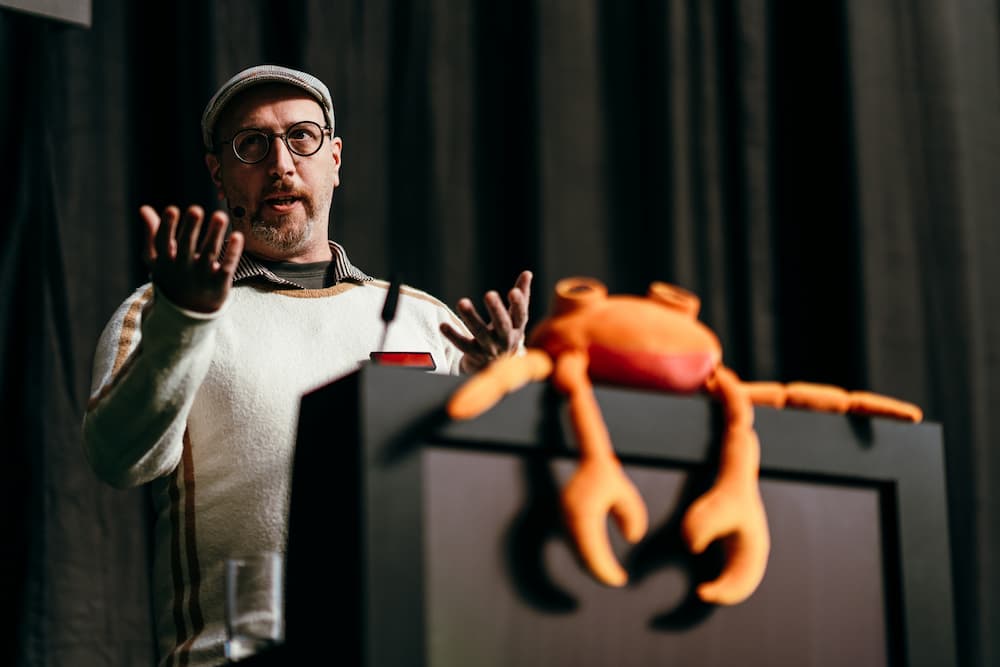
The concept of a centralised office is fading for many tech companies. For leaders like Daniel Thompson-Yvetot, CEO of the open-source software company Crabnebula, managing a team spread across different time zones is not a challenge to overcome, but a reality to master.
The key to success, he argues, lies in deliberately bridging the "empathy gap" that can easily develop in a purely digital workspace.
So, how does a leader ensure their team remains aligned, motivated, and bought into key decisions when face-to-face interaction is rare? For Mr Thompson-Yvetot, the answer is a combination of intentional verification and distributed authority.
"We verify in virtual meetings and try not to make presumptions," he explains. This simple practice - actively confirming understanding and agreement - is a critical first step in preventing misalignment. He complements this by empowering his team to operate autonomously.
"Also, we enable decisions to be made in small groups which accelerates decision making processes." This approach not only speeds up workflow but also fosters a sense of ownership and trust within smaller, more agile units.
But effective remote leadership extends beyond structured video calls.
One of the most significant casualties of remote work is the loss of spontaneous collaboration - the quick conversations by the coffee machine that often lead to breakthroughs. To replicate this organically, Crabnebula leverages a well-established software development practice.
"In software engineering there is a technique called 'pair-programming', and we make use of this whenever someone needs help," says Mr Thompson-Yvetot.
This practice, where two engineers work together at one workstation, either physically or virtually, is a powerful tool for real-time knowledge sharing and problem-solving. By formally integrating this into their culture, they create structured opportunities for the kind of spontaneous collaboration that offices provide informally.
Despite having a robust system in place, Mr Thompson-Yvetot is refreshingly candid about what he initially underestimated. His reflection points to a fundamental human need that technology cannot fully replace.
"Looking back, what is one thing you underestimated about remote leadership when you started?" MaltaCEOs asked.
His answer was a deep cut: "How good it is to see people in the real world."
The most effective remote leaders are those who build efficient digital frameworks while never losing sight of the people within them. For this CEO, the future of leadership is not about choosing between remote and in-person, but about blending the best of both to create a cohesive, empathetic and highly productive global team.

‘We want to build a group that will outlive us all’ – James Barbara
James Barbara brought a group of major businesses together under a new corporate identity.
LifeStar Insurance appoints economist Jean Paul Fabri as Interim Acting CEO
His appointment follows the departure of Jonathan Camilleri as CEO.

Building on Ferraracasa’s legacy: Third generation, next chapter
Joining an established family business brings a different challenge to building one from the ground up. The foundations already exist, ...
‘I dreamed of moving to Malta 20 years ago’: iQrypto CEO
Quantum tech firm iQrypto is set to expand its operations to Malta.
