


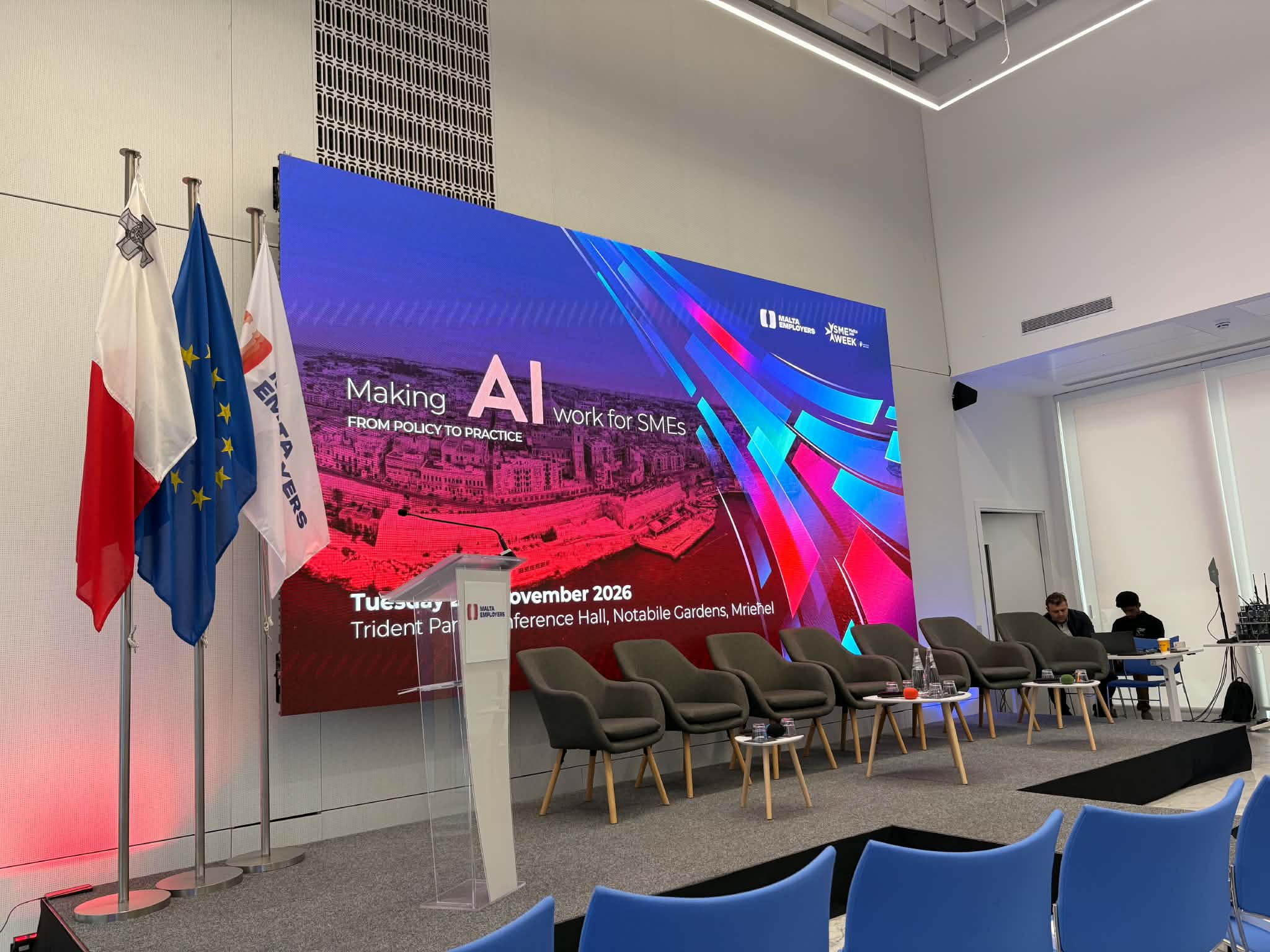
A virtual receptionist recovering more than €42,000 in booking value, a robotic dog speaking Maltese and AI agents navigating the complexities of international shipping – artificial intelligence is increasingly finding its place within the day-to-day operations of Maltese businesses.
Yet, a common message emerged from presentations delivered by three business leaders at the SME National Forum 2026: AI's value lies not necessarily in replacing employees, but in giving them the tools to work more effectively.
The receptionist who never misses a call
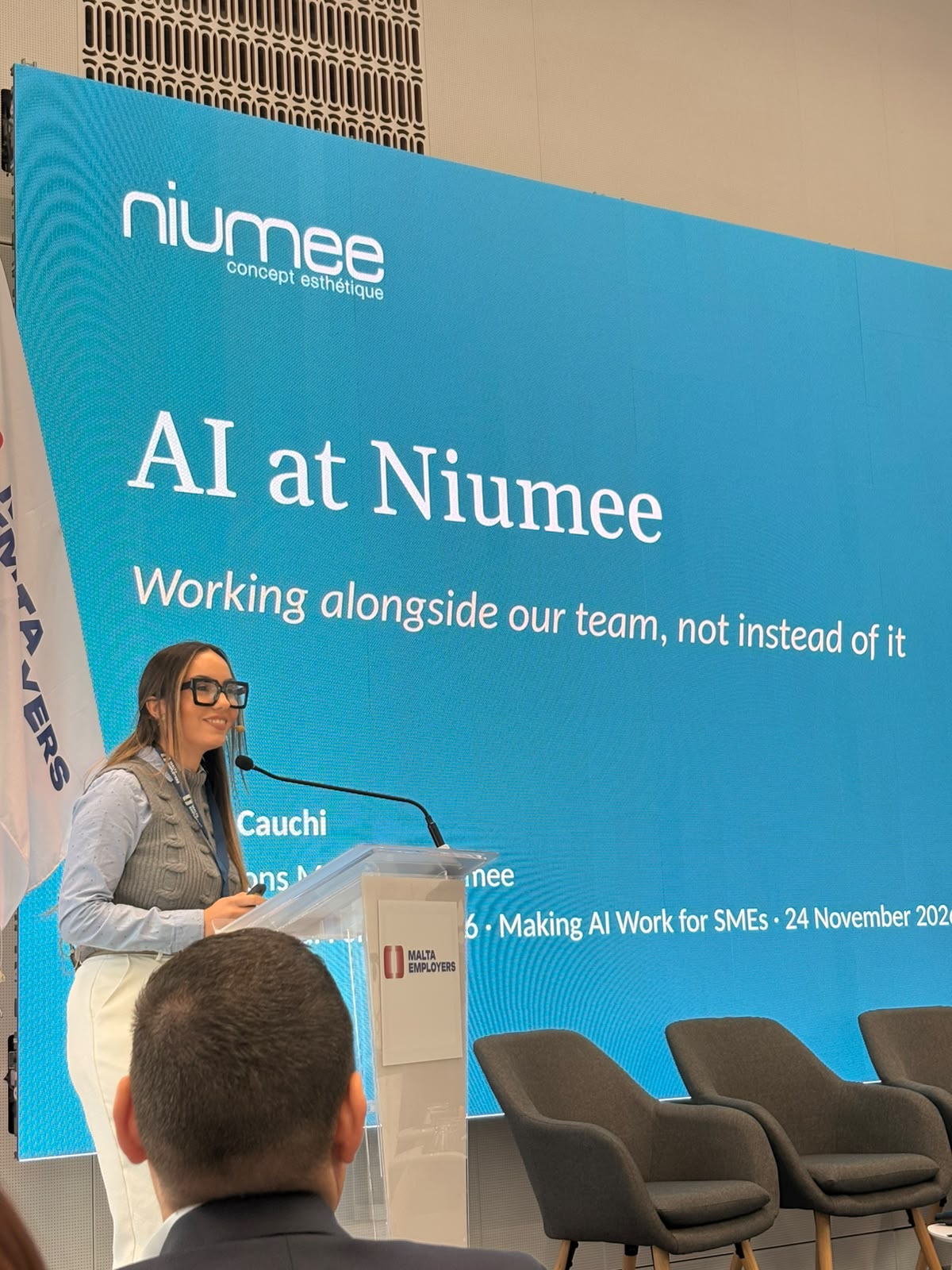
For Donna Cauchi, Operations Manager at Niumee Ltd, the journey towards AI adoption began with a pressing operational challenge.
The company was experiencing high employee turnover at its front desk, where staff were struggling to keep up with the volume of work. At one point, the business recorded a staggering 1,499 missed calls over a 10-week period.
Ms Cauchi noted that 52 per cent of front desk time is typically spent responding to clients through telephone calls, emails and WhatsApp.
For the company, digital transformation had previously been associated with large IT projects that were expensive, slow and difficult for an SME to undertake.
However, attending an AI workshop where participants could present a business problem and explore potential solutions opened the door to a different approach.
Enter NIMA, Niumee's AI-powered virtual receptionist, which has been interacting with clients through WhatsApp since 28th September.
NIMA responds to missed calls by sending clients a WhatsApp message, confirms appointments, manages bookings, reschedules and cancels appointments, and sends appointment reminders.
The results speak to the commercial potential of the technology. Over a 10-week period, NIMA generated €42,831 in booking value which, according to Ms Cauchi, would otherwise have been lost.
The objective, however, was to introduce technology that works alongside employees rather than in their place.
Ms Cauchi has also incorporated AI into her own managerial responsibilities. Her personal AI assistant drafts WhatsApp responses in her own tone of voice, prepares email replies, provides a daily overview of budgets, sales, missed calls and client retention, and records meetings before producing minutes.
A four-legged glimpse into the future of automation
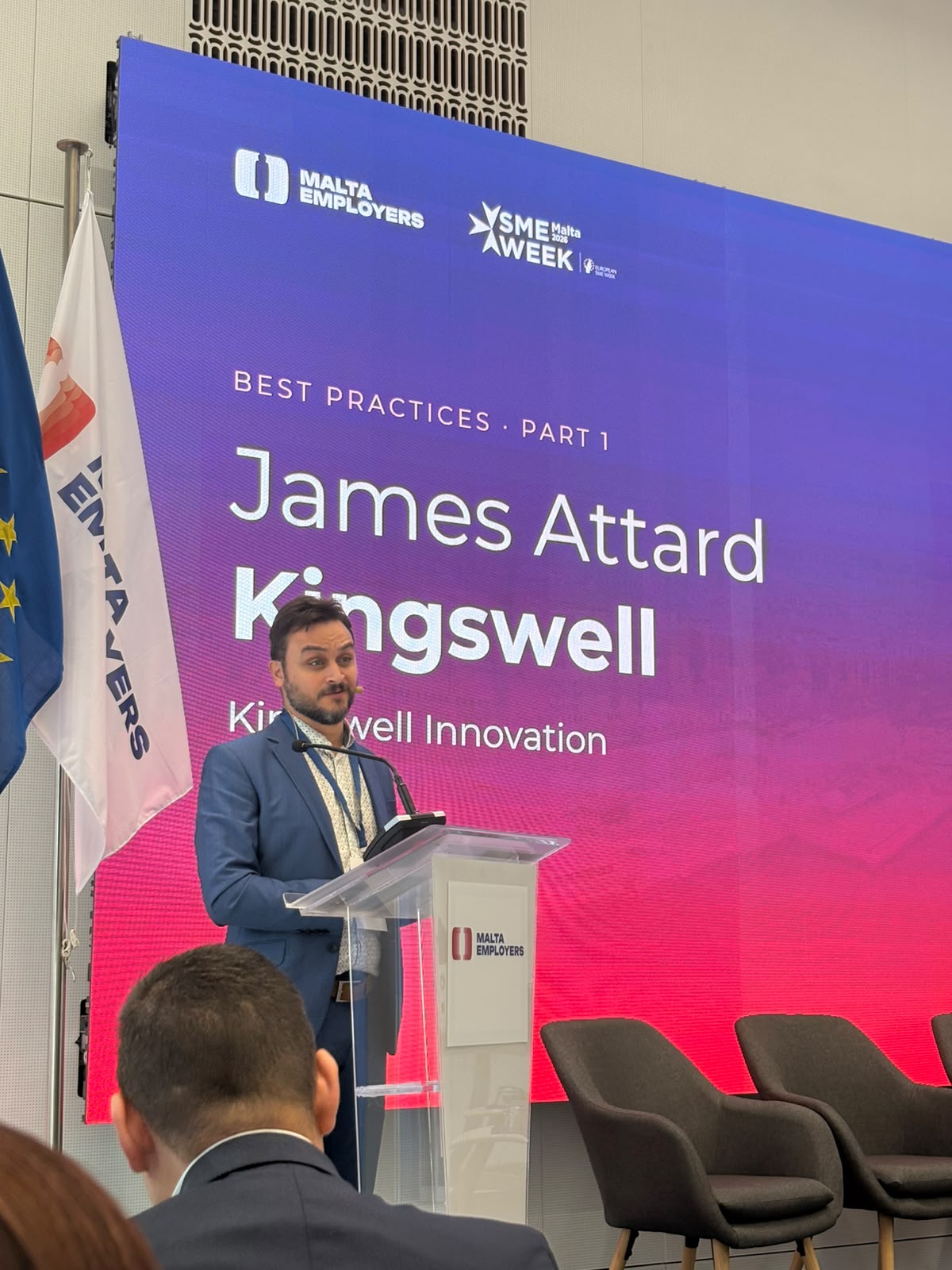
Meanwhile, one of the more unconventional attendees was Byte, an AI-powered robotic dog introduced by James Attard Kingswell, Founder of Kingswell Innovations.
The four-legged robot stole the show with its witty remarks and ability to speak Maltese, offering an entertaining glimpse into the capabilities of AI-powered robotics.
Beyond the novelty, however, Mr Attard Kingswell demonstrated how the technology can address practical challenges within industrial environments.
Equipped with cameras and AI-powered vision systems, the robots developed by his company can recognise objects and adapt to their surroundings, allowing them to cope with mixed products, older machinery and imperfect positioning.
Rather than requiring weeks of reprogramming whenever a new task is introduced, the robots can also learn through demonstration, making automation more adaptable to changing operational requirements.
Mr Attard Kingswell presented the example of one business that benefited from the introduction of such technology, saving 2,200 hours of manual work and securing projected annual savings of €21,450, with a payback period of under three years.
Bringing AI into the complex world of shipping
For Matthew Ellul Sullivan, CEO of Sullivan Shipping, AI adoption is about navigating the complexities of an industry that depends heavily on the movement of information as well as goods.
Handling more than 15,000 shipments annually, the company operates across a chain involving customers, international networks, carriers, cargo tracking and regulatory declarations.
AI is being integrated into several areas of the business, including pricing and quotations, cargo tracking and international coordination.
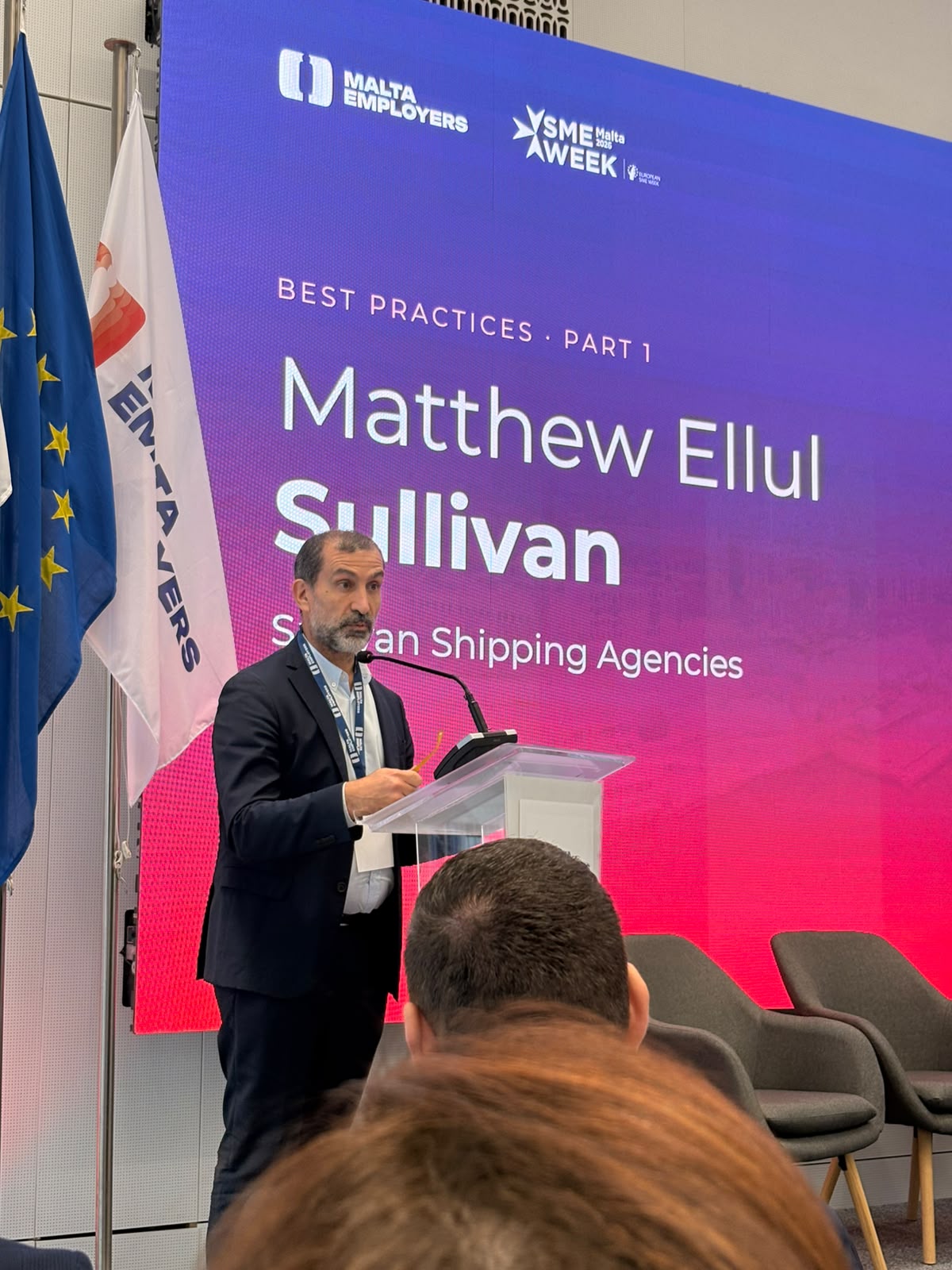
It is also supporting repetitive, data-intensive tasks associated with customs and National Statistics Office (NSO) declarations, while retaining human verification.
Mr Ellul Sullivan explained that the company opted for a bottom-up approach to AI adoption rather than imposing technology from management level.
Employees who understand the intricacies of existing processes are therefore involved in shaping how AI agents are used, while external IT experts provide independent review and oversight, with particular attention to security, data management and human validation.
While the three businesses operate in vastly different industries, their experiences show how AI adoption can begin with identifying everyday operational frustrations rather than embarking on costly, large-scale digital transformation projects.


Equal access to training across all roles essential as jobs evolve, says IDEA Group COO
‘Critical thinking and adaptability are essential skills that should be developed at every level of a company.’
Peter Spiteri joins WH as Chief of Corporate Services Transformation
He will focus on strategic development, business growth and the continued enhancement of services available to corporate and private clients.
Alfie Borg sees potential for Malta to become an export hub for Africa and Europe
He advised businesses to study their competitors, understand local pricing and familiarise themselves with the laws that will govern their ...
Andrew Vella Zarb appointed CEO of Alberta Fire & Security
He joined Alberta in 2025, initallly serving as COO and Deputy CEO.
