

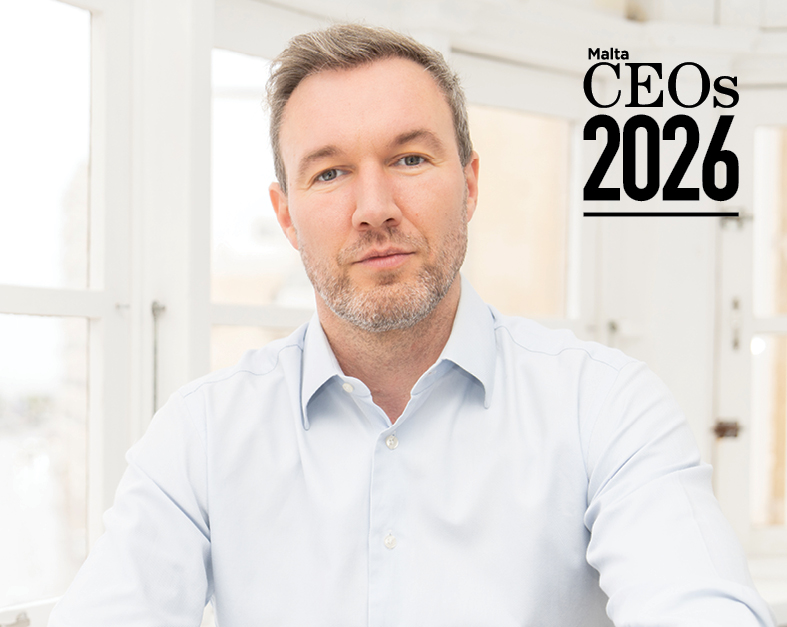
In 2025, cryptocurrency exchange OKX was granted a Markets in Crypto-Assets (MiCA) licence by the MFSA, positioning it at the forefront of Europe’s digital financial ecosystem. For CEO Erald Ghoos, the licence reinforces his conviction in the transformational potential of Bitcoin, cryptocurrencies and decentralised financial systems – what he calls a force “for the greater good of the world”.
There is very little that keeps Erald Ghoos, CEO (Europe) of cryptocurrency exchange OKX, up at night – apart from his 18-month-old. The Belgian native, new father and company leader is fuelled by a passion to reshape the financial industry, convinced of the transformational potential of cryptocurrencies and blockchain technology.
“My background is in computer science, but I’ve spent my entire career in banking. The moment I moved into crypto, I felt, ‘this is it’. I no longer wanted to work in any other industry. I believe crypto is both a technology and an asset class that works for the greater good of the world, and that conviction keeps me sharp. It allows me to give the best of myself,” he smiles.
Erald’s professional experience – working across the globe for financial institutions and progressing into C-suite roles – has given him both specialised perspective and the broad insight required to run a company in the sector.
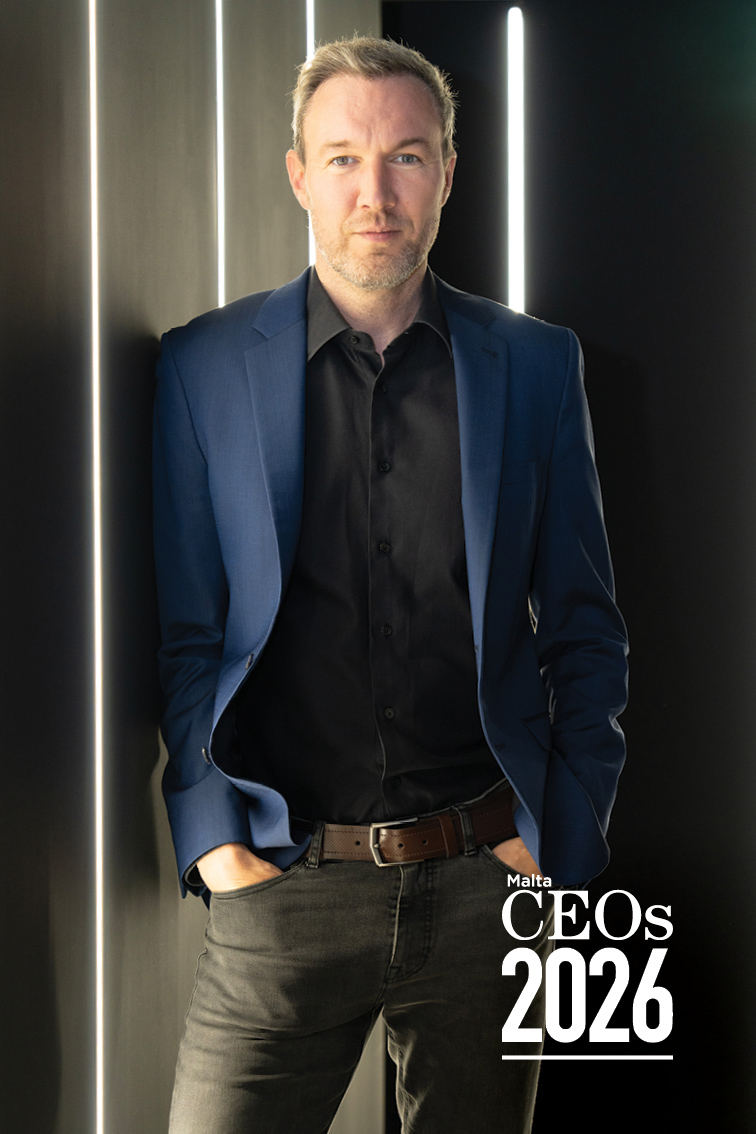
“Over the years, I transitioned from focusing intently on specific aspects of the industry to broadening my experience. As CEO of OKX in Europe – a digital currency operation – I cultivate knowledge across a wide array of areas from the group’s technical set-up to payroll, employment law, conflict management, and profitability, because one day I may be involved in product innovation and the next in marketing strategy. No day is ever the same. I cannot be an expert in every area, of course, but as CEO, I must select the right people and build teams to support this executive function,” Erald explains.
Such a broad approach has been central to OKX Group’s development. Founded just over a decade ago, the group’s enduring goal is to provide financial access to anyone, anywhere. Erald attributes this drive to the limitations of traditional finance: “The industry has typically been archaic, slow, expensive, not necessarily transparent, and arguably influenced by political and geographical factors that are not manifest or clear to end consumers,” he asserts.
In contrast, he continues, blockchain and crypto offer a decentralised ledger that allows for greater visibility. “It is not under anyone’s control; it is accessible and immutable. It also allows people in some developing countries – the ‘unbanked’ – to access financial instruments, safeguard assets and accrue wealth. Companies like OKX make the financial system more inclusive,” he attests.
OKX now operates globally, except in jurisdictions under sanctions. The group’s inclusive strategy is reaping dividends: the price-tracking website CoinMarketCap lists OKX as having more than $2 billion in spot trading volume over a 24-hour period, with assets exceeding $17 billion.
For Erald, however, the focus remains on European operations and regulatory compliance. “Cryptocurrencies grew rapidly, and regulators had to step in to establish safeguards for consumers. My primary operating ground covers the EEA – almost 450 million people. We applied for licences to ensure customers have confidence in our services,” he says.
Malta has played a critical role. In 2025, OKX received a Markets in Crypto-Assets (MiCA) licence from the Malta Financial Services Authority (MFSA), authorising the group under the island’s Crypto-Asset Service Provider (CASP) regime. This licence allows OKX to passport its services across the EU. “Malta has been very progressive, agile and proactive in establishing a solid regulatory framework for crypto and digital assets. With this in mind, we have centralised our European headquarters here,” he says.
Moreover, OKX also operates under a MiFID licence, in line with the EU’s Markets in Financial Instruments Directive. “In other words, we have MiCA for our crypto offering and MiFID for our more structured and speculative investment solutions, so we are well positioned to provide regulated products. This approach ensures full transparency for both the authorities and our customers,” he explains.
These developments have not been without challenges. In particular, OKX has had to navigate an interim pause before its MiCA licence came into effect. “While the MiCA framework offers a harmonised approach across the EU, there is a transitional period during which the licence does not come into effect instantaneously. In some countries, this can take up to a year. Meanwhile, some competitors may already be operating with the licence, and others may even be functioning outside the regulatory environment. This creates a temporary competitive disadvantage, as consumers can access a wider product offering with exchanges that are not compliant with MiCA,” Erald attests.
In an unexpected development, European regulators are now pushing to rework MiCA and introduce more centralised governance of crypto – even before the licence has been fully implemented across the bloc’s jurisdictions, the CEO continues. “Essentially, there is a move to withdraw sovereign oversight of crypto from individual member states. This came as a surprise to me, since it is happening before there is evidence that any change is needed. They should first allow MiCA to operate and be evaluated over time, rather than creating instability and uncertainty within the sector,” he says.
Looking ahead, he predicts growth in Decentralised Finance (DeFi) – the financial system on which blockchain technology is built. He sees this trend being accelerated by global political instability. “I believe DeFi represents the future of financial technology, as it gives ownership to the end consumer. Over time, it will complement – and in some cases replace – centralised and traditional financial systems, because in DeFi, individuals control their own funds. I also expect a rise in people choosing to hold their own assets in custody, particularly if governments adopt more controlling policies,” he explains.
In the coming months, OKX’s European focus will remain on “translating our licences into vital user products, to drive growth and expand services for our consumers in Europe,” the CEO says. He adds: “People only have three fundamental financial needs in their lives: to pay and get paid; to accrue wealth through investments and savings; and, thirdly, to lend or borrow. Our goal is to build useful solutions and services across all these segments.”
For the foreseeable future, the island will remain the base for these endeavours. Erald is optimistic about the country’s potential: Malta is at the top of European rankings for GDP growth and is attracting a lot of talent. It’s a vibrant ecosystem, so we’re very buoyant about our future here,” he shares.
This article is part of the serialisation of 50 interviews featured in MaltaCEOs 2026 – the sister brand to MaltaCEOs.mt and an annual high-end publication bringing together some of the country’s most influential business leaders.
FinanceMalta Chairman George Vella: ‘We’re growing too comfortable’
George Vella’s hunger for excellence starts from the personal: ‘I have always tried to surround myself with people better than ...
Shireburn CEO on leading with trust: ‘I believe people come to work to do a good job’
‘We want to create an environment that allows people to be extraordinary,’ says Adrienne McCarthy.
‘Malta has potential, but we must continue evolving,’ says Tumas Group’s Raymond Fenech
Malta may be small, but it is 'agile and resilient'.
‘Word of mouth is still our strongest form of marketing’ – Saint James Hospital CEO
Jean-Claude Muscat describes 2025 as ‘a milestone year that fuels the group's next wave of investment.’
