


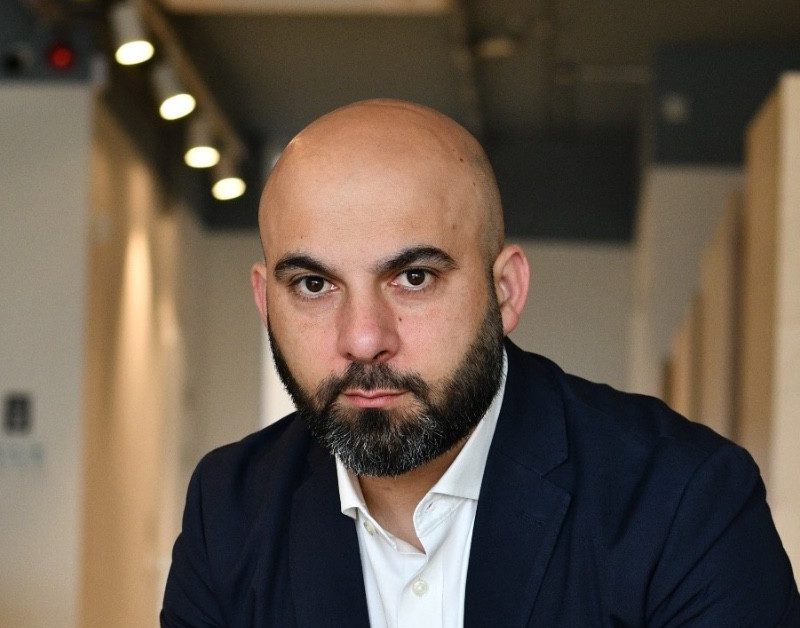
While democracy is often seen as the best tool for electing leaders, Entrepreneur Morgan Parnis expressed his belief that it’s not without significant flaws.
Rethinking democracy at its core, Mr Parnis poses a number of questions, mostly pertaining to what makes a great leader.
“Is it someone who aligns perfectly with the common good, or someone who stands out as exceptional in their vision and execution? How do we measure leadership – by popularity, by the ability to compromise or by the impact on society?” he asks.
Mr Parnis is the Chancellor and CEO of the Central Mediterranean Business School (CMBS), Executive Chair and CEO at Business Leaders Malta, CEO & Co-Founder at Esprimi, Co-Founder of 3Cmalta and Edu Alliance and Partner at Mdina Partners.
Sharing his thoughts on LinkedIn, Mr Parnis makes reference to influential thinkers Plato and Nietzsche.
He remarked that in his book, The Republic, Plato warned about the dangers of allowing everyone an equal say in governance, regardless of their wisdom or expertise.
“He feared that democracy could lead to the election of leaders who are more skilled in pandering to the masses than in ruling wisely,” Mr Parnis noted.
Similarly, he continued, Nietzsche had criticised democracy for promoting mediocrity and suppressing excellence.
Here, Mr Parnis commented on the fact that Nietzsche was concerned that a system giving equal weight to all voices might enable a ‘herd mentality’, where the collective opinion of the uninformed majority overshadows the insights of those more capable of leading.
“Are the best leaders those who rise to power without needing to make countless promises and compromises simply to get to the helm?” he asked.
Expanding on his thoughts, Mr Parnis said that perhaps it’s independence from the need to appease everyone that allows them to make bold, effective decisions that truly serve the common good.
He remarked that upon reading comments on social media, “it’s easy to see the level of ignorance and lack of critical thinking that often prevails – not just in Malta, but globally.”
While noting that everyone has an equal right to vote, he expresses concern over how little thought is sometimes put into decisions.
“How blinded these can be by lack of judgement and ill-informed opinions,” he added.
Wrapping up his thoughts, he stated that while his writing can be perceived as being judgemental, this evaluation is grounded in concerns raised by Plato and Nietzsche themselves.
“Democracy, while valuable, requires informed and thoughtful participation. If we want it to function effectively, we must find ways to elevate the discourse, encourage deeper thinking, and perhaps rethink what we value in our leaders,” he added.
Finally, he concludes by asking about how society can fix a system that it has relied on for such a long time.
Michael Stivala re-elected MDA President, calls for better forward planning
'Malta urgently needs better forward planning, particularly in infrastructure, transport, utilities and community facilities.'
Effective leadership ‘starts with listening’, says ETERNA Group’s Priya Lakshmanan
Priya Lakshmanan, newly appointed Chief Strategy and Optimisation Officer at ETERNA Group, speaks about the leadership qualities needed to drive ...
Fenech & Fenech Advocates appoints Antonio Ghio as Chief Innovation and Technology Officer
Antonio Ghio is an IT Law expert and has been with the firm for the past 25 years.
‘Considerable potential’ for Malta to develop as a private equity and venture capital hub – PEVCA head
He said that private equity and venture capital play a vital role in modern, innovation-driven economies.
