

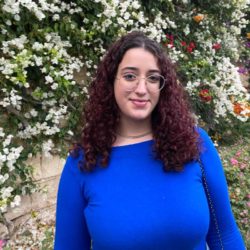

Swedish Prime Minister Ulf Kristersson has revealed that he regularly turns to artificial intelligence (AI) tools, such as ChatGPT and LeChat, to help guide his thinking in political decision-making, describing it as a way to gain a “second opinion”.
Speaking to Dagens industri, a Swedish business newspaper, Mr Kristersson said that AI was a tool he used “quite often,” particularly when considering alternative perspectives or approaches.
“If for nothing else than for a second opinion. What have others done? And should we think the complete opposite? Those types of questions,” he explained.
Mr Kristersson, whose Moderate party leads Sweden’s centre-right coalition government, noted that his colleagues also made use of AI in their daily work.
While the Prime Minister’s openness to using emerging technologies in leadership reflects a growing global trend, experts in the field have emphasised the importance of caution.
Simone Fischer-Hübner, a computer science researcher at Karlstad University, told Aftonbladet that political leaders must be “very careful,” particularly when it comes to sensitive information.
Mr Kristersson’s spokesperson, Tom Samuelsson, stressed that the Prime Minister does not use AI in a way that compromises security. “Naturally it is not security sensitive information that ends up there. It is used more as a ballpark,” he said.
The Prime Minister's remarks have sparked a wider conversation in Sweden and beyond about the role of AI in government, as leaders around the world explore how such tools can be used responsibly in public service and policymaking.
Featured Image:
Swedish Prime Minister Ulf Kristersson photographed by Kristian Pohl/Government Offices of Sweden

‘We want to build a group that will outlive us all’ – James Barbara
James Barbara brought a group of major businesses together under a new corporate identity.
LifeStar Insurance appoints economist Jean Paul Fabri as Interim Acting CEO
His appointment follows the departure of Jonathan Camilleri as CEO.

Building on Ferraracasa’s legacy: Third generation, next chapter
Joining an established family business brings a different challenge to building one from the ground up. The foundations already exist, ...
‘I dreamed of moving to Malta 20 years ago’: iQrypto CEO
Quantum tech firm iQrypto is set to expand its operations to Malta.
