

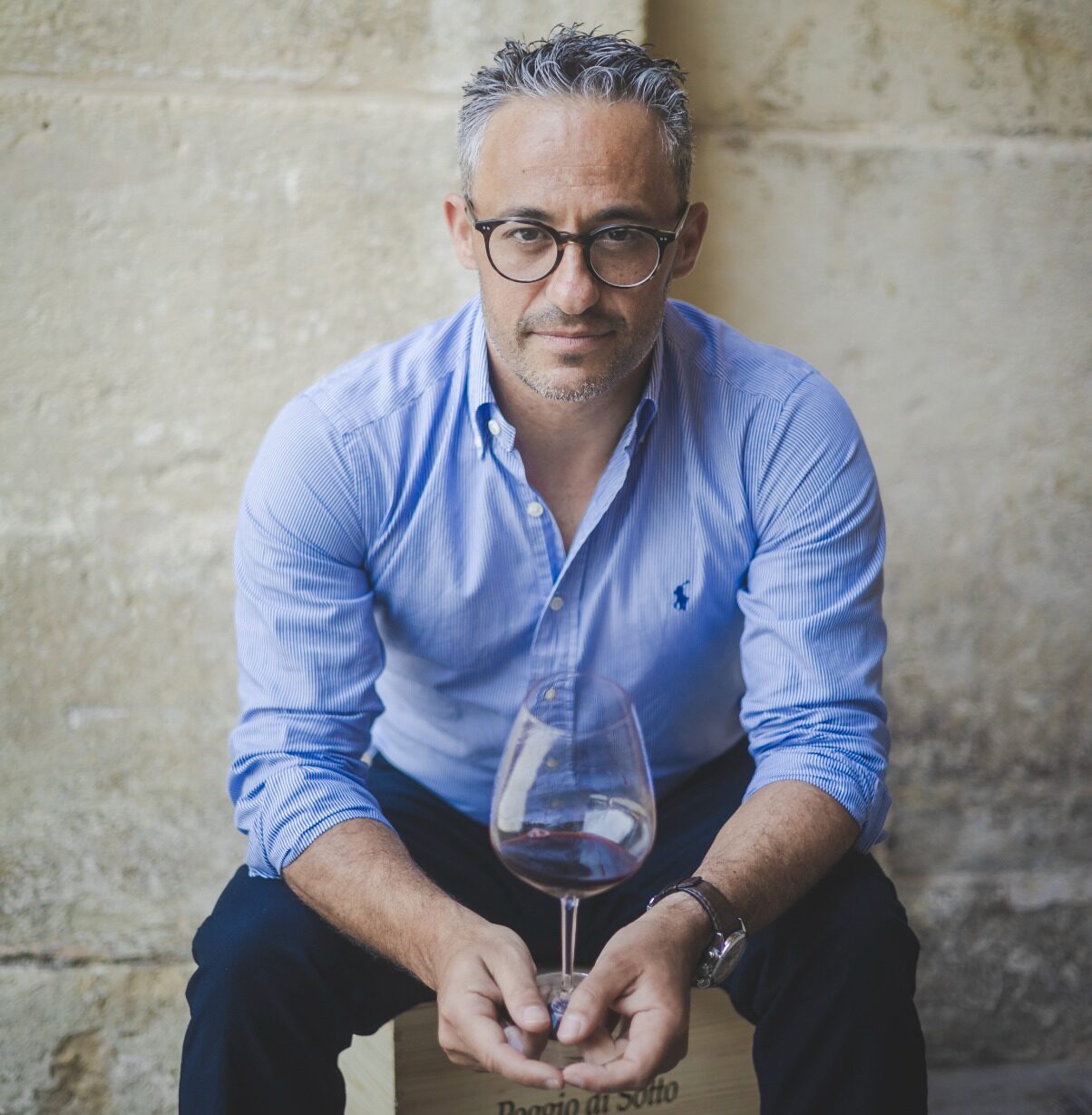

I was mid-tasting some lovely Sicilian wines when the call came in. It was another wine merchant based in Bordeaux, offering the usual array of wines available on the Place de Bordeaux, just like the other gazillion négociants.
But this call seemed different. She wasn’t selling wine, she was calling to talk about what might happen to Bordeaux. I was intrigued.
Whilst I love Bordeaux wine, there's no denying that the system is creaking under pressure and nobody seems to do anything about it, least of all the Bordelaise themselves. We speak about it every time I travel to Bordeaux. We discuss the holes in the system with peers and clients in Malta too, but it's invariably business as usual the following day.
This time, the conversation was somewhat different. She wasn't pitching wine so much as an idea. That one of St-Émilion's most exclusive estates, Château Beauséjour (Duffau-Lagarrosse), was looking for an exclusive partner in Malta. A winery so small that it's comparable to Château Pétrus in size and smaller than most Maltese wineries, yet so exclusive it's often only sought out by those who already know. Vintage'82 had been shortlisted.
Malta has never been short of Saint-Émilion wines. Ask around and someone will name their favourite. One of the big pours or one of the names everyone already knows. That's a fine business to be in. It isn't this one. Beauséjour Duffau-Lagarrosse isn't trying to be a wine everyone's heard of; it's trying to be one almost no one can get. Visibility versus scarcity and that's the whole story of what's happening in Bordeaux right now, whether Bordeaux wants to admit it or not
For three centuries the system worked like a charm: A château makes wine, releases it "en primeur" while it's still asleep in barrel, and sells it through the Place de Bordeaux - a marketplace of négociants (wine merchants) who buy, mark up, and move the wine across the world through importers in every country that wants it. It was democratic in its own snobbish way, but everyone got a taste eventually, if they had the patience and the money to do so. For centuries it solved a genuine problem where thousands of producers reached hundreds of markets, all sold under one uniform system. Today the problem isn't that Bordeaux can't produce great wine, when on the contrary, it’s producing some of the best wine in its history. It's that the mechanism designed to distribute it is increasingly struggling to create value for everyone in the chain. It also meant a château had almost no control over who ended up with its wine, at what price, or standing next to what on a shelf.
This small, serious estate, which were never selling on volume anyway, has started asking a sensible question: Why hand our wine into a system built for scale, when scale was never what made us valuable?
The answer they have landed on is elegant, and maybe a little cheeky. Stay on the Place de Bordeaux marketplace, keep the address, keep the prestige, but restrict the actual commercial relationship to a single négociant, who appoints a single importer per country. It’s now totally under their control. The great thing is that they aren't destroying the Bordeaux model, just selectively redesigning it and that’s what make it so clever. If you think about, this is exactly how serious wines such as Burgundy's best domaines tend to operate. They remain in full control of the journey of their wine.
Château Beauséjour (Duffau-Lagarrosse) sits next door to the famed Château Angélus and Château Canon and produces a tiny 25,000 bottles a year. As Jancis Robinson's site has reported, not everyone in the Duffau family was pulling in the same direction and there was an appetite, among some, to sell the estate outright. Josephine Duffau, family heir and the estate's winemaker, chose otherwise, and found her partner in Prisca Courtin-Clarins, of the Clarins family. Teaming up with a conglomerate with its own history and expertise for building something desirable for people who'll pay for precision is not something to take lightly. Together, winemaker and co-director, didn't reject the system entirely, but declined to be trapped by the parts of it that stopped working. Better still, Ms Duffau can continue improving the quality without losing too much time and worry on the business side. So far, it seems to be working. The 2025 vintage, still asleep in barrel, has already been awarded 100 points by Falstaff, the Austrian wine authority, and word has it that Jane Anson, one of the most respected palates writing on Bordeaux today, may be close behind.
Every business owner reading this has faced some version of the same fork – sell, or find a way to make the old thing work on new terms. Most take the safer exit. It's tempting to wonder whether this becomes the small St-Émilion estate that kept the marketplace on its own terms, against three centuries of everyone doing it the other way.
Whether this model holds is a different question, and Bordeaux hasn't answered it yet. What works for an estate making 25,000 bottles a year, selling to a handful of serious clients who'll wait for it, doesn't obviously work for a château built at real scale. A château producing closer to 100,000 bottles needs volume and reach the same way Beauséjour needs precisely the opposite. Perhaps a hybrid exists somewhere between the two, but nobody's built it yet, as far as I can tell.
Whatever the outcome, it's a bet. But it's one of those business decisions where the potential upside is far more interesting than the downside. I'd like to think it's one I'll look back on with some pride, not just relief.
In the meantime, I've recently come back from Château Beauséjour itself, where I tasted wine of a kind I don't get to taste often. Elegant, precise and entirely unconcerned with being liked by everyone. Which, by this point, should come as no surprise at all.


Two masterpieces, one remarkable instrument
Michael Pantalleresco explores the poetry, passion and brilliance of the clarinet in works by Mozart and Weber.
‘A setting we couldn’t be prouder of’: db CEO on Hard Rock Hotel’s new rooftop restaurant
Cyana’s head chef is Spiros Tzilis, a Greek chef who has worked at Michelin-starred restaurants.

‘AI might be faster and cheaper, but at what cost?’ – Aramis Capital MD
He warns that businesses risk sacrificing service quality, human judgement and accountability in their pursuit of greater efficiency through artificial ...

‘We’re already late’: Employers chief calls for cross-party mass transport agreement
Through cross-party agreement, the solution will endure beyond individual legislatures, he explains.
