


Conflict has traditionally been viewed as something businesses should minimise. A disagreement emerges, a manager or HR gets involved, and everyone looks for the quickest route back to normal.
But in increasingly diverse, international and hybrid workplaces, disagreement is inevitable. The challenge for today's leaders is not eliminating conflict but making sure it is handled constructively.
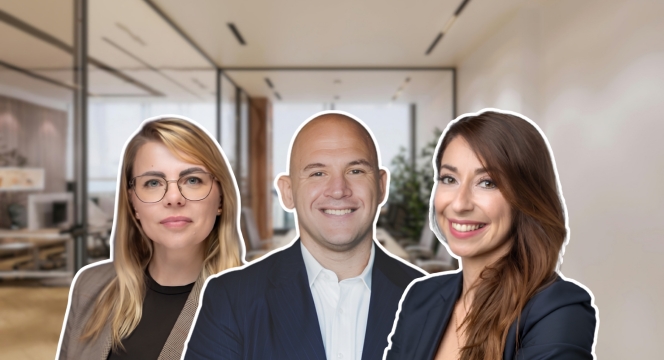
MaltaCEOs.mt reached out to three business executives to understand their thinking about managing conflict - and how it has changed.
For Monika Kareckaitė-Šiupinienė, Group Chief Human Resource Officer at PAYSTRAX, handling conflict starts with understanding what is actually behind the disagreement.

“The issue that initially reaches HR is not always the actual source of the conflict,” she explains. Unclear expectations, different interpretations or communication that has gone wrong can all sit beneath what initially appears to be a straightforward dispute.
Her approach is to speak with those involved, understand different perspectives and separate facts from assumptions. Where the conflict is within a team, she also believes the manager should be involved, given their understanding of the team's dynamics.
The objective is not to decide who is right and who is wrong, but to find a way forward.
Ms Kareckaitė-Šiupinienė says her own approach has evolved throughout her career. Earlier on, she felt a greater responsibility for HR to step in and resolve workplace disputes. Experience has taught her that HR does not necessarily need to own every conflict.
“Dealing with difficult situations is part of people management and should not automatically be passed to HR,” she says.
“Difficult conversations are better held early,” she added. “Problems rarely become easier when they are left unresolved.”
John Ellul, Co-Founder at Veracloud, has reached a similar conclusion.
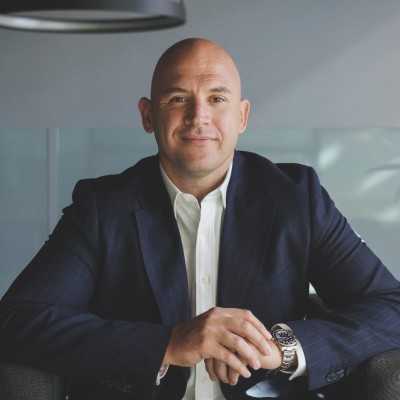
“Early in my career I treated conflict as something to close down quickly. Get to a decision, move on. I now think that's the wrong instinct.”
Today, Mr Ellul sees conflict as a potential signal that someone has a concern or idea that has not been heard. His approach is to bring the disagreement into the open, give everyone space to speak and then make a clear decision.
Is it really a generational problem?
Generational differences are often blamed for workplace friction, but all three leaders caution against making age the default explanation. “I would be careful about explaining too much through generational labels,” says Ms Kareckaitė-Šiupinienė.
This is particularly relevant in international organisations. At Veracloud, Mr Ellul's teams work across Malta, Greece and Cyprus, alongside remote partners.
“Generational differences exist, mostly around communication style and how people like to work, but they're rarely the real cause,” he says. Instead, he identifies unclear expectations and a lack of understanding around decision-making as more common sources of friction.

For Janice Fenech, General Operations Manager at Storton, the answer is similar: understand the individual rather than relying on assumptions about their generation.
“We don’t need to think alike to work well together,” she says, “but we do need to respect each other, listen openly and be clear about what we’re trying to achieve.”
When disagreement improves the outcome
Mr Ellul recalls a major project involving an energy broker with offices across four continents. With multiple teams, international partners and a client operating across different time zones, there were plenty of opinions about how the project should be approached.
Instead of allowing those disagreements to emerge later, the team brought everyone together before the work began and invited people to share their concerns, objections and opportunities. Some of the feedback was uncomfortable. Some of it changed the plan.
But once everything was on the table, the team made a decision, and everyone understood why.
“The conflict you avoid early tends to come back later, usually at a worse time and with a client watching,” Mr Ellul says.
For Ms Fenech, one of the most important lessons has been learning how not to take disagreement personally. Earlier in her career, she says, working in a male-dominated environment sometimes created pressure to prove herself. A challenge to her opinion could feel like a challenge to her ability, making her defensive.
Experience has changed that. She has learned that standing by a position while remaining open to challenge are not mutually exclusive — and that changing her mind when someone makes a good point does not diminish what she brings to the table.
The common thread in all three perspectives is that a healthy workplace is not necessarily one without conflict. It is one where people can disagree without damaging their working relationships.
Successful conflict resolution does not mean everyone agrees, Ms Kareckaitė-Šiupinienė points out. It means creating enough understanding and clarity for people to work together effectively and respectfully.
For Mr Ellul, it means giving people space to challenge decisions before disagreements become bigger problems.
For Ms Fenech, it means recognising that disagreement can create opportunities for learning, growth and better decisions.
The lesson for leaders is straightforward: good leadership does not eliminate difficult conversations. It makes those conversations possible.
Sometimes, the disagreement a business is most tempted to avoid is exactly the conversation it needs to have.

Stuart Vella Bonello marks next career step as Director in Advisory at KPMG Malta
‘Thank you to everyone who supported me and challenged me,’ he wrote.
‘Still pinching myself a little,’ says Owen Baldacchino on joining Flutter as Head of AML
Owen Baldacchino joins Flutter Entertainment as Head of AML and MLRO.

Meet Cyana: New Greek rooftop restaurant opens this Saturday October 10 at Hard Rock Hotel Malta
Book now for Greek flavours, Mediterranean views and sunset cocktails await at this new rooftop destination in St Julian’s.
Donald Vella to take over as Managing Partner at Camilleri Preziosi Advocates in 2027
Louis de Gabriele will be stepping down from this role after five years.
