



As major international companies increasingly turn to artificial intelligence (AI) to streamline operations and reduce costs, Andre Darmanin, Managing Director at Aramis Capital (Europe) Ltd, has questioned whether businesses are overlooking the value of human expertise in their pursuit of efficiency.
His comments come as people’s concerns are growing with regards to AI's impact on employment, particularly in financial services and Malta's iGaming industry.
Barclays has reportedly been pursuing thousands of job cuts as part of its restructuring efforts, while HSBC has also been exploring how AI can transform its operations.
Closer to home, former employees in Malta's iGaming industry have reported losing their jobs to automation, with some claiming they were required to train the systems that eventually replaced them. However, industry representatives have challenged suggestions of widespread AI-driven redundancies, pointing instead to changing skills requirements and the redeployment of workers.
Against this backdrop, Mr Darmanin expressed concern about the implications for employees.
"This is very unfortunate. I have friends and connections working in these industries, and I genuinely wish everyone affected the very best in finding new opportunities where their work, experience and skills are recognised and valued," he wrote on social media.
When efficiency comes at the expense of quality
Mr Darmanin recounted a recent experience involving one of his company's international technology service providers, which he believes shows the limitations of replacing human interaction with AI.
Following the disclosure of a critical PHP cybersecurity vulnerability, he contacted the provider to establish whether any company data had potentially been exposed, particularly in view of its obligations under the General Data Protection Regulation (GDPR).
However, his enquiry was initially handled by an AI chatbot, which responded within approximately three minutes with information about ISO certifications, encryption, security monitoring and compliance procedures.
Despite its speed, the response failed to address his specific concern. After requesting human assistance, Mr Darmanin received a more relevant explanation, including confirmation of the security measures taken.
"A human replied and he understood the question, its context and the responsibility behind it. He provided a clear answer, confirmed the security measures taken and even acknowledged that the chatbot had failed to address my enquiry properly," he explained.
"The difference wasn't the speed of the response. It was the quality and relevance of the answer."
He added that the chatbot's response had delivered "absolutely no value" and had merely wasted his time.
‘Reducing costs is one thing. Delivering an effective service is another’
For Mr Darmanin, the experience raises broader questions about how organisations measure the success of AI adoption.
While automation can reduce operating costs and improve response times, he argued that these benefits should not come at the expense of professional judgement, accountability and customer satisfaction.
"Seeing organisations invest heavily in AI and reduce headcount in pursuit of greater efficiency concerns me," he said.
"But are we actually looking at this the right way? Reducing costs is one thing. Delivering an effective service is another."
His concerns are particularly relevant to regulated industries, where providing accurate information, understanding context and responding appropriately to compliance-related enquiries can carry significant consequences.
The issue also presents a challenge for business leaders weighing the potential savings from automation against the risks of inadequate service, reputational damage and the loss of institutional knowledge.
Nevertheless, Mr Darmanin stressed that he is not opposed to AI, acknowledging that he uses the technology himself, including to help draft his social media post.
"I believe AI has enormous potential," he said, while warning that replacing human judgement and experience with poorly implemented technology could create more problems than it solves.
"So far, when it comes to replacing human professional work, I'm not particularly impressed."
Ultimately, he questioned whether businesses are sufficiently considering the consequences of replacing experienced employees.
"AI might be faster. It might be cheaper. It might even be more efficient on paper – but at what cost?"
Borrowing a line from Top Gun: Maverick, he concluded: "It's not the plane, it's the pilot."
"And sometimes, the pilot makes all the difference – don't let him go!"
Featured Image:
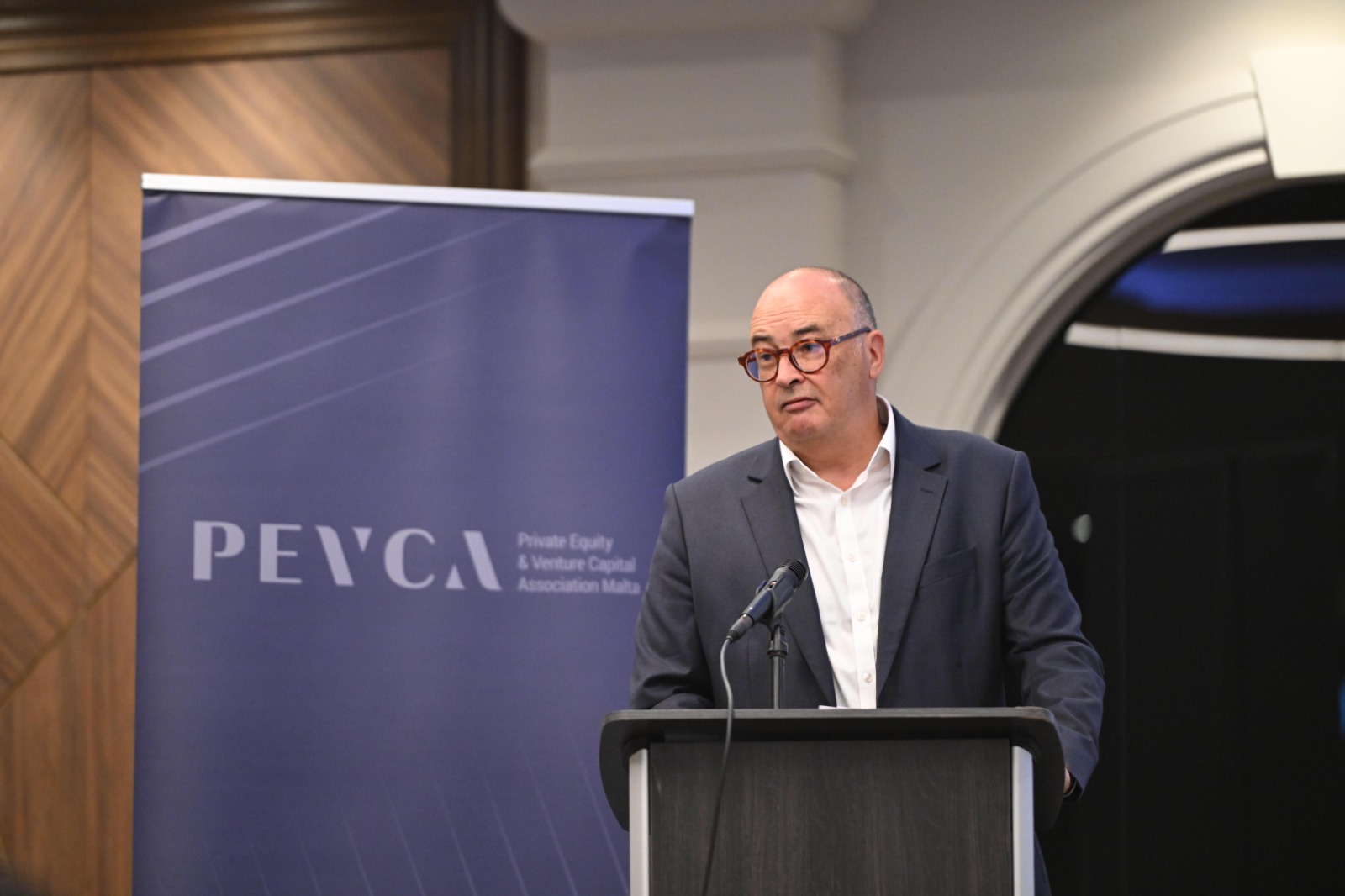
Andre Darmanin / LinkedIn


‘A setting we couldn’t be prouder of’: db CEO on Hard Rock Hotel’s new rooftop restaurant
Cyana’s head chef is Spiros Tzilis, a Greek chef who has worked at Michelin-starred restaurants.

‘We’re already late’: Employers chief calls for cross-party mass transport agreement
Through cross-party agreement, the solution will endure beyond individual legislatures, he explains.

Corinthia Palace combines musical performances with its hospitality offering through Palace Concerts
Alfred Pisani, Chairman of Corinthia Group, said the initiative builds on a tradition established at the hotel more than six ...

David Xuereb appointed as Chief Growth Officer at Moneybase
Prior to joining the company, Mr Xuereb has had experience in a number of management roles
