

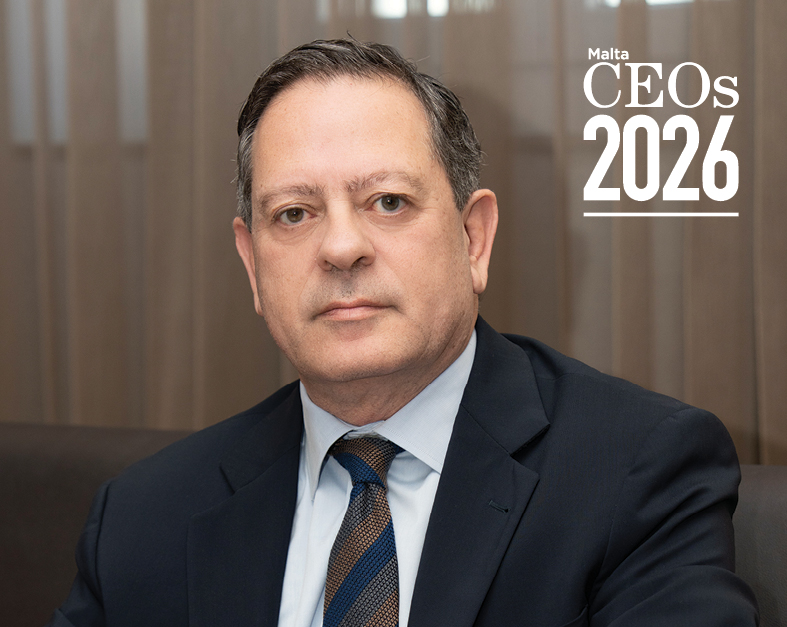
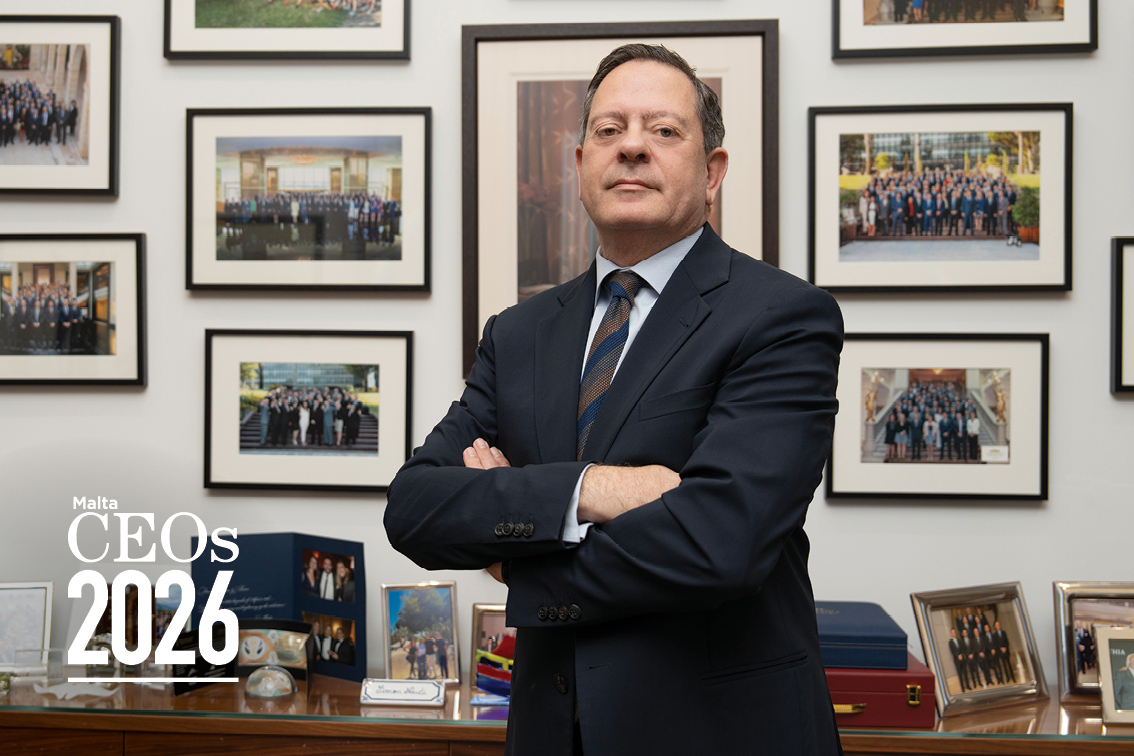
As CEO of Corinthia Group, Simon Naudi presides over Malta’s most prominent international hospitality export. Following a landmark year that saw the brand plant its flag in New York, Brussels and Bucharest, he is navigating the complexities of operating across 20 countries while preserving the company’s distinct family ethos. As 2026 gets underway, his focus shifts to embedding this human-centric culture within a rapidly growing global workforce and pioneering the luxury-branded residential market in Malta.
For Simon Naudi, looking back on 2025 reveals a company that has expanded aggressively on the global stage. It was, by his own admission, a “breakthrough year” for the group.
“I think we’ve had a great year,” Simon begins, reflecting on the whirlwind of activity that defined the past 12 months. “We’ve opened three hotels – a beautiful hotel in Brussels, which we own and developed; a Corinthia Hotel in New York, our first in the United States; and a palace-style hotel in Bucharest.”
Representing a strategic consolidation of the brand’s positioning in the ultra-luxury segment, the group’s ambition shows no sign of waning. Moving forward, Simon reveals that a consortium put together by the group has secured a prime site in Beverly Hills, California, marking another significant step in one of the United States’ most competitive markets. Closer to home, in Europe, the group’s highly anticipated hotel in Rome is “almost done,” with completion imminent.
However, scaling a business deeply rooted in a specific philosophy – the ‘Spirit of Corinthia’ – presents a unique set of challenges. As the company expands into new territories, employing thousands of new staff members from Belgium to the US, the effective transmission of culture becomes critical.
“At the core of Corinthia, like many successful companies, lies a philosophy,” Simon explains. “Decision-making isn’t driven purely by technical considerations, but also by human ones. Ultimately, the hotel business is about the human experience.”
It is this human-centric approach that Simon believes gives Corinthia a competitive edge over industry giants. “Our industry is dominated by four or five huge companies, each with dozens of brands,” he notes. “So when you are a smaller operator – small in relative terms – it becomes a huge advantage in how we interact with guests and partners. Relationships are far more personal. The commercial benefit follows: a well-oiled but human machine stands a better chance.”
To ensure this ethos endures as the business scales, the group is formalising the way its culture is embedded across the organisation. At the start of 2026, dedicated HR resources are being deployed to “ensure and articulate the values of the company in all four corners of the world,” moving beyond technocratic recruitment towards a deeper nurturing of the company’s spirit.
While the group’s eyes are firmly fixed on global growth, Simon remains deeply engaged with the evolution of Malta’s tourism offering. The group’s Chairman and Founder Alfred Pisani has long advocated for a pivot from volume to value, a sentiment Simon now feels has permeated the national consciousness.
“Change can only happen in a democracy when people want it to happen. Now there is a broader understanding that the future of our country should be less about increasing numbers and more about increasing spend,” he observes.
The CEO is confident in Malta’s ability to deliver on this promise, distinguishing it from competitors that rely solely on sun and sea. “There are spectacular sites, beautiful towns and villages,” he says. “We Maltese tend to focus on what has been uglified but, in the wider context there are truly stunning places, and there is a market willing to pay more for that experience.”
Corinthia is leading this charge domestically through significant reinvestment. The Corinthia Palace, the group’s ‘spiritual home’, is undergoing a phased upgrade to ensure it stands shoulder to shoulder with its international counterparts in London and New York. “This hotel has a particular character that appeals to a more mature luxury traveller, and we want to continue investing in that,” he maintains.
The group is also introducing new verticals to the local market. The launch of the Verdi brand – an upscale, though not ultra-luxury, offering – has proven successful, with eight hotels now managed under the banner. Simultaneously, the group is preparing to introduce branded residences to Malta through the Oasis project at the former Ħal Ferħ site.
“The hotel industry globally is moving into the residential space,” Simon notes, referencing Corinthia’s own projects in London, Riyadh, Dubai, Doha, and New York. “This sector is growing at a very fast pace, and our brand brings reassurance that the product is well built, well designed and supported by strong service,” he adds. The Oasis will combine a hotel with residences benefiting from full hotel services – a first for the island at this scale.
Despite the operational complexities of running a business across 20 countries, Simon remains focused. His priorities for 2026 are clear and financially prudent: increasing revenues and improving conversion to the bottom line through efficiency.
Yet, when asked about the most critical decisions of the past year, Simon does not point to real estate acquisitions or financial restructuring. True to the company’s ethos, he points to people.
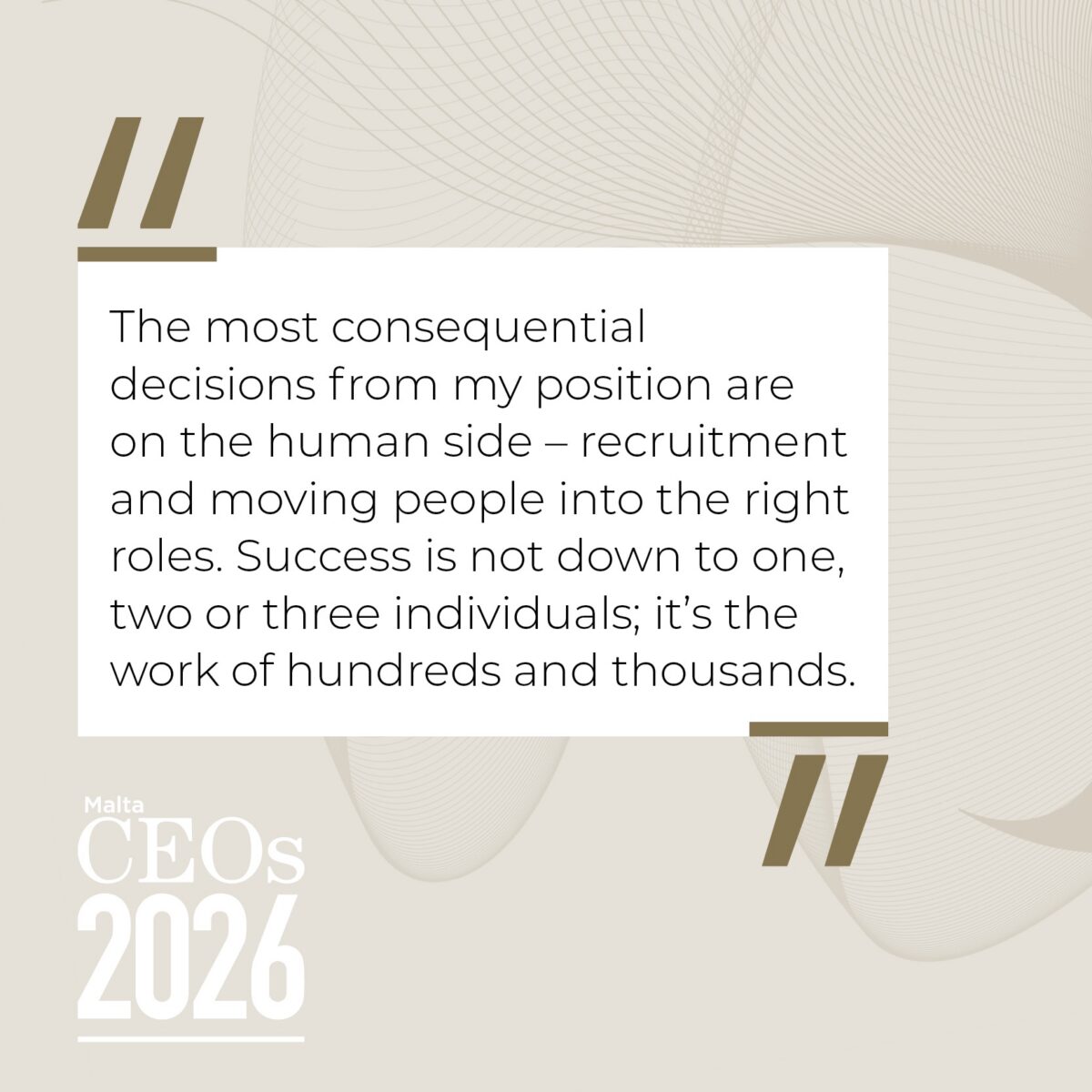
“The most important decisions are not investment-related,” he reflects. “The most consequential decisions from my position are on the human side – recruitment and moving people into the right roles. Success is not down to one, two or three individuals; it’s the work of hundreds and thousands.”
Looking ahead, Simon’s advice to aspiring entrepreneurs is grounded in the fundamentals that have driven Corinthia’s success for decades. “Focus on the product and the service. Deliver quality to customers. If you meet expectations, people will return and they will talk about you. It becomes a snowball that grows and grows.”
This article is part of the serialisation of 50 interviews featured in MaltaCEOs 2026 – the sister brand to MaltaCEOs.mt and an annual high-end publication bringing together some of the country’s most influential business leaders.
‘Smart choices decide everything’ – Prof. Stephanie Fabri
The Associate Professor and Economist warns: 'Old growth models won’t survive this new global order.'
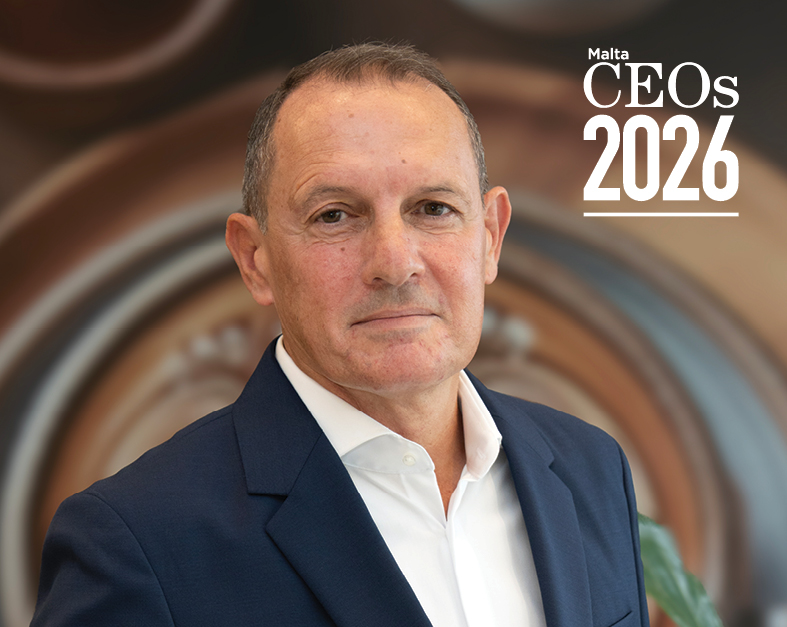
‘We want to be the most trusted retail network in Malta’ – The Convenience Shop Group CEO
Growth 'goes beyond the number of doors opened,' says David Tabone.
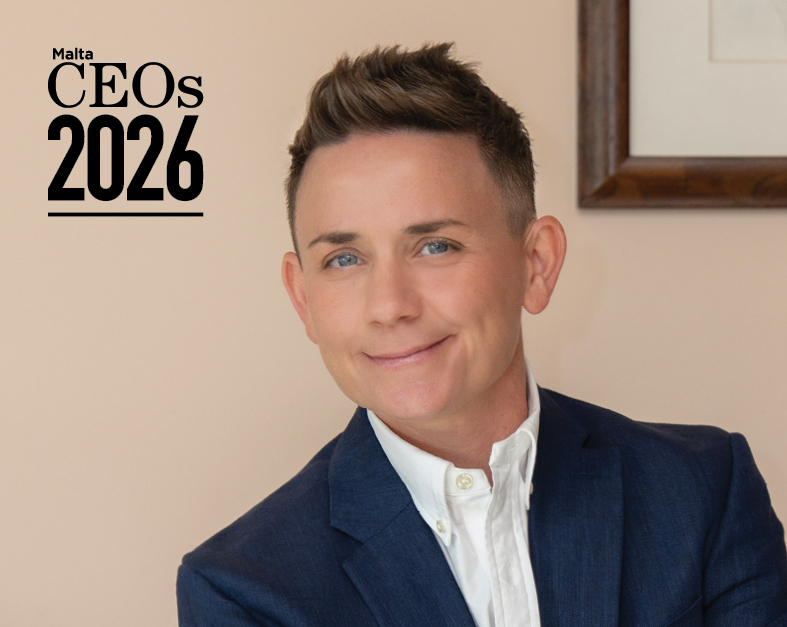
M&Z plc CEO Greta Camilleri: ‘Leadership is about creating alignment’
‘Success takes patience,’ says the CEO. ‘You grow responsibly or not at all.’
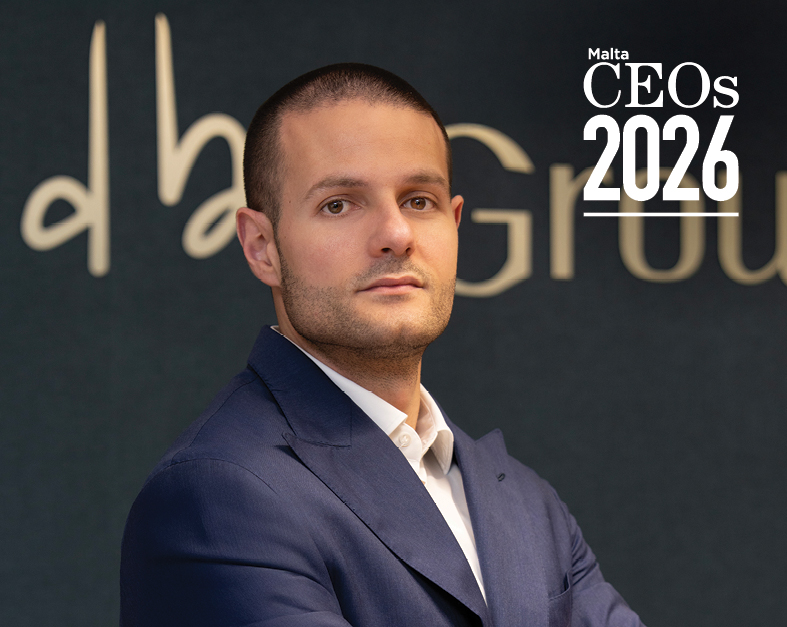
‘Hospitality has seriously levelled up in recent years’ – db Group CEO Robert Debono
'The wider environment still needs work, but overall Malta is heading the right way.’
