



Non-executive Directors (NEDs) play a vital role in ensuring accountability, good governance and long-term sustainability.
Yet, questions remain as to whether their expertise is always being fully utilised, particularly when board agendas are dominated by compliance and regulatory demands.
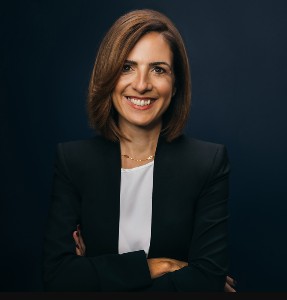
International business mentor Nadia Pace and economist Stephanie Fabri, both seasoned non-executives, share their perspectives with Maltaceos.mt on how boards can create more space for NEDs to contribute strategically.
“Preparation is key” – Nadia Pace
For Ms Pace, effective preparation lies at the heart of a board’s performance.
“As a Non-Executive Director, it is my responsibility to request the right information in the right level of detail, and to ensure it is shared ahead of time,” she explains.
“The Chair plays a crucial role in this process by coordinating meetings effectively, setting a clear agenda and ensuring that supporting documents are distributed promptly to all board members.”
She notes that boards cannot afford to go into reactive mode. Instead, they must remain engaged between meetings, tracking progress on open actions and preparing for time-sensitive decisions.
Her recommendation is clear: “Maintain strong, ongoing communication between meetings, with the Chair kept fully in the loop, so that preparation and decision-making are both proactive and informed.”
Strategic space beyond compliance
When asked whether her skills are being fully utilised at board level, Ms Pace acknowledges a frequent imbalance.
“Boards often place heavy emphasis on compliance and performance. While regulatory, financial and statutory matters are critical, they can dominate the agenda, leaving less space for forward-looking discussions around strategy, risk, future investment, stakeholder engagement, commercial decisions and leadership,” she says.
Her own approach, she adds, is to integrate business development, succession planning, risk management and growth strategy into the compliance framework, “rather than treating them as separate priorities.”
She believes that boards can better leverage NED expertise by deliberately carving out agenda time for strategic exploration, thus enabling directors to shape the long-term vision of the organisation.
“Quality and timeliness of information are crucial” – Stephanie Fabri
Dr Fabri echoes the importance of preparation, emphasising that the quality, timeliness and accessibility of information are what allow non-executives to fulfil their oversight and strategic roles.
“In my experience, the boards I serve on provide well-structured board packs, with comprehensive financial and risk data, circulated ahead of meetings. This enables me to prepare thoroughly and to contribute with evidence-based analysis,” she says.
That said, she recognises that not every issue can be anticipated.
“There are occasions where important issues are raised at the meeting itself, mainly because they arise on the day of the board. While earlier circulation of papers is always desirable, I recognise that in practice this is not always possible given the dynamic nature of business.”
Ultimately, she argues, ensuring that Directors have adequate time to consider critical issues, through timely packs, concise executive summaries or structured briefings, “strengthens the quality of debate and maximises the value boards can draw from their non-executives.”
Involving NEDs earlier in strategy
On whether her expertise is fully leveraged, Dr Fabri highlights that her role as an economist is generally well applied in areas such as macroeconomic risk, ESG and financial oversight. However, she sees room for improvement.

“I believe boards could more effectively harness Directors’ expertise by engaging non-executives earlier in the strategic process, not solely at the point of approval,” she says.
This could include involving NEDs in horizon scanning, scenario planning, and specialised committee work on risk, audit or sustainability. Such early engagement, she notes, not only allows NEDs to apply their specialist perspectives but also helps boards avoid groupthink and strengthen their decision-making.
“Leveraging non-executives as both challengers and strategic partners is the best way to ensure their expertise translates into stronger governance and improved long-term performance,” Dr Fabri concludes.
Featured Image:
Nadia Pace




‘A very proud moment’: J’Oli Co-Founder celebrates new Cypriot outlet
Jean Paul Cascun says new Paphos outlet is 'only the beginning'.

Stefan Riolo appointed Executive Director of Clearflowplus
Stefan Riolo succeeds David Sacco in the executive role.

Beyond the boardroom: How St John’s Co-Cathedral is redefining corporate engagement
The country's mix of heritage venues and close-knit business community means familiar settings can be transformed into something genuinely memorable.

Sawadee Valletta! Iniala brings Thai family-style dining to Malta
Led by celebrity chef Ian Kittichai, Anaalā takes diners on a journey across Thailand with four rotating menus.
