


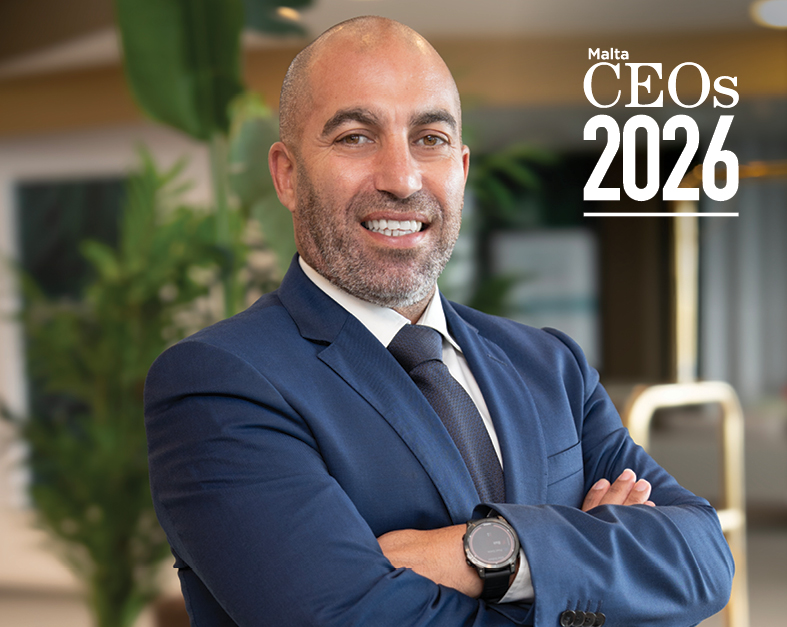
Pio Vassallo leads Vassallo Group, a family enterprise celebrating its 80th anniversary in 2026. Founded in 1946 as a construction firm, the group has grown into a highly diversified business spanning real estate, elderly care, hospitality, and education. Now, Pio is steering a phase of strategic consolidation while pursuing selective expansion in areas such as energy and further growth in education, positioning the third generation to scale with disciplined governance and clear purpose.
Pio Vassallo’s journey to the helm of one of Malta’s most diversified groups of companies began early. Every summer from the age of 10, he spent time across different areas of the business – from construction sites to the store and design office – gaining practical exposure that, combined with a degree in construction management, formed the basis of his management philosophy.
He quickly ascended, becoming CEO of the construction arm in the early 2000s. Construction requires dealing with “a lot of critical issues”, and Pio soon found that the discipline and decision-making demanded by the industry travelled well across other areas of the business. He takes a methodical approach to problem-solving and has used it to guide the group’s entry into – and expansion across – new markets. “I’ve used my experience in taking key decisions and applied it to different sectors,” he shares. This ability to draw parallels across disparate operations remains one of his strengths as a leader.
With a leadership style rooted in humility, Pio maintains a steady focus on empowering his senior team. “I pride myself on being a servant leader,” he notes, preferring persuasion to being “too strict”. Central to his ethos is a commitment to listening: “I’m a very good listener. I listen more than I talk. And this is how you learn.” The underlying reasoning is simple – Pio believes openness is a prerequisite for growth. “If you don’t allow other people to talk, you will not get that opportunity to learn.” He extends this philosophy by adding one final principle: “If you don’t care who gets the credit, it’s amazing what you can achieve.”
That long view also shapes how Pio thinks about the company’s legacy and the overall wellbeing of his staff. Indeed, a recent pivotal decision involved setting long-term direction by initiating a formal succession plan for the next generation – a move he deems “very critical for our business”. As he puts it, “succession is not an event; it’s a process.” His strong duty of care towards the group is as much moral as managerial. “When you inherit a business, you don’t just inherit the assets or wealth. You also inherit the responsibility.”
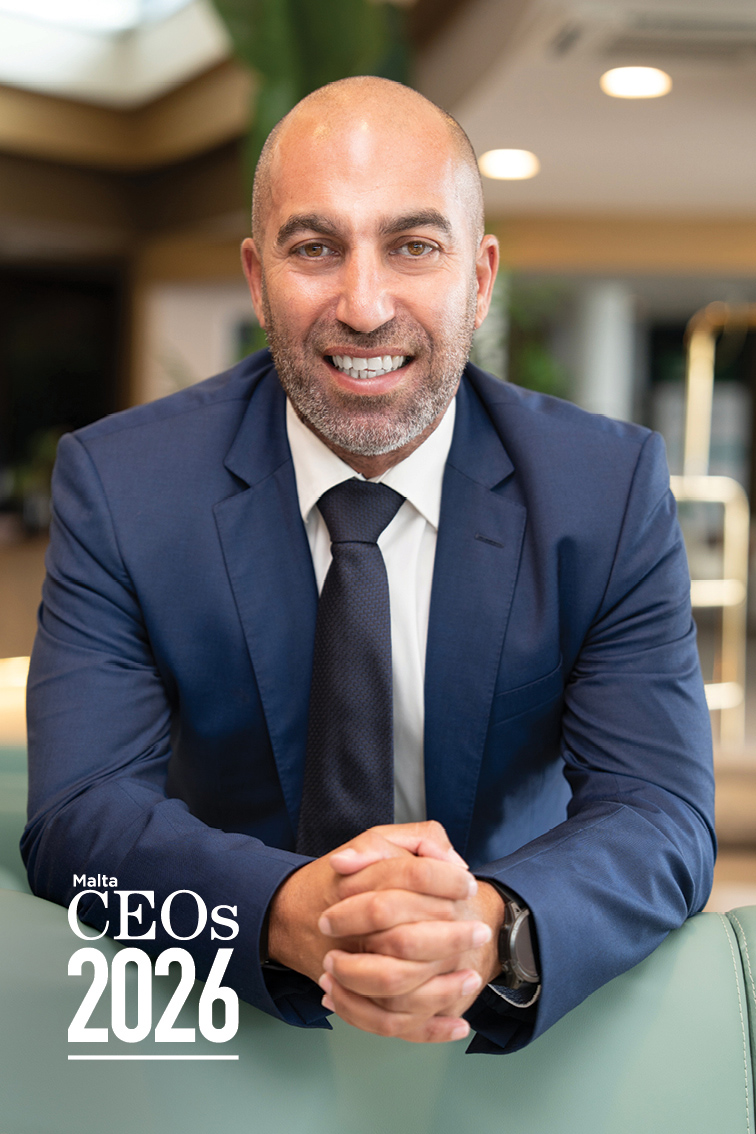
Vassallo Group’s growth reflects ambitious yet structurally sound diversification. Founded in 1946, the company began in construction before making a strategic leap into elderly care in 1993, pioneering private-sector care in Malta. Today, the company’s portfolio blends these pillars with other areas including property, education, energy, hospitality, and student accommodation.
This seemingly disparate mix of business lines operates under a unifying strategy; finding common ground even in the most unlikely of departments. Pio illustrates the approach with a simple comparison: “Pricing cake and pricing concrete have more in common than you might think.” Whether mixing ingredients in catering or sequencing processes in construction, time is the constant. Both require quality delivered on schedule, because, as Pio puts it, “the product has an expiry date”.
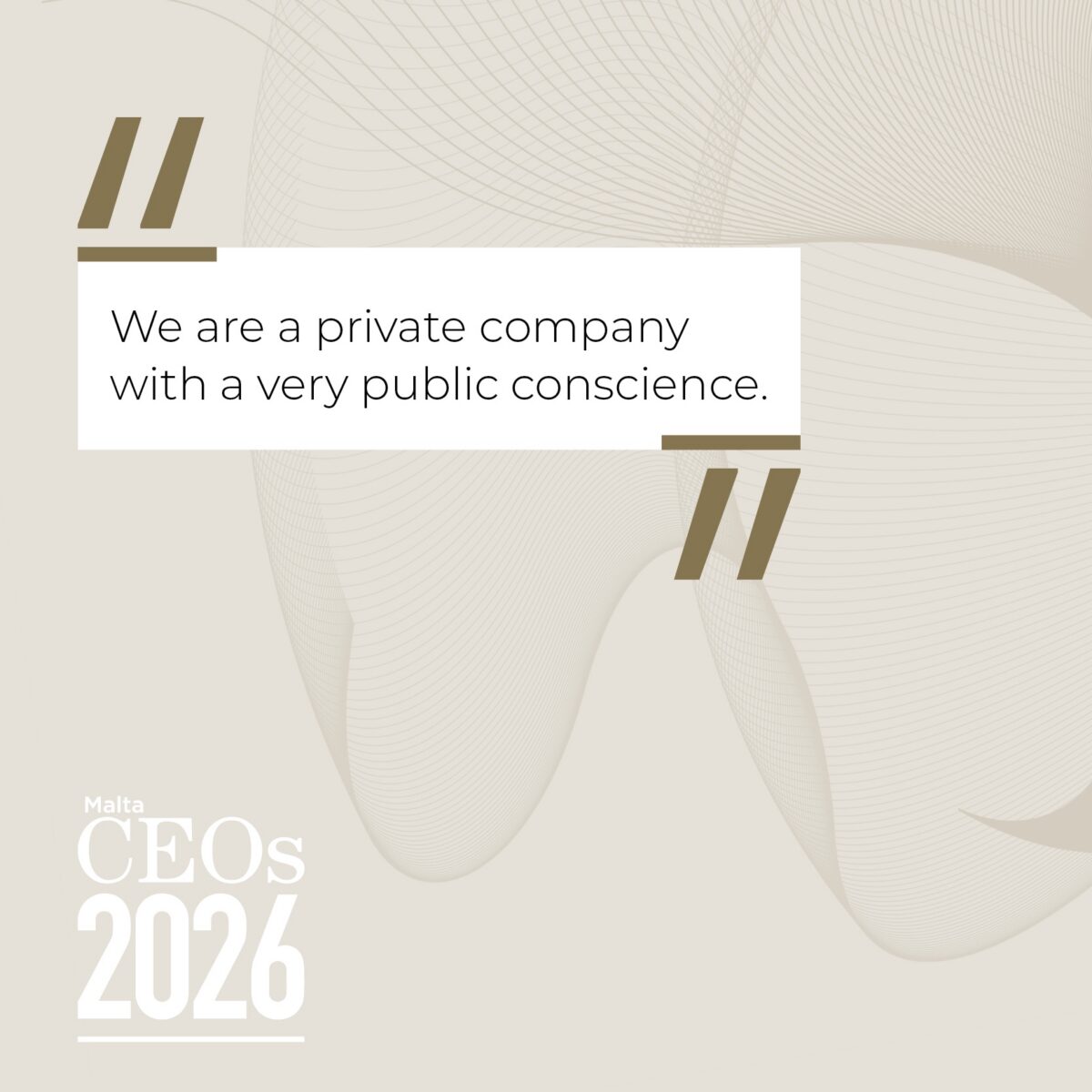
Governance underpins the model. Delving into the company’s modus operandi, Pio explains that despite being a private, family-owned entity, the group functions with a corporate mindset and robust oversight. “We are a private company with a very public conscience,” he says. The firm’s boards are structured with a balance of family, non-family and non-executive directors, meaning that organisational rigour intersects with inherited values like “humility and hard work”.
For Pio, this operational approach is key to maintaining Vassallo Group’s purpose and ongoing stability. To ensure knowledge and best practices circulate across the portfolio, a monthly leaders’ forum brings the CEOs of the group’s companies together. “They share context, give advice and therefore ensure that everyone knows what’s happening in different parts of our business,” Pio explains. The resulting synergy maximises group-level services like finance and logistics while enabling the individual business heads to learn from one another and benefit from the diverse experience of their peers.
That coherence shows up in results. Recent performance reflects the maturing of Vassallo Group’s major investments. Key drivers of this success include the Campus Hub project, construction and real estate, healthcare, and education. As projects come to fruition, Pio confirms that the group is now “reaping the benefits of this investment”.
The principal constraint to further growth in Malta, however, is a serious human capital issue. “Our biggest obstacle is the difficulty in finding staff,” Pio confirms – a limitation felt acutely across Malta’s construction and healthcare sectors. To tackle it, he advocates for a national change in attitude that places vocational routes on a par with academic ones. “In places like Estonia, apprenticeships are as important as professional qualifications,” he notes. “There needs to be a broad shift in which we place greater emphasis on apprenticeship roles.”
On technology, the CEO’s approach is also practical. The group is actively integrating digital tools and advancements, using artificial intelligence (AI) to improve efficiency on the administrative side of the business. Yet Pio is clear-eyed about its limits, particularly in care services, highlighting that the human element remains paramount. “In elderly care, a person still needs a person,” he asserts.
That pragmatism also shapes his perspective on risk and standards. The weight of responsibility comes with the territory, and Pio speaks candidly about his main concern: “the risk of accidents” in construction – an ever-present consideration as a CEO managing large-scale, physical projects. Pio also identifies a broader challenge in Maltese construction: maintaining local identity and standards. He urges the industry to keep Malta’s identity visible.
“The goal should be that when you look at a newly built structure, you can immediately tell it is Maltese rather than Italian,” says Pio, pointing to traditional architectural and design features such as the Maltese balcony, patterned tiles and – space permitting – internal courtyards. But above all else, for the construction industry to operate healthily and successfully, Pio stresses the need for collaboration and respect among competitors. “Even though there is competition, there should be respect, and I think that’s something that has been missing in new businesses.”
As Vassallo Group heads towards its 80th anniversary in 2026, its corporate strategy is a considered blend of two growth pillars: consolidation and selective diversification. Following a rapid period of expansion, the past two to three years have focused deliberately on consolidating – preparation “for the next big jump”. Looking ahead, the group is targeting energy as a new sector for diversification, while continuing to grow in care and accommodation, potentially through acquisitions.
That outward lens extends to Malta’s wider economy. Pio sees substantial opportunities for Malta, particularly in areas he believes are currently underestimated. For example, international education remains a strong prospect. “I think Malta is still a big attraction,” he muses, citing the island’s good reputation, climate, location, and the English language as distinct advantages. He also points to “niche opportunities, such as those in AI” where Malta can excel, similar to its success in financial services.
For the year ahead, Pio’s primary objective is to have the next generation’s succession planning “well underway”. And his message to Malta’s business community is equally steady and pragmatic: identity matters, and so does mutual respect. “One minute you’re competing with someone, and the next you’re working together,” he underscores. With that in mind, he calls for a renewed focus on fair play and civility: “Competition,” he adds, “is healthy.”
This article is part of the serialisation of 50 interviews featured in MaltaCEOs 2026 – the sister brand to MaltaCEOs.mt and an annual high-end publication bringing together some of the country’s most influential business leaders.
‘At the core of Corinthia lies a philosophy’ – Simon Naudi, Corinthia Group CEO
‘Decision-making isn’t driven purely by technical considerations, but also by human ones. Ultimately, the hotel business is about the human ...
‘Hospitality has seriously levelled up in recent years’ – db Group CEO Robert Debono
'The wider environment still needs work, but overall Malta is heading the right way.’
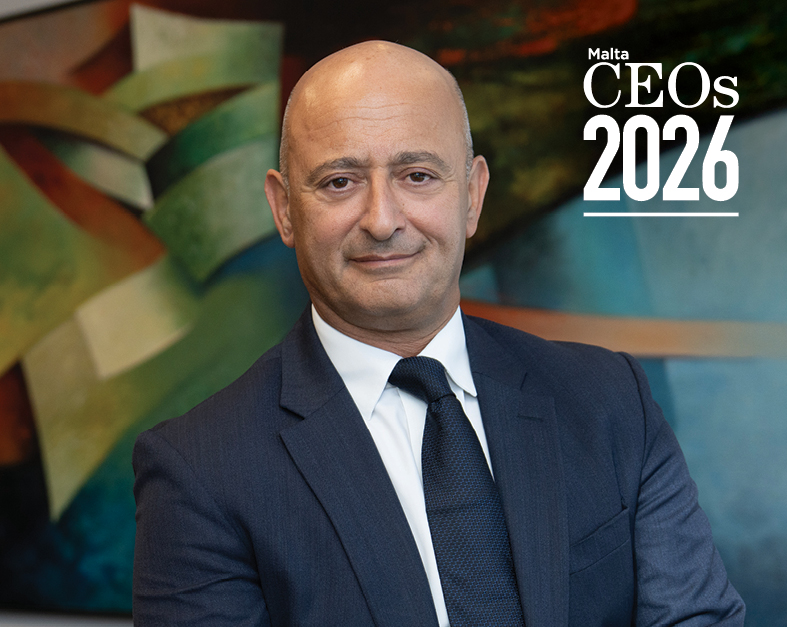
‘If you take care of your people, they will take care of your business’ – BOV CEO Kenneth Farrugia
'I feel that leaders should be proud of what they have achieved but grateful to those who made it happen.'
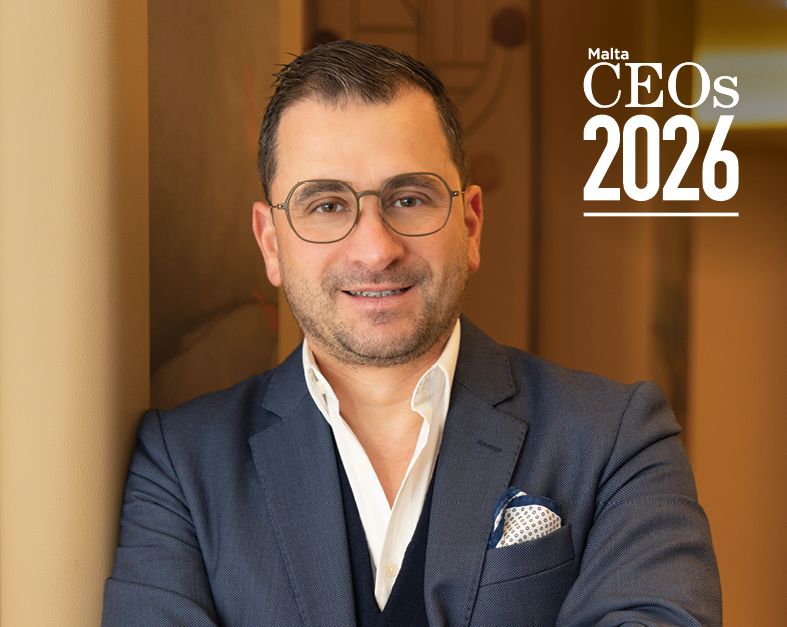
‘We aim to remain human-led, but AI-fed’ – Concept Stadium Founder Jonathan Dalli
People should come to creative agencies for a ‘blue-sky, no-limits’ approach without letting size determine what can be achieved, says ...
