


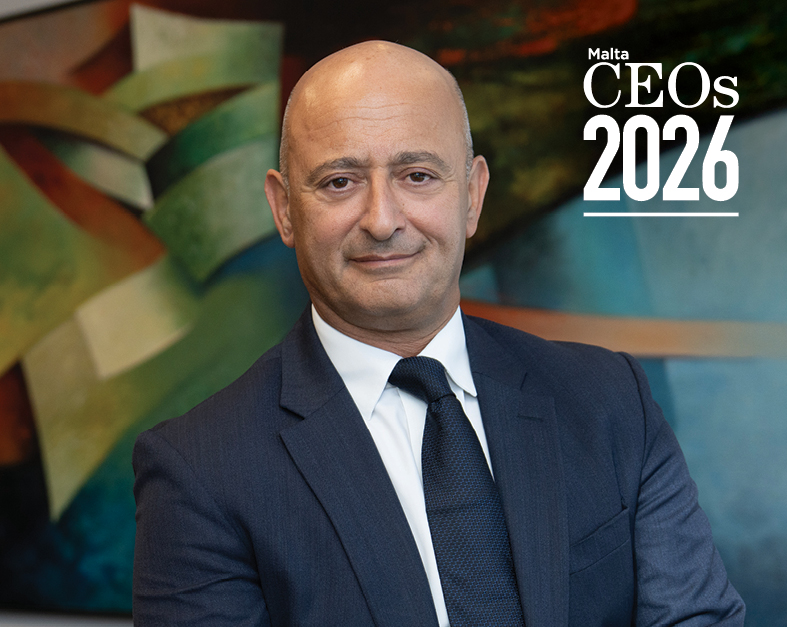
As CEO of Bank of Valletta – a systemic pillar of Malta’s economy – Kenneth Farrugia is steering the institution through a pivotal digital transformation. For 2026, his focus remains on harmonising technological innovation with a deep-seated commitment to sustainability and community engagement – a balancing act that defines his strategy for ensuring the bank’s relevance and resilience in an ever-evolving financial landscape.
Through his 40-year career at Bank of Valletta, CEO Kenneth Farrugia has witnessed the industry’s tectonic shift from traditional, in-person services to today’s highly regulated, digital-first environment.
Kenneth’s leadership style has adapted in parallel with the industry’s constant evolution. “There’s no playbook,” he muses. “New challenges emerge every day.” His approach is built on a foundation of trust and empowerment. “I’m a people-first person,” he states. “I always feel that, if you take care of your people, they will take care of your business and your clients.”
The CEO’s people-centric philosophy is crucial when navigating the frustrations of external roadblocks or implementation delays. For Kenneth, the key is fostering a collaborative, learning-focused environment. “As a leader, you must drive that sense of collaboration between employees and encourage a learning mindset. It’s about working together to improve – I’m not after witch-hunts – I just expect constant, continuous improvement,” he asserts. “I think that setting that tone from the top goes a long way.”
This sense of collective responsibility extends beyond the bank’s walls. The CEO is keenly aware of the weight of responsibility Bank of Valletta carries as a systemic institution in Malta’s economy – a duty that has become even more pronounced amid global inflation and economic uncertainty.
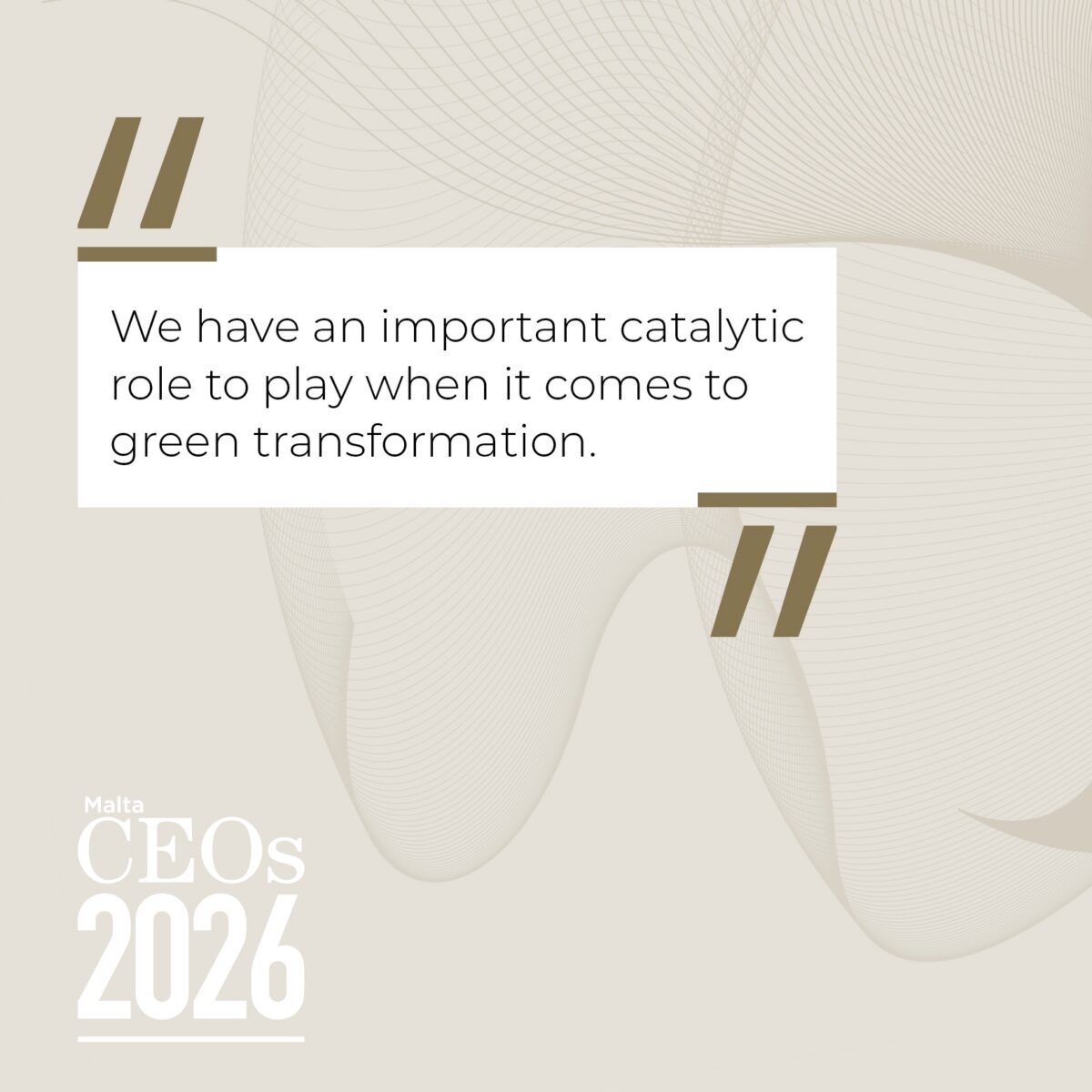
The bank translates this responsibility into tangible action, embedding sustainability into its core strategy. “We have an important catalytic role to play when it comes to green transformation,” Kenneth insists, highlighting that the bank’s pricing models have been designed to incentivise sustainable practices. “If you have green capex, you get a preferential financing rate. We have also introduced green home loans and even green investments to support the green transition.”
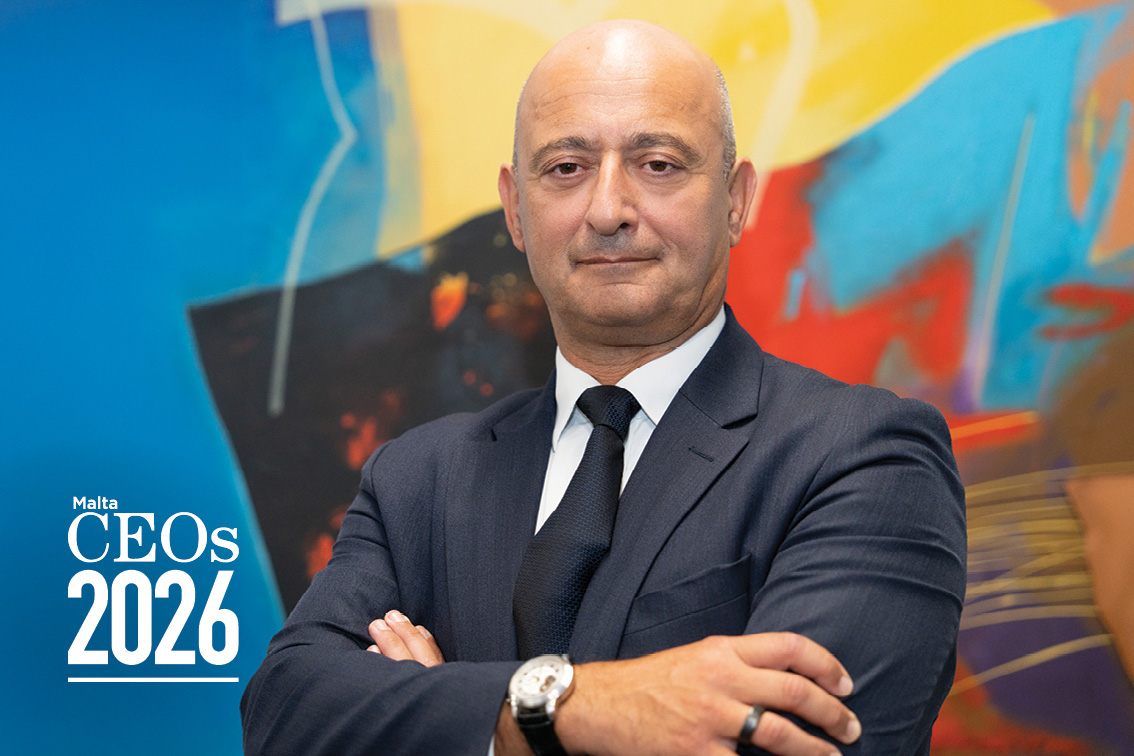
The goal, Kenneth explains, is to use the bank’s influence to foster positive change. “I believe that you can influence supply by influencing demand. If you make customers aware that they’ll benefit from a lower financing rate if they buy a green home, the supply will start skewing itself towards green buildings.”
The bank’s commitment to the community is further solidified through the Bank of Valletta Foundation and active participation in the Malta ESG Alliance. This moves beyond boardroom strategy to prioritise hands-on action, from supporting cultural initiatives and vulnerable members of society to encouraging employees to use a dedicated day of leave for charitable work. “I recently joined my executive team in a soup kitchen to help serve the people there,” Kenneth shares. “We want to make sure that this is part and parcel of who we are as a bank.”
Reflecting on Bank of Valletta’s performance over the last year, Kenneth is equally positive. “It has been a good year, exceeding our expectations,” he begins, noting strong results in the first half of 2025. While the bank anticipated a reduction in interest income due to lower rates, its core business lines have proved their strength. “We’ve seen these becoming stronger across the board,” he states, “even when it comes to commercial lending, personal lending, home loans, cards activities, and investment products.”
This robust performance, however, has not been without its challenges, admits Kenneth. Chief among these, he shares, was the onset of significant regulatory shifts at the start of the year, namely the Digital Operational Resilience Act (DORA) and the Capital Requirements Regulations (CRR III).
While essential for stability, these regulations were primarily focused on resilience rather than serving as catalysts for innovation – another key priority for Kenneth over the past 12 months. Indeed, a conscious, strategic decision from within the bank has driven innovation and inspired what he views as his most critical recent decision as CEO: to embrace digital transformation at Bank of Valletta. “Our drive throughout 2025 was to initiate the process to embed digital in our business and operational model. We want to remain relevant to the current and future generations.”
This commitment is materialising in a new mobile and internet banking channel that will quintuple its functionalities. “We’re going from 20 to 100 functionalities, giving more empowerment to our clients to self-service their banking,” Kenneth reveals. “My ambition is that by the end of 2026, we will enable our customers to self-service most of their core banking requirements.”
However, Kenneth balances this digital-first approach with recognition of the bank’s diverse client base. “We are careful to also give important consideration to the older generation, many of whom have been loyal Bank of Valletta customers for decades. For their sake, we’ve taken bold decisions to maintain a robust branch footprint in Malta and Gozo – the opposite approach of some other banks,” Kenneth affirms.
While catering for the needs of the bank’s various demographics, he maintains his long-term vision for Bank of Valletta’s future: “To enable customers to completely self-service their requirements, so that every product and service we currently offer over the counter can also be provided digitally.”
Kenneth shares that he and his team are eager to explore the wide potential of technology to help them realise this vision. “Digital really excites me,” he smiles. “We are constantly inspired by what technology can do for us and our customers.” Conversely, what keeps him up at night is the other side of that same coin: cybersecurity. “As much as technology solves problems, it can also be misused,” he warns, expressing concern over the onset of sophisticated scams targeting customers as well as ransomware attacks on institutions. “It pains me to experience customers being scammed.”
As for his own legacy, Kenneth is reflective. “I don’t think of it as my legacy; I think it’s all about my contribution to the legacy that we are leaving behind. I feel that leaders should be proud of what they have achieved but grateful to those who made it happen.”
He poses a question every leader should ask: “How would you like to be remembered? What will you leave behind?” For Kenneth, the answer lies in building a bank that is not just digitally adept and profitable, but also deeply anchored in the wellbeing of the community it serves.
The CEO echoes his call to introspection and long-term thinking in his message to Malta’s business community for the chapter ahead: “Look in the mirror and ask yourself: ‘What can I do to ensure that the coming generations have a better living and working environment?’ Let’s think sustainably.”
This article is part of the serialisation of 50 interviews featured in MaltaCEOs 2026 – the sister brand to MaltaCEOs.mt and an annual high-end publication bringing together some of the country’s most influential business leaders.


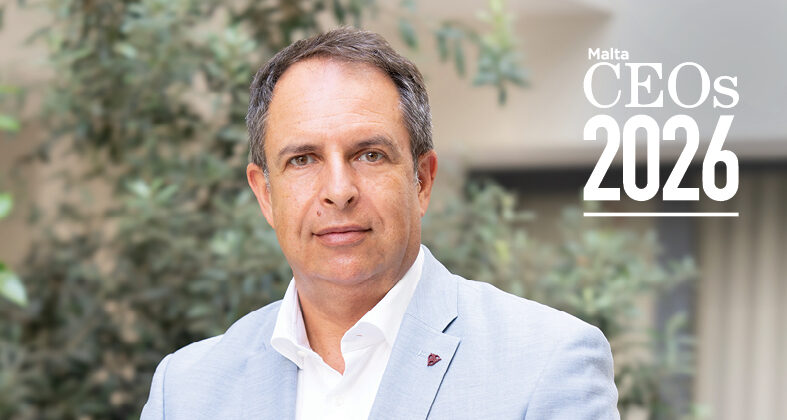
‘Greed harms businesses more than anything else’ – Wolfgang Tweraser
The TW Consulting & Trade Ltd CEO believes Malta has much more to offer: ‘It could be like a little ...
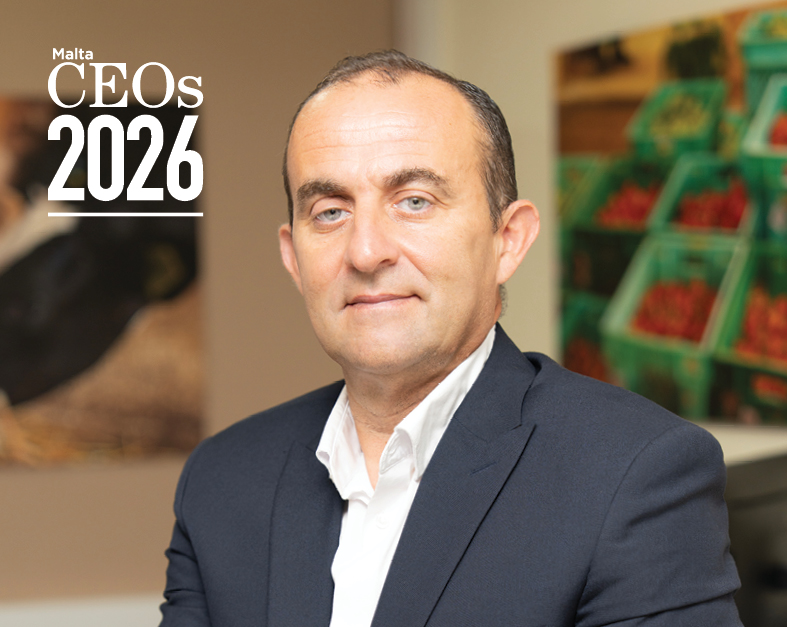
‘We can’t promote tourism without agriculture’ – Malta Food Agency CEO Brian Vella
‘I envision having fewer farmers, but more productive ones.’
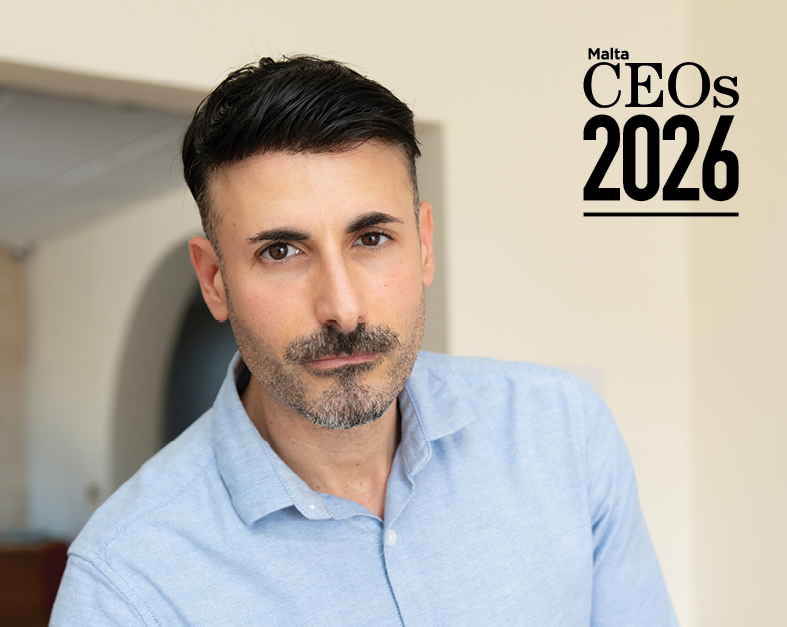
‘Not everything can be taught through textbooks’ – MUHC CEO Chris Schinas
‘I see my role as using the university’s name, its facilities and its resources to build a successful commercial arm.’
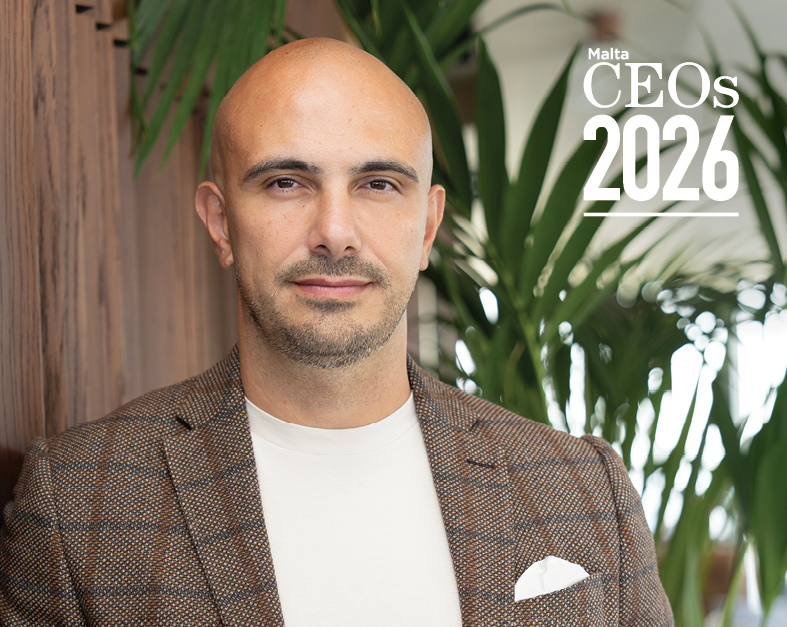
‘Retention is the new recruitment’ – HR Plus Managing Director Adrian Buttigieg
‘Starting from the ground up teaches you to value every team player.’
