


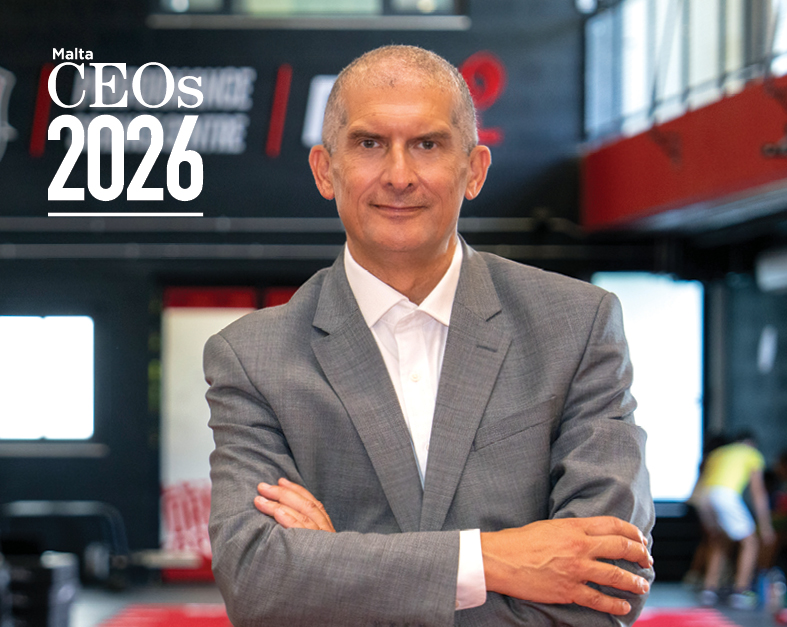
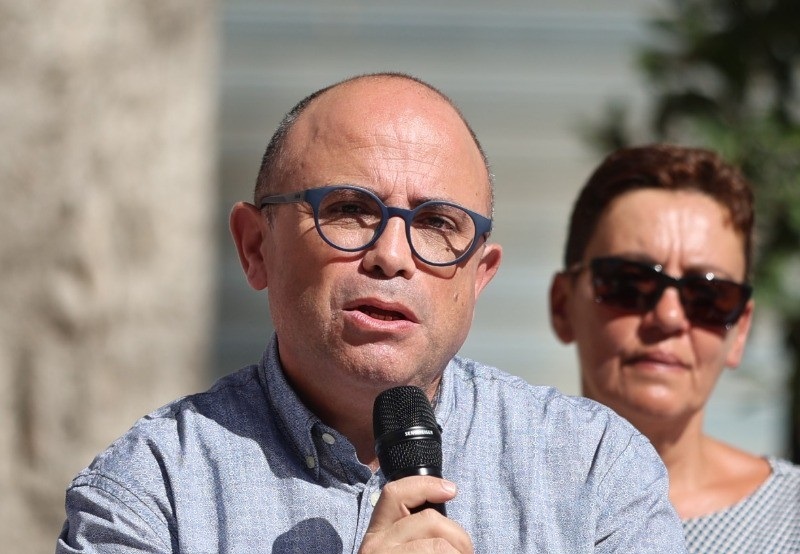
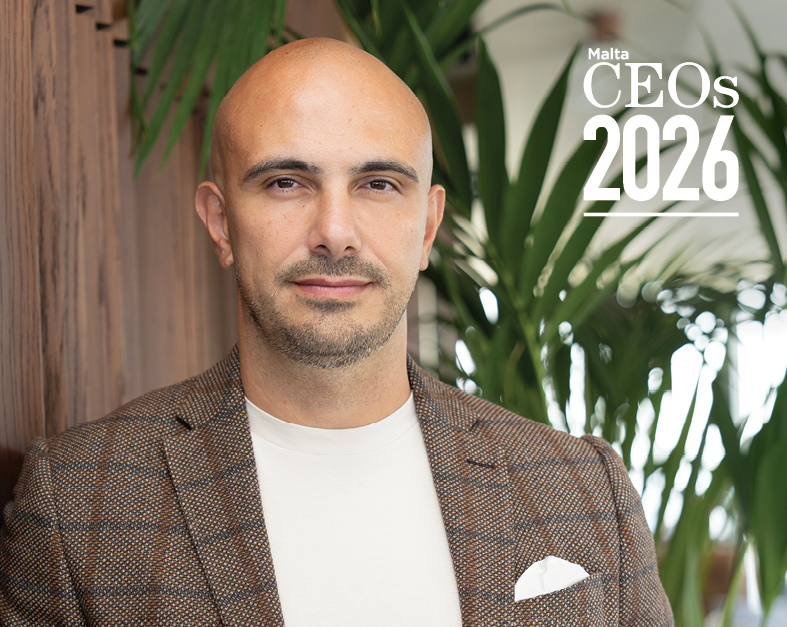
Charlo Bonnici, CEO of the Mediterranean College of Sport (MCS), is at the helm of Malta’s biggest private sports investment to date. Through innovation and strategic collaboration, MCS combines traditional education with AI-powered performance analysis across facilities that operate from 5am to 11pm daily – offering both a pathway to athletic excellence and a private-sector template for tackling societal health challenges.
Charlo Bonnici believes the solution to Malta’s growing inactivity crisis starts with fostering a love of sport from an early age and removing barriers to participation. With adult physical inactivity projected to reach 35 per cent by 2030 – a trend that threatens to strain Malta’s healthcare system through increased rates of obesity, diabetes, cardiovascular disease, and mental health issues – his approach at the Mediterranean College of Sport (MCS) is comprehensive, spanning both education and community access.
Since opening in 2024, MCS has run for 18 hours a day – with school programmes during daylight hours and external operators managing the pool, padel courts, fitness centre, and performance science centre in the evenings. “Our shareholders invested millions in setting up MCS,” Charlo explains. “Now we’re constantly thinking about how to maximise utilisation and create opportunities for the wider community.”
Charlo speaks to the operators daily about usage numbers, and the proof of his conviction is visible. “At any time of the day and up to late at night, you’ll see hundreds of children and athletes using the facilities,” he says. “I think we’ve created something that will outlast all of us.”
That sense of legacy resonates personally with Charlo. At 59, the former politician and HR director has found renewed energy in building something from scratch. “When we opened our doors to the first students in September 2024, their energy and enthusiasm gave me a completely new lease on life,” he says. The experience has also evolved his leadership approach. “Everyone wants to leave a mark, and obviously I want to leave mine, but I’ve learnt to be present rather than omnipresent – you need to trust your team, especially when you have capable managers in place.”
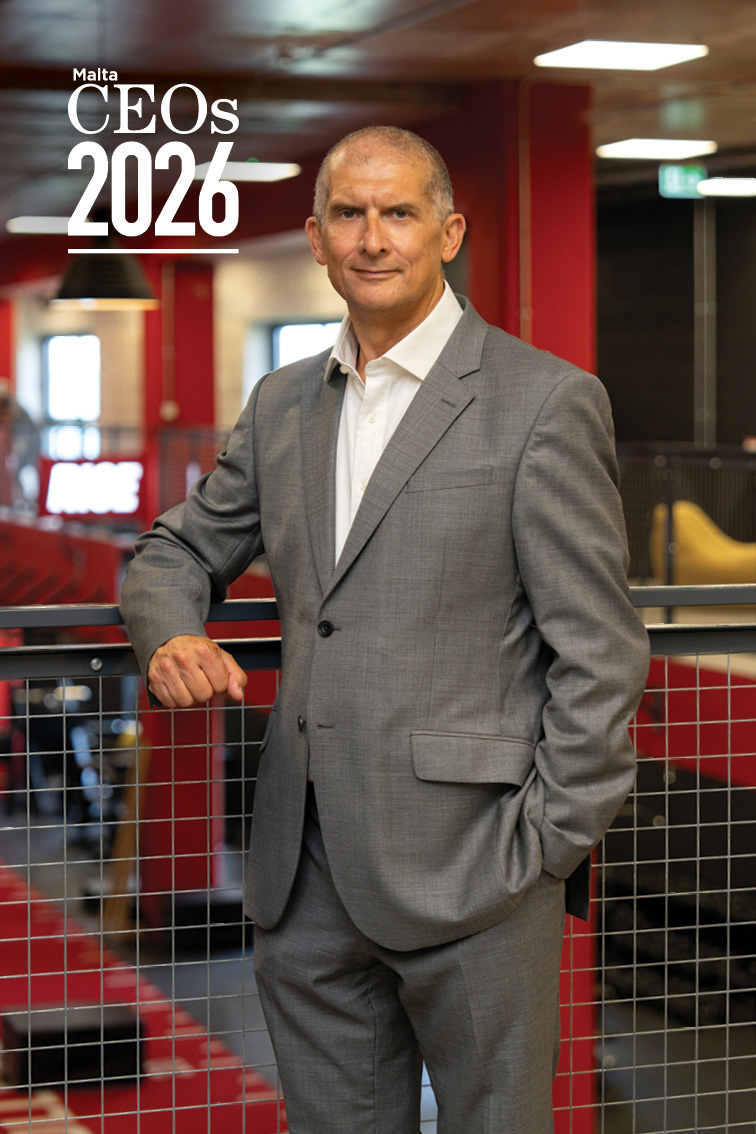
Charlo’s political and corporate background continues to shape his leadership style. Years spent in politics taught him how to balance competing priorities and navigate national policy – skills he now applies in steering projects in Malta’s education, health and sports sectors. “In both politics and business, you realise quickly that success depends on people. At MCS, we’ve created an environment where staff, coaches and students can all thrive,” he reflects.
This was not his first time building an educational institution. Charlo honed these leadership principles through his other venture, Learning Works, which he created in 2009 and has since grown to serve hundreds of international students in healthcare, management and hospitality programmes. That foundational experience provided the blueprint for tackling the more ambitious MCS project.
Charlo has also undergone a physical transformation that mirrors his professional mission. His journey from someone who “never took physical activity too seriously” to becoming a daily runner has reinforced his conviction about addressing Malta’s declining fitness levels – and shown him how exercise creates positive ripple effects. “What happens is you start paying attention to your diet, adopting better eating habits and controlling alcohol consumption,” he explains. “You get all these benefits – each step leads to something new and better.”
Yet despite the advantages of exercise being well documented, Charlo sees Malta making decisions that run contrary to promoting sport. He believes Government-level policies that encourage sport, such as expanding the scheme to provide free gym access for young people, could make all the difference. “When you’re involved in sport, there are unavoidable costs – if you run, for example, you need to replace expensive shoes regularly. If you’re new to weightlifting, you need a trainer. Tax incentives would encourage more people to participate,” Charlo insists.
His focus on systemic change is not limited to sports policy. He also sees untapped potential in attracting foreign students to the island’s educational programmes. “The sector has great potential, but it’s hampered by bureaucratic red tape,” he says. It is a frustration for someone who recognises Malta’s broader appeal. MCS already has accommodation for 100 students and the college’s Performance Science Centre is one of the largest in Southern Europe. Building on this infrastructure, Charlo has forged strategic partnerships to enhance the college’s offerings.
“We’ve signed an agreement with SL Benfica, one of Portugal’s leading football clubs, renowned for its youth development programme,” he notes. The alliance extends beyond MCS to after-school programmes reaching children from age three onwards. “Hundreds of students joined the Benfica Football School in the first year, and some of them are prospective MCS students as well,” he enthuses.
These partnerships also pave the way for innovation – most notably the use of artificial intelligence (AI) to measure and predict student-athlete performance. The Performance Science Centre at MCS generates vast amounts of data. “We assess every student who joins us at the beginning of the year, then monitor their progress throughout,” he shares. The data encompasses everything from nutrition and training to strength and conditioning sessions and sporting performance. “By integrating AI, we can predict a student athlete’s potential using the data we collect daily,” he adds. “We are ready to work with other entities such as the University of Malta Artificial Intelligence department to explore these possibilities further.”
The implications are not confined to sport. Charlo believes similar predictive models could one day be used to inform wider national health strategies, helping policy-makers understand how lifestyle changes influence outcomes such as obesity rates or cardiovascular health. “If we can show how investment in youth sport reduces long-term healthcare costs, it becomes a compelling argument for reform,” he says.
That belief in long-term impact is already reflected in the results. Demand has exceeded even Charlo’s expectations, prompting MCS to introduce its primary school initiative three years ahead of schedule in 2025. The primary programme focuses on fundamental movement skills rather than sport specialisation. “Participants gain basic skills, and after a few years they’ll start showing their preference for a particular sport,” he explains. Even if students choose not to pursue competitive sport, the approach ensures physical activity becomes an ingrained part of their daily lives.
MCS emphasises dual career pathways, combining academic excellence with sporting achievement. “We focus on these two aspects even when recruiting students. They need to have succeeded or shown potential in both academic subjects and their sport,” Charlo continues. Supporting that dual focus requires specific skills training. The college’s Performance Lifestyle course addresses skills like time management, pressure handling and public speaking. “This year, we’re emphasising public speaking because if these students succeed in their sports, they’ll likely be interviewed in the media, so they need to have solid communication skills too.”
With this foundation in place, Charlo has clear targets for the near future. “Within three years, we’ll have a complete primary school, with one class per year level, totalling six classes,” he says. “Ultimately, there won’t be more than 500 students on campus when we reach maximum capacity – that was part of our plan from the beginning.” The controlled growth reflects his conviction that each student requires individual attention.
Charlo’s longer-term vision stretches beyond the walls of MCS. He hopes Malta will have shifted from being one of the EU’s less active populations to one where sport is embedded in daily life. “It’s ambitious, but I believe MCS can be a catalyst. If we get more children moving and convince more people to pursue healthier lifestyles, the whole country benefits,” he says.
That vision for Malta’s future frames his closing thought: “If we speak again in a year, I hope we’ll have fulfilled our targets, especially in student recruitment. And if we speak again in five years, I hope Malta will be healthier, fitter and prouder of its young athletes.”
This article is part of the serialisation of 50 interviews featured in MaltaCEOs 2026 – the sister brand to MaltaCEOs.mt and an annual high-end publication bringing together some of the country’s most influential business leaders.

‘Greed harms businesses more than anything else’ – Wolfgang Tweraser
The TW Consulting & Trade Ltd CEO believes Malta has much more to offer: ‘It could be like a little ...
‘We can’t promote tourism without agriculture’ – Malta Food Agency CEO Brian Vella
‘I envision having fewer farmers, but more productive ones.’
‘Not everything can be taught through textbooks’ – MUHC CEO Chris Schinas
‘I see my role as using the university’s name, its facilities and its resources to build a successful commercial arm.’
‘Retention is the new recruitment’ – HR Plus Managing Director Adrian Buttigieg
‘Starting from the ground up teaches you to value every team player.’
