

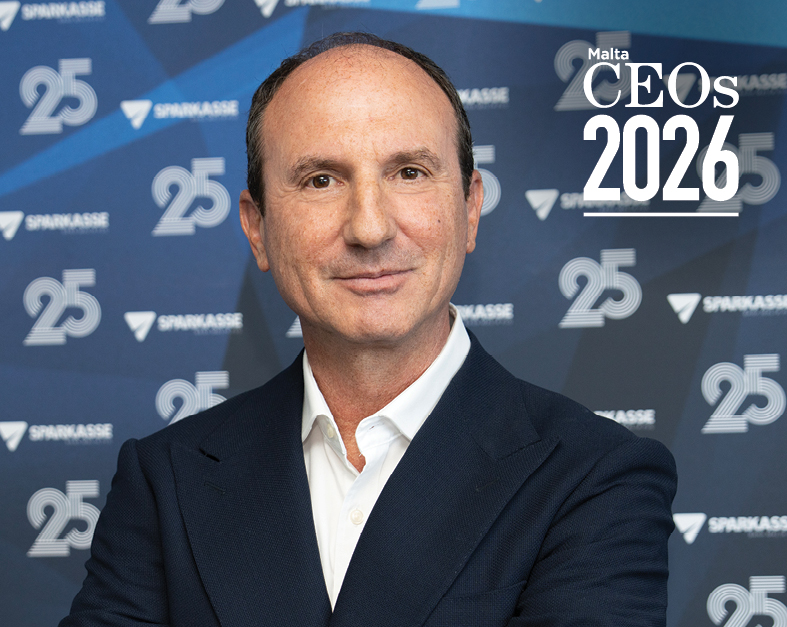
Sparkasse Bank Malta is celebrating its 25th anniversary of doing business on the Maltese Islands. Since its first day, the organisation has achieved steady growth, and what began as a team of six now numbers well over 100. At the helm is Managing Director Paul Mifsud, who shares his journey, his leadership philosophy and his strategy for increasing the bank’s assets and expanding its client base.
Sparkasse Bank is celebrating 25 years in Malta this year, and Managing Director Paul Mifsud is clear: the past few years have been highly rewarding, and the future looks equally promising.
“It has certainly been a period of growth for us,” he says. “We have continued to perform strongly with the onboarding of new customers, while our cross-border activity has also increased.”
As a custody bank, Sparkasse’s business model differs markedly from that of a traditional bank. Its clients are typically large, regulated entities that require access to funds at short notice. “We maintain high levels of liquidity, and our investments are focused on High-Quality Liquid Assets,” Paul explains.
The bank’s consistently positive performance is also supported by its five operating licences, generating revenues across multiple streams, including foreign exchange, buy and sell transactions, and forward contracts. Sparkasse is also recognised as Malta’s leading custodian bank for clients wishing to hold securities.
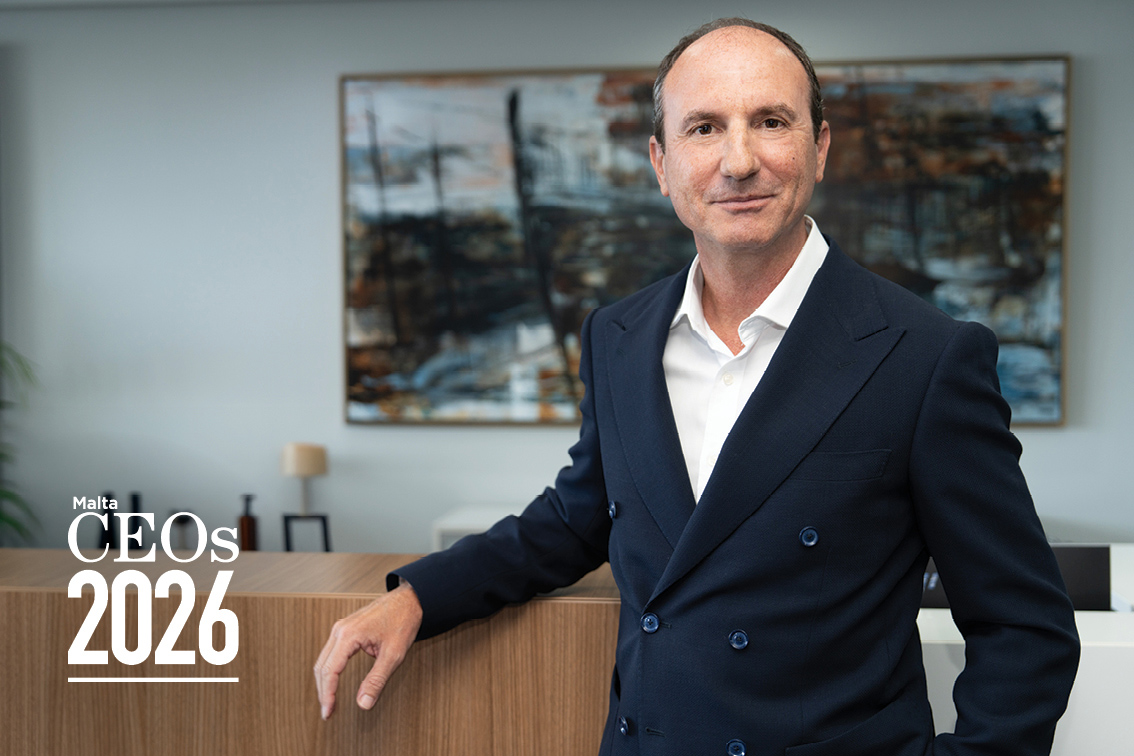
“I’ve been with Sparkasse for 20 years, and have witnessed significant progress during that time,” Paul reflects. “This success is due both to our team’s competence and to the strength of the local economy. While the economy has faced plateaux and crises, its activity has never come to a halt.”
The growth of the Maltese team is testament to this evolution: from just six employees at the start to 135 today. Paul attributes this expansion to the bank’s agility. “We are fortunate to be nimble. Our approach is to focus on a select number of risks that we are willing to take, rather than spreading ourselves too thin. We have a strong, capable team, and when we identify an opportunity, we discuss it openly. If the feedback is positive, we act immediately,” he elaborates.
Banks are often viewed as cautious rather than agile. How does Sparkasse balance governance with agility? “We have a clear internal governance policy to avoid excessive bureaucracy. Ideas are discussed in a dedicated forum, and decisions are made quickly: it’s either yes or no. That discipline allows us to implement effectively, but only when there is alignment across the team,” Paul explains.
He emphasises the importance of unity: “If the team isn’t on board, progress stalls. It would be like going into battle without an army behind you. That’s why it’s important to communicate clearly, build support and move forward only when risks are manageable and the rationale is sound.”
The introduction of ‘project owners’ has further reinforced accountability. “If there is no owner, no accountability and no leader, there’s no project. That principle has become embedded in the culture of the bank. Each initiative always circles back to its designated owner, who is responsible for driving it forward,” he explains.
Equally important is maintaining focus: “When opportunities arise, it is important to act decisively – but always in line with who you are as an organisation. Chasing too many directions only leads to distraction. Success comes from concentrating on what you do best, and ensuring the market recognises that strength.”
This philosophy guided the decision to establish a fully-fledged, in-house IT team. “IT is our expertise, and is now inseparable from banking. We recognised the need to invest heavily in our specialists, and today the team plays a central role in supporting growth,” he notes.
A similarly strategic move was the opening of a branch in Dublin, considered bold at the time. “It extended our footprint into a country where we previously had no presence. It can also be viewed as a natural progression, but it required a full process and significant coordination.”
What lessons did he draw from such undertakings? “The support and cohesion of the team are critical. Without people working well together, you cannot succeed. It goes back to building alignment and reinforcing a culture of trust and collaboration.”
Looking ahead, the bank continues to review its licences, exploring opportunities to expand its suite of services and introduce new business lines. “We are in the process of obtaining and developing additional licences, which will form important milestones in our future growth,” he adds.
He returns to the role of technology, highlighting it as a central challenge for the global financial sector. “The biggest transformation over the next five years will be the growth of digital funds, faster payments, new asset classes, and greater reliance on IT. But this also introduces vulnerabilities. The pace of change is rapid, and banks must keep up,” the Managing Director asserts.
Paul is confident that the in-house team positions the bank to meet these challenges. “Banks will continue to serve their essential function – holding cash, transferring funds and providing stability. But the interface between the customer and the bank is changing, as is the interface with the regulator. The regulator is a key stakeholder, constantly requiring new information. Unless banks can meet evolving demands, they risk their licences being compromised,” he elaborates.
Talent acquisition and retention represent another major challenge. “The labour force in Malta has changed dramatically in its demographics. If I compare the bank’s workforce today with that of 10 years ago, the difference is striking. Expectations around employment have also shifted. Reversing the hybrid/remote working model is simply impossible, and the ‘work away’ model is gaining traction. Employers need to adapt if they want to retain valued staff.”
He acknowledges this has added complexity for employers. “If an employee is valuable, you have to find ways to accommodate them while maintaining fairness across the company,” he says.
For the year ahead, Paul’s focus is clear: growing the balance sheet and introducing additional services. “I want to see at least two additional licences secured, further growth in assets and continued commitment from my leadership team – matched by the same positivity and energy that drives me.”
This article is part of the serialisation of 50 interviews featured in MaltaCEOs 2026 – the sister brand to MaltaCEOs.mt and an annual high-end publication bringing together some of the country’s most influential business leaders.
‘Greed harms businesses more than anything else’ – Wolfgang Tweraser
The TW Consulting & Trade Ltd CEO believes Malta has much more to offer: ‘It could be like a little ...
‘We can’t promote tourism without agriculture’ – Malta Food Agency CEO Brian Vella
‘I envision having fewer farmers, but more productive ones.’
‘Not everything can be taught through textbooks’ – MUHC CEO Chris Schinas
‘I see my role as using the university’s name, its facilities and its resources to build a successful commercial arm.’
‘Retention is the new recruitment’ – HR Plus Managing Director Adrian Buttigieg
‘Starting from the ground up teaches you to value every team player.’
