

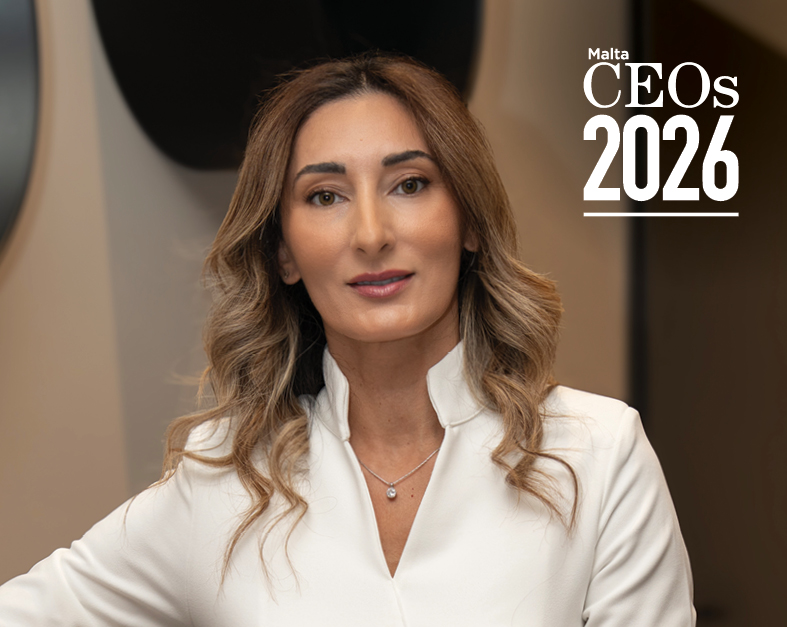
Angelle Falzon’s career has been shaped by a family legacy of patient care, which she built on to establish one of Malta’s leading private healthcare institutions. As CEO of St Thomas Hospital, she leads a facility that combines clinical excellence with personalised, transparent care. Looking to 2026 and beyond, Angelle is steering the organisation through immense change, from digital health evolution to a more proactive model of patient care.
For Angelle Falzon, a career in healthcare was never a matter of chance but a calling inspired by her father,
Dr Louis Buhagiar, who served Malta’s healthcare system for more than 45 years. “He showed me the profound difference that dedication and compassion can make in people’s lives,” she recalls. “His example set me on my own path.”
That journey began in 2001 when she was part of the team who helped open Malta’s first family-owned nursing home, followed by a second in 2014, with an even stronger focus on dignity and quality. These experiences laid the foundation for the defining chapter in her career so far: establishing St Thomas Hospital.
“The project was never about opening just another facility. It was about creating a place Malta genuinely needed – a hospital founded on trust, warmth and care,” she reflects. Those values have remained Angelle’s north star as her role evolved. “Early in my career, I was very hands-on, but over time, I learnt that effective leadership is empowering my team, focusing on trust, clarity and removing obstacles, creating the conditions for others to thrive.”
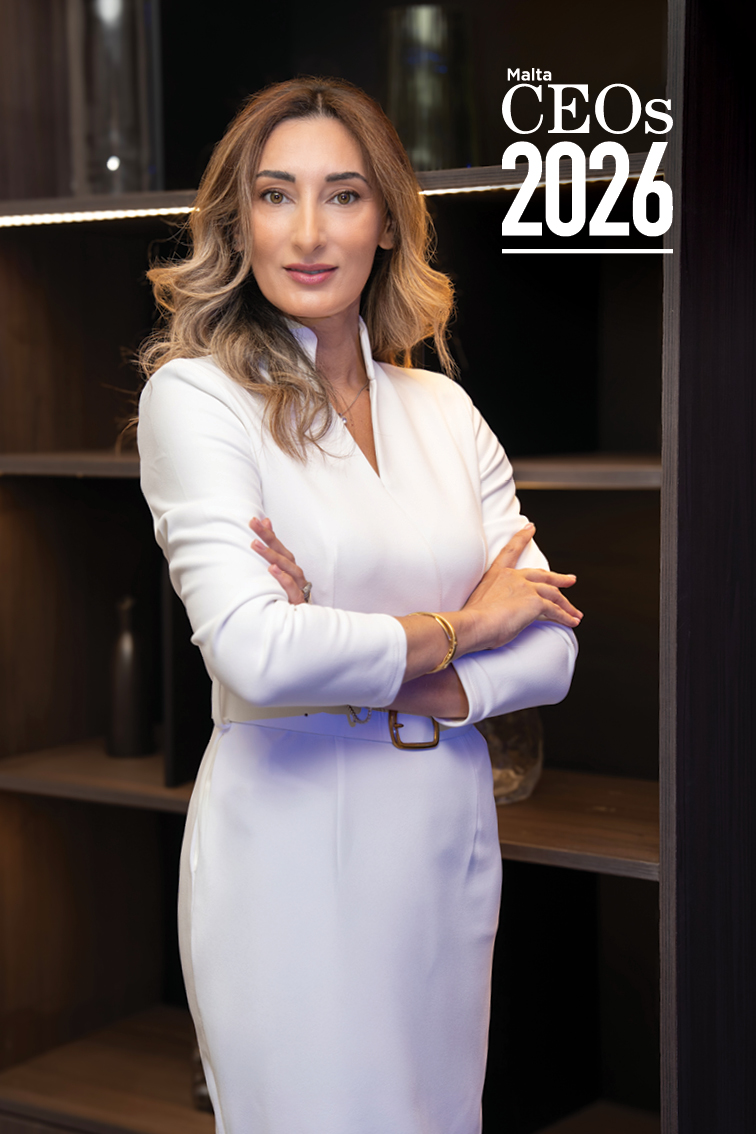
The ethos of St Thomas Hospital is rooted in precision and depth. Angelle’s father, a nephrologist, established Malta’s first kidney transplant unit – a pioneering spirit that still guides the hospital. “It set a benchmark for excellence in highly specialised medicine that continues to shape us today,” she shares. “Even as we have expanded into broader fields, that legacy remains a constant reminder that St Thomas must stand for more than general care – it must stand for leadership in specialised services, the courage to push boundaries, and a relentless commitment to advancing medical knowledge for the benefit and comfort of our patients.”
This philosophy comes to life in the hospital’s approach to personalised care, which Angelle describes as a mindset woven into every patient encounter. “We see each individual as more than a diagnosis, and we measure success by the quality of their experience as much as their outcome,” she states. Training, mentorship and a culture that prizes empathy as highly as technical skill embed this philosophy throughout the organisation.
Financial transparency is another key feature for St Thomas. “Transparency is one of the greatest enablers of trust in healthcare,” Angelle asserts. “Strategically, it positions St Thomas as a hospital where clarity and integrity are just as important as medical results.”
In such a fast-evolving sector, Angelle stresses that progress means leading the pace of change and not merely keeping up. For this reason, St Thomas has expanded into new areas of care while strengthening its existing core services. “Part of this strategy has involved developing more outpatient models, where patients can receive treatment or procedures and return home the same day. It makes care more accessible and reduces the burden of long hospital stays,” she says.
One of the most testing periods of Angelle’s tenure so far was the COVID-19 pandemic. “It was a period that demanded rapid decisions and constant adaptation, but it also proved that healthcare is strongest when it functions as an integrated system. Despite the challenge, the pandemic showed that the future of healthcare depends on integration, agility and innovation – qualities that turn crises into opportunities.”
For St Thomas, the past year continued to bring both progress and pressure. “In such a challenging environment, maintaining stability was an achievement in itself,” Angelle reflects. At the same time, rising patient demand and transparent pricing fuelled growth, but workforce shortages and increasing costs created headwinds.
“We navigated these obstacles by keeping decision-making disciplined and quality non-negotiable. Even under strain, standards must never be compromised,” Angelle emphasises. “Malta’s health system is on the cusp of transformation,” she continues. “An ageing population, rising demand for specialist care and persistent workforce shortages require new thinking.” Angelle’s team is responding with forward-looking agility, expanding specialised pathways, strengthening outpatient services, and embracing digital health to enhance efficiency. The real shift ahead will be moving beyond treating illness to proactively managing health, prevention and patient experience.
St Thomas Hospital has been one of the private hospitals participating in the Government’s emergency healthcare services initiative – a programme that has already demonstrated how the private sector can play a vital complementary role in supporting Malta’s public system.
“We view collaboration not as competition, but as a public–private partnership that helps alleviate bottlenecks in acute services, reduce waiting times and improve patient flow across the system,” Angelle explains. “By diverting lower-acuity cases to private facilities, the initiative has freed up bed capacity at Mater Dei, enabling clinicians there to focus on the most complex and urgent cases.”
Collaboration also underpins one of Angelle’s most critical recent decisions: to launch a partnership with a leading European tissue bank to address Malta’s shortage of corneal donations. “This has given patients access to treatment that previously often required long waiting periods or travelling abroad,” she explains. St Thomas now offers the full spectrum of corneal transplantation, from advanced keyhole procedures to complete transplants. For Angelle, it exemplifies healthcare’s true purpose: “To step in where needs are greatest, bridging gaps in the system and ensuring that patients receive timely and life-changing care.”
This perspective continues to inform the hospital’s strategy. Angelle views preventive care as Malta’s greatest untapped opportunity – and a core part of the environmental, social and governance (ESG) agenda. She explains that prevention not only keeps people healthier but also makes healthcare more sustainable by reducing waste and resource use. “By promoting active lifestyles, greener spaces and early detection, we can ease the system’s burden while improving wellbeing,” she says. “Our health is shaped as much by our environment and daily choices as by medicine itself.”
Technology is a vital enabler of this shift. Angelle sees it not as a replacement for human expertise but as a tool that allows clinicians to focus on patients. “Artificial intelligence (AI) can enhance diagnostics, accelerate decision-making and streamline logistics,” she maintains. “Given its size and strong network, Malta could become a leader in digital health, delivering care that is not only faster and more precise, but also more equitable.” The key, she adds, is to ensure digital innovation remains responsible and truly patient-centred.
By the end of 2026, Angelle hopes to see expanded specialist services, measurable improvements in patient experience and significant strides in digital health at St Thomas – with financial sustainability remaining a core priority. “Growth is not measured by numbers alone, but by the ability to expand while safeguarding the highest quality of care,” she affirms.
This steady approach, coupled with a constant commitment to collaboration, is the cornerstone of Angelle’s outlook. Her closing message to Malta’s business community captures that conviction: “As a small country, our strength lies not in scale, but in the ability to act quickly, work together and drive innovation – collectively and sustainably.”
This article is part of the serialisation of 50 interviews featured in MaltaCEOs 2026 – the sister brand to MaltaCEOs.mt and an annual high-end publication bringing together some of the country’s most influential business leaders.
‘Greed harms businesses more than anything else’ – Wolfgang Tweraser
The TW Consulting & Trade Ltd CEO believes Malta has much more to offer: ‘It could be like a little ...
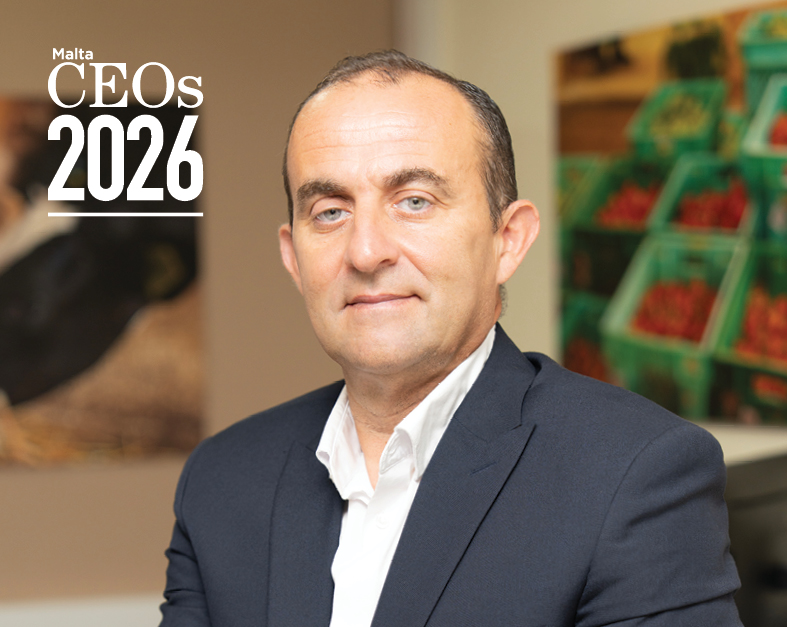
‘We can’t promote tourism without agriculture’ – Malta Food Agency CEO Brian Vella
‘I envision having fewer farmers, but more productive ones.’
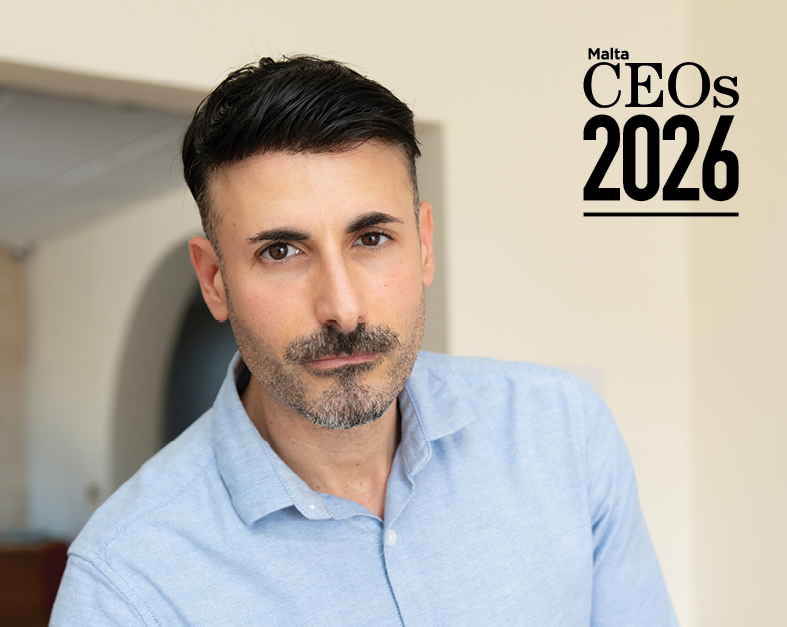
‘Not everything can be taught through textbooks’ – MUHC CEO Chris Schinas
‘I see my role as using the university’s name, its facilities and its resources to build a successful commercial arm.’
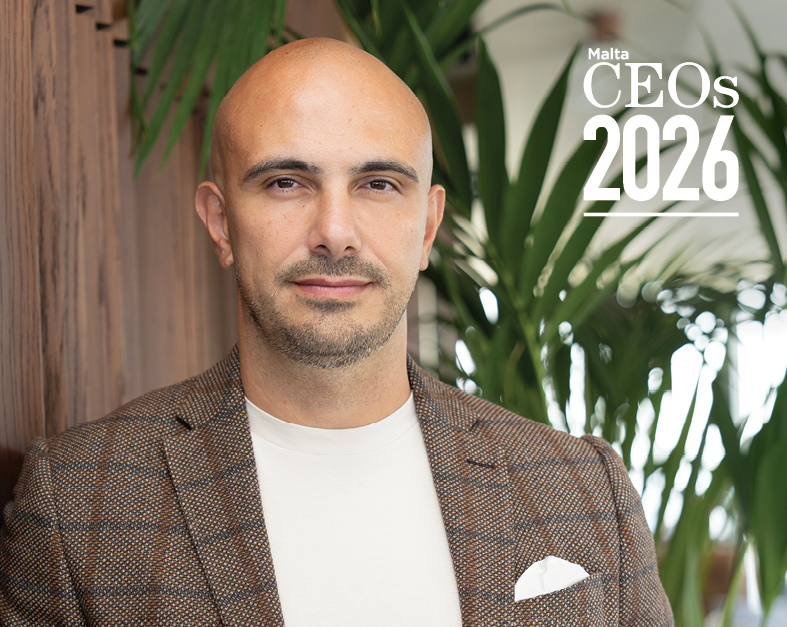
‘Retention is the new recruitment’ – HR Plus Managing Director Adrian Buttigieg
‘Starting from the ground up teaches you to value every team player.’
