


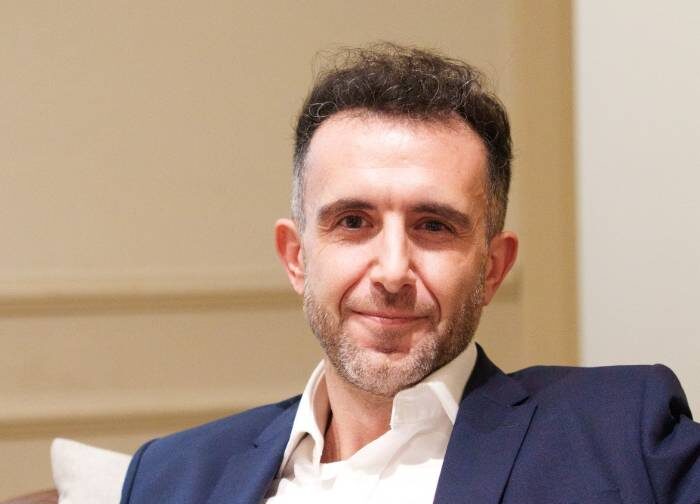
Casa Rooms Director Cecil McCarthy has warned that measures introduced in Malta’s 2027 Budget risk increasing costs for businesses and tourists alike, potentially undermining the country’s competitiveness unless accompanied by a clear long-term strategy.
Mr McCarthy expressed concern over the increased fees imposed on third-country nationals and the rise in the eco-contribution for tourists, arguing that both measures could have consequences extending well beyond the hospitality industry.
“Malta cannot solve its labour shortages by making employment more expensive, or improve tourism by simply making holidays more expensive,” he said.
“We need a clear strategy that strengthens our workforce, raises the quality of our tourism offering and protects the competitiveness of the entire destination.”
Mr McCarthy, who acquired Casa Rooms alongside other investors in late 2021, has more than 15 years of experience in property management.
During the Budget presented on Monday (26th October), it was announced that the eco-contribution on tourist accommodation will increase to €10 per night for short-let properties from 2027.
Higher employment costs could affect the wider economy
Addressing the increased fees for third-country nationals, Mr McCarthy cautioned against viewing the measure solely through the lens of tourism and hospitality.
“The increased fees imposed on third-country nationals will not affect hotels and short-let operators alone. The impact will be felt across the wider economy, including restaurants, care services, financial services and other businesses that rely on these workers,” he said.
He pointed out that Malta already faces difficulties filling vacancies through its domestic workforce, leaving businesses across several industries dependent on foreign workers to maintain operations.
Where employers have limited alternatives to recruiting third-country nationals, he argued, increasing the associated costs could place additional pressure on already stretched businesses.
“Ultimately, these costs risk being passed on to consumers, contributing to higher prices across multiple sectors,” Mr McCarthy warned.
‘We risk creating a downward spiral’
Turning to tourism, Mr McCarthy questioned whether increasing the eco-contribution would help Malta achieve its ambition of attracting higher-spending visitors.
“The sharp increase in the eco-contribution raises serious questions about Malta’s long-term tourism strategy,” he said.
“If our objective is to attract higher-quality tourism and encourage visitors to spend more, we need a clear plan to achieve that, rather than relying increasingly on higher charges for non-residents.”
While acknowledging the need to finance Government subsidies and support measures, he stressed that tourism remains a significant contributor to Malta's economy.
“I understand that the subsidies and support the country has benefited from must ultimately be financed, but tourism remains a major source of economic activity and revenue,” he said.
“We must be careful not to increase the cost of visiting Malta to the point where we undermine our own competitiveness.”
“If we make the destination significantly more expensive without a clear strategy to increase the value we offer, we risk creating a downward spiral that will eventually affect accommodation providers, restaurants, employees and the wider economy.”
Short-let operators voice frustration over eco-tax increase
Mr McCarthy is not alone in questioning the Budget's impact on the accommodation sector. Matthew Zammit, owner of major Maltese short-let operator 360 Group, has also strongly criticised the increase in the eco-contribution, particularly the decision to raise the charge to €10 per night for short-let accommodation.
Mr Zammit said the increase from €1.50 to €10 caught him by surprise, claiming he had previously been given indications that the rise would be considerably smaller.
“I can never agree with this measure,” he said.
He also questioned the difference in treatment between accommodation categories, noting that the eco-contribution for hotels had increased to €8 per night, compared with €10 for short-let properties.
“I’m very disappointed with what happened tonight,” he added.

APS Bank CEO Marcel Cassar calls for diversification amid rising cyber and geopolitical risks
The CEO emphasised the importance of building a more agile and resilient business model as the bank reported record profits ...
Malta ‘cannot afford to lose skilled foreign women,’ warns WiAM&T Founder Ruth Sawers
‘Not all TCN are doing the low paid manual work that some believe can be easily replaced with locals,’ she ...
Corinthia Group CEO hails Accor partnership bringing Verdi into Handwritten Collection brand
Simon Naudi says the development of the group’s second brand will now benefit from Accor’s extensive global marketing reach and ...

‘Contribution should matter more than nationality’, says NEXT.io COO Ana Maria Hitzfitz
She recognised the need to manage immigration and public finances but questioned the treatment of long-term residents.
