



Budget 2026 sent a subtle but significant signal: Malta is finally realising that the island’s future won’t be built on how much land we add, but on how intelligently we use what’s left.
The Government’s decision to limit land reclamation of the Freeport to industrial use only, marks an important shift – a move away from an economy driven by quantity toward one that must now compete on quality, innovation and productivity.
In other words, Malta is hitting the natural limits of “more”. It’s time to master “better”.
1. Land as strategy, not commodity
For years, Malta’s development narrative has been defined by expansion – more construction, more density, more short-term gain. But when every stretch of coastline is contested and every square metre carries economic, social and environmental weight, land ceases to be a commodity. It becomes a strategic asset.
The budget’s reclamation decision acknowledges this reality. It suggests a turning point where Malta may finally choose to use land as a lever for productivity – not just property.
The real question now is not whether to reclaim, but why and for what purpose. If reclamation simply feeds another speculative cycle, we’ve learned nothing. But if it anchors new clusters – green industry, maritime innovation, digital logistics – then it can redefine Malta’s competitive edge.
2. Industrial – but meaningfully so
“Industrial use only” sounds straightforward. It isn’t.
Does it mean high-value manufacturing, blue-economy technology, research facilities, clean energy production? Or does it become another flexible term that bends under pressure once land values rise?
Malta cannot afford vagueness. Industrial must mean productive, export-oriented, innovation-driven.
That’s the kind of industry that drives GDP and national resilience – not just concrete output.
This is where business leaders must engage – not react. CEOs, developers and investors should help shape the definition now, before ambiguity opens the door to yet another round of low-yield, high-impact projects.
3. Governance is the real test
This is no longer an engineering debate – it’s a governance one.
A reclaimed industrial zone can only be successful if it is accompanied by transparent planning, clear zoning laws, environmental safeguards, and a credible institutional framework.
If these are missing, the reclaimed area risks becoming another congested, disconnected patchwork. But if done right, it could become a flagship of Vision 2050 – a zone that integrates productivity, sustainability and long-term competitiveness.
Malta’s business community must demand that governance is hardwired from the start: not as an afterthought, but as a prerequisite for investment.
4. The real growth frontier
Malta’s true constraint isn’t space – it’s vision.
We can reclaim land, but if we fail to reclaim our sense of strategy, the outcome will be the same: short-term profit, long-term strain.
We need to move from construction-led GDP to knowledge-led productivity. From an economy of volume to one of value.
That means investing in skills, research, R&D incentives, and digital infrastructure that make every square metre of this island work harder and smarter.
Because the next phase of Malta’s growth won’t come from what we build – it will come from what we create.
5. The call to Malta’s leaders
Malta’s CEOs and industry leaders have a decisive role to play. If this reclaimed zone becomes reality, it must not be left to policy-makers alone.
This is the time to partner – to propose clusters, skills programmes, ESG standards and industry hubs that position Malta as a European micro-hub of innovation and blue-economy enterprise.
Waiting for Government to define it is no longer enough. Shaping it is what leadership means.

‘Growth comes from being willing to take calculated risks’
Darren Ciantar, founder and CEO of Ciantar Group, traces the ambitions, opportunities and uncertainties that have helped shape the enterprise.
The next step must be about productivity
'We cannot keep addressing every labour shortage by adding more workers.'
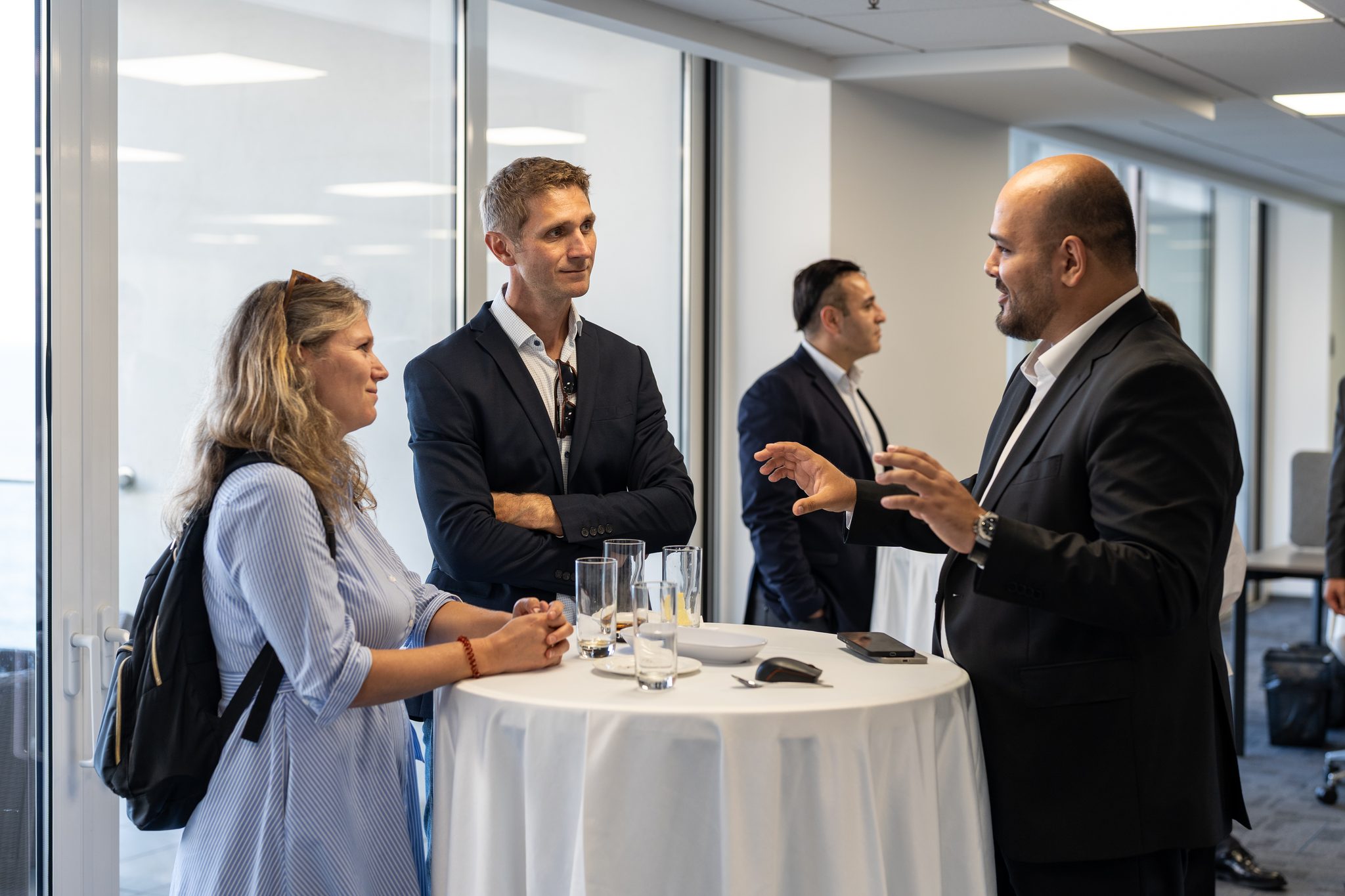
Alkagesta’s banking summit in Malta draws partners from across Europe’s financial centers
The gathering reflected the scale of the company's global ambitions and the growing confidence of the international financial community in ...

Six workforce indicators every CEO should be tracking
Workforce data can offer CEOs an early indication of emerging business challenges.
