


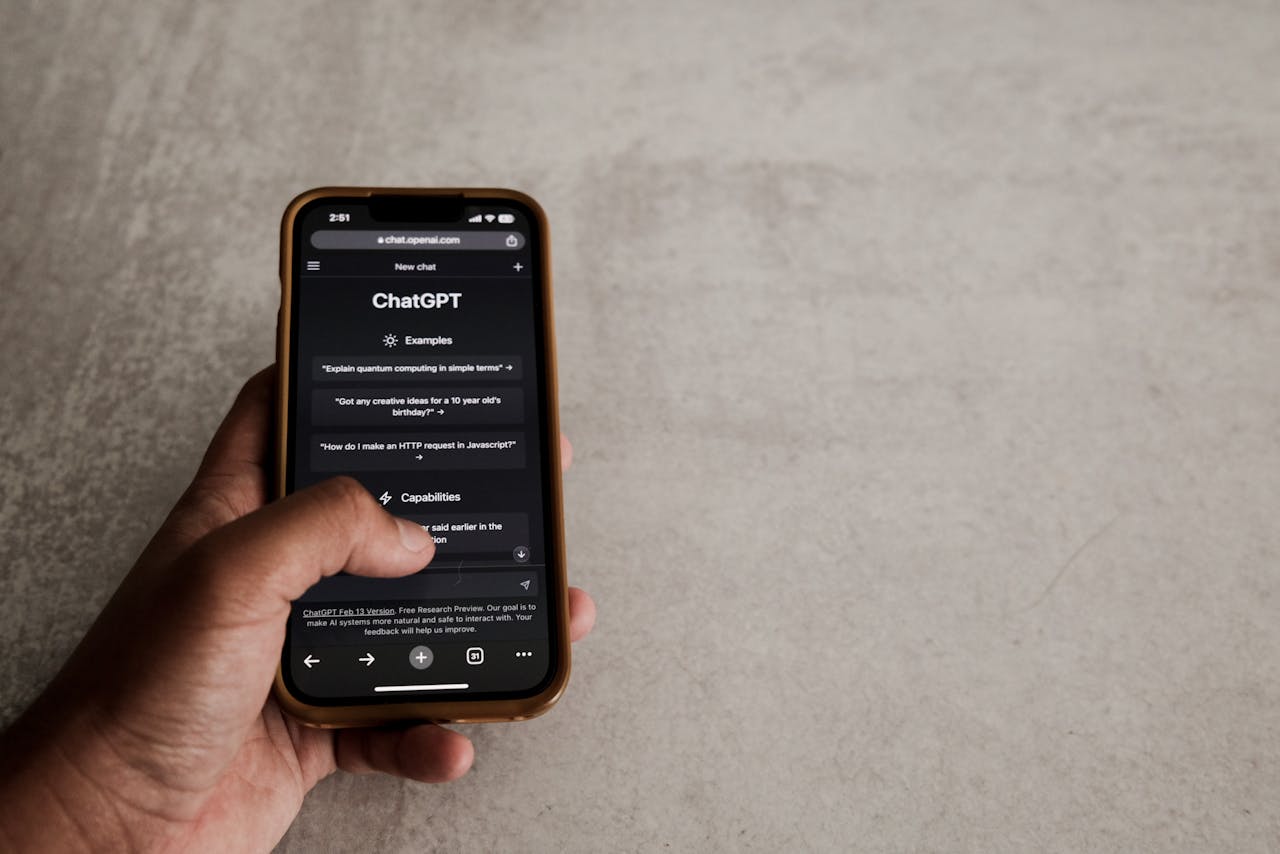
The Maltese Government’s plan to provide citizens with free AI education and a subscription to an AI service has been met with cautious approval from sector experts, who argue that the measure must go beyond tool access and promote deeper skills, critical awareness, and long-term innovation.
Announced by Finance Minister Clyde Caruana during the Budget for the upcoming year, the initiative aims to equip the population with the skills necessary to safely navigate a rapidly evolving digital landscape. Additional support will be provided to parents and the elderly. The plan includes free training, certification, and ultimately, a government-funded subscription to an AI service, with OpenAI’s ChatGPT and Google’s Gemini cited as examples. The rollout is expected early next year.
Stakeholders in the field agree that the aim is well-intentioned, though several believe that the measure requires greater ambition if Malta is to maintain competitiveness and digital resilience.
‘Education should not stop at ‘how to prompt’’

Vanessa Camilleri, Senior Lecturer at the Department of Artificial Intelligence within the University of Malta’s Faculty of ICT, stresses the need for comprehensive AI literacy that extends beyond operational skills.
She notes: "While I welcome the intention behind the measure, namely, to equip citizens with tools to navigate AI safely, I remain cautious about positioning a paid subscription to an LLM-based service as the central reward for AI education."
Dr Camilleri argues that citizens must be able to critically understand the systems they engage with, not just use them.
"Education should not stop at “how to prompt.” Rather, it should be framed in a broader context: exploring the full spectrum of AI applications, interrogating issues of fairness, bias, and justice, dissecting the ways algorithmic systems can spread malice or distort reality, and enabling citizens of all ages to critically understand (and challenge) these systems."
She adds that "A subscription might offer access, but without deeper critical literacy, it risks reinforcing tool-consumption, rather than tool-empowerment."
Her recommendation is clear: "I’d encourage the policy to emphasise critical awareness, not just access, and to ensure that what is offered in the “safe-use” course is as much about why and how AI matters (and can go wrong) as about what AI can do."
‘More tactical than transformative’

Gege Gatt, CEO of EBO.ai, similarly welcomes the effort to drive AI adoption but believes the proposal lacks the systemic ambition required for long-term national competitiveness.
He states: "While well-intentioned, the proposal to offer free AI licences feels more tactical than transformative. If Malta aims for long-term competitiveness, it needs a whole-of-economy approach that goes beyond access to tools and focuses on capability, capital and credible public sector exemplars."
According to Dr Gatt, AI should be embedded into everyday national services through personalised tutoring, stronger digital literacy, and a public sector that demonstrates impact through its own digital transformation.
He emphasises the need for clarity, adding: "The announcement is light on detail: which platforms, which tiers, what costs, how many users, and what quality of training or certification. Without such clarity, the “free subscription” risks being symbolic."
True progress, he argues, requires more than software distribution: "True AI readiness is not achieved by distributing software licences. It comes from nurturing human, financial and institutional systems that learn, adapt and evolve."
When asked whether current investment incentives for SMEs partially bridge this capability gap, Dr Gatt drew a clear distinction between adoption and innovation funding.
While acknowledging that allocating €100 million to help SMEs adopt innovative technology is "no doubt useful," he stresses that Malta needs more than that to generate home-grown innovation.
Access must be a catalyst, not a substitute
Industry voices appear aligned on one core point. While government-backed access to generative AI may broaden public familiarity and strengthen digital comfort, it cannot be the endpoint of policy.
For Malta to retain its competitive edge, experts argue that access must be paired with critical education, stronger leadership in the public sector’s digitalisation, and investment in research and innovation that supports AI creation, not only consumption.


Two masterpieces, one remarkable instrument
Michael Pantalleresco explores the poetry, passion and brilliance of the clarinet in works by Mozart and Weber.
‘A setting we couldn’t be prouder of’: db CEO on Hard Rock Hotel’s new rooftop restaurant
Cyana’s head chef is Spiros Tzilis, a Greek chef who has worked at Michelin-starred restaurants.

‘AI might be faster and cheaper, but at what cost?’ – Aramis Capital MD
He warns that businesses risk sacrificing service quality, human judgement and accountability in their pursuit of greater efficiency through artificial ...

‘We’re already late’: Employers chief calls for cross-party mass transport agreement
Through cross-party agreement, the solution will endure beyond individual legislatures, he explains.
