



Both the Malta Chamber of Commerce and the Malta Employers Association have expressed concern following statements by Malta Fiscal Advisory Council officials that productivity has not matched rising wages, but both agree that the answer lies in enhancing productivity, not suppressing wages.
The Malta Chamber and the Malta Employers Association were contacted by this newsroom after the Malta Fiscal Advisory Council, an independent body which assesses the extent to which the fiscal and economic policy objectives proposed by the Maltese Government are being achieved, made the aforementioned statement.
Describing its concern as “significant”, a spokesperson for the Malta Chamber of Commerce said that “Malta can no longer rely on increasing the number of people employed as the principal means of generating economic growth," a point that the Malta Chamber has outlined in recent years.
Wage increases, the spokesperson said, are positive when they reflect higher value added and improved productivity. The difficulty arises when labour costs rise persistently without a corresponding increase in output, because that ultimately impacts competitiveness of Maltese businesses, the spokesperson said.
“This is concerning for an insular economy such as ours, as this erodes international competitiveness. Local businesses cannot and do not simply pass every additional cost on to their customers.”
The solution is not to suppress wages, the spokesperson said, adding that the solution is to raise productivity.
“That requires a clear, coherent and consistent policy direction and corresponding support by Government, as well as investment by business: greater adoption of technology, AI, automation and digitalisation; considerably more investment in research and innovation; continuous upskilling and reskilling; a stronger alignment between education and the needs of industry; and a greater concentration on higher-value-added economic activity. The Malta Chamber has also argued that business-support schemes should increasingly reward productivity and automation.”
The spokesperson said that productivity is not solely something that happens inside the factory or office, and underlined that businesses also lose productive hours because of traffic congestion, inefficient public administration, fragmented processes and inadequate infrastructure.
“Addressing traffic, utilities, bureaucracy and public-sector efficiency should be at the forefront of addressing Malta's productivity agenda.”
For wages to be sustainable, any increase needs to be justified by a commensurate gain in productivity – Kevin J Borg
Responding to the same question, Director General of the Malta Employers Association, Kevin J Borg said that productivity not matching rising wages has been a primary concern for the association for years.
“It too has been consistently sounding the alarm on an escalating 'productivity deficit' for a considerable period of time.”
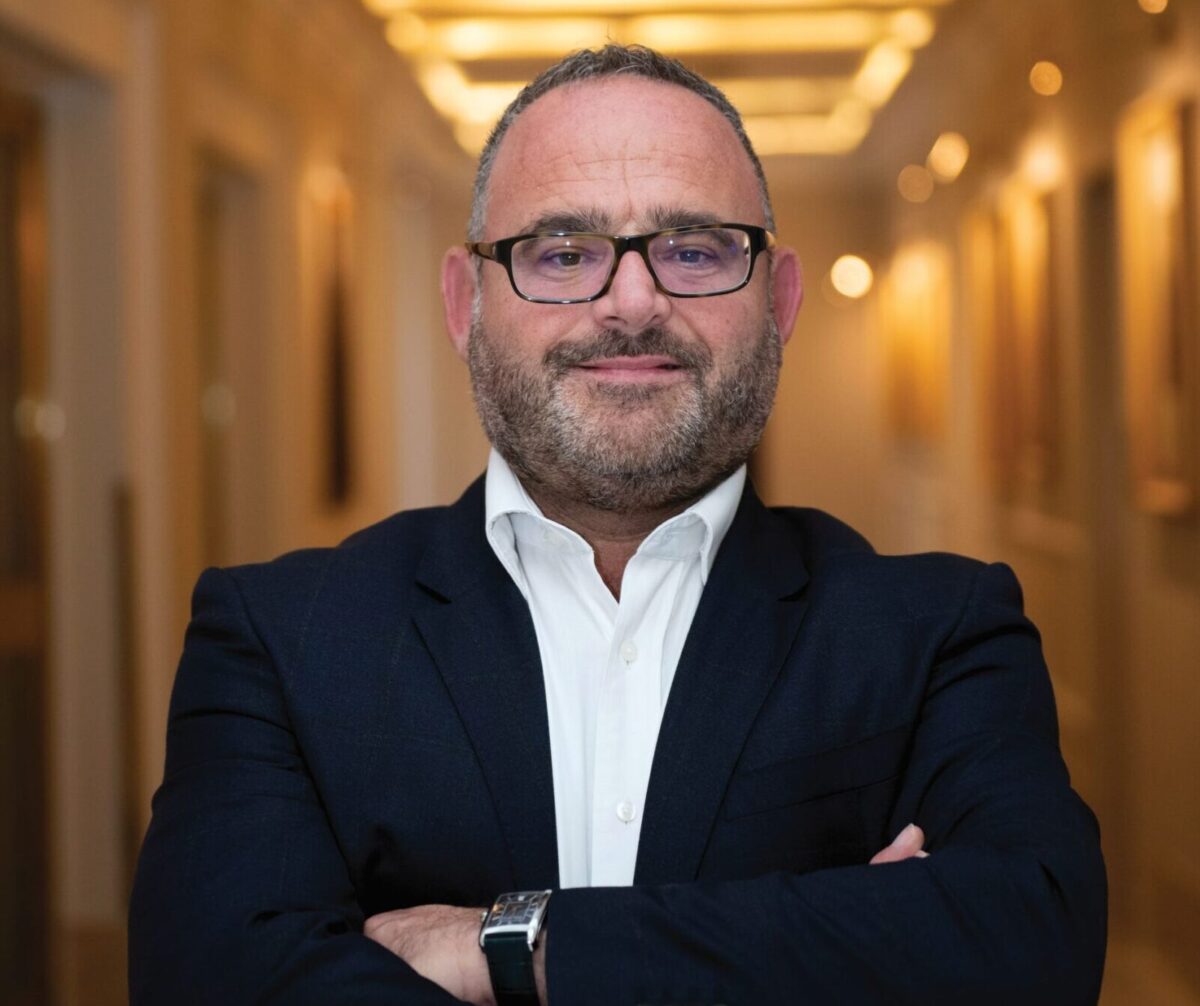
“Of course, Malta Employers fully supports higher wages and it expects higher wages to be sustained in the long-run. But for wages to be sustainable, any increase needs to be justified by a commensurate gain in productivity.”
Business must be profitable to exist, Mr Borg said, adding that if profitability of a company is eroded by costs which are not matched by revenue, the existence of the company comes under scrutiny, “at least in its present form ie, operating under its prevailing business model, location, head-count etc.”
He said that Malta Employers has explained its position, that the solution is not to restrain wage growth because the employer-employee relationship “must be win-win. Employees, therefore are entitled to improved conditions of work and living standards as long as these are affordable in the particular circumstances of the employer.”
The answer, therefore, is to accelerate investment in productivity-enhancing measures such as innovation, the adoption of new technology, automation, digitalisation and AI, coupled with continuous upskilling and reskilling, he said.
“Companies also need support to invest, improve processes and move towards higher-value-added activities.”
Malta’s economic model is in dire need for change, he said. “So far it has sought to sustain GDP growth by increasing critical mass and higher volumes by plugging in more workers. But the numbers have now caught up with the physical limitations of the country so the objective must increasingly be to generate more value with the resources already available to us.”
If product lines go elsewhere, investment goes elsewhere
The two were asked whether increasing prices and increasing wages, without a proper increase in productivity could reach an unsustainable point, and when this could happen.
“If productivity does not keep pace, there is only so much that a businesses can absorb," Mr Borg said.
He said that there are two possible outcomes of this. If a company caters predominantly for the local market, the higher costs are passed on to the local consumer fuelling more inflation. If a company caters for the foreign market, “higher costs cannot be passed on so they must be absorbed by accumulated reserves. If there are none, and the prospects are not encouraging, the company would need to reconsider its position and/or business-model.”
He said that in the manufacturing industry, for instance, decisions in today’s competitive scenario are made on the basis of evidence.
“They are taken by comparing cost-benchmarks in various regions. No-one owes Malta a living and decisions will be made in favour of locations that yield the highest returns. In the context of inter-group competition between plants of the same companies based in different States, if Malta loses competitiveness, new product lines will be lost to other more competitive regions.”
He said that if product lines go elsewhere, investment goes elsewhere and the competitiveness of local factories declines even further. Similar considerations apply to other industries like tourism, shipping, aviation, gaming and others, he added.
“There is no exact point at which the situation suddenly becomes unsustainable, but the longer this gap persists, the more difficult it becomes to address. This is why action is needed now.”
He indicated what he believes needs to be done. In the short term, starting from the forthcoming Budget, unnecessary additional costs and regulatory burdens should be avoided, while investment in technology, skills and other measures that improve productivity needs to be encouraged, he said.
“In the medium term, Malta needs to support businesses in moving towards higher-value activities, address skills mismatches, improve access to investment and finance and tackle infrastructure shortcomings that add unnecessary costs.”
In the longer term, he said that Malta needs a genuine transformation of its economic model.
Warning signs emerge progressively
“Higher wages and better living standards can only be sustained when they are supported by higher productivity and greater value creation. This is not a question of choosing between workers and employers. Sustainable wage growth depends on productive and competitive businesses that are in a position to invest, grow and create better jobs.”
Responding to the same question, the Malta Chamber of Commerce spokesperson said that when higher labour costs are not accompanied by higher productivity, businesses have a limited number of options. These are to absorb the additional cost through lower margins or at a loss, increase prices to cover the costs, reduce investment to have more liquidity, automate, or consider restructuring.
The spokesperson too said that for internationally exposed businesses, increasing prices is not an option because they compete with companies operating from lower-cost jurisdictions.
“Albeit to a lesser extent, even some local business cannot afford to increase prices – this is particularly true to businesses offering products and supplies that can be easily bought through online platforms offering similar or alternative products operating from other jurisdictions.”
“This is why the Malta Chamber has previously warned of the risk of a wage-cost inflation cycle if increases are not pegged with value-added productivity. Higher prices trigger wage pressures, which increase production costs, which can then generate further price pressures and weaken competitiveness.”
The warning signs emerge progressively, the spokesperson said, such as in reduced margins, weaker investment, loss of export competitiveness, greater automation or restructuring, slower productivity and GDP-per-capita growth, and ultimately weaker job creation.
“In fact, some of those warning signals are already visible, which is why The Malta Chamber is calling for action now rather than waiting for a crisis.”
In the short term, the spokesperson said that the Government should avoid introducing unnecessary additional costs on employment and business; keep inflationary pressures contained; address immediate productivity drains such as traffic and administrative delays; accelerate existing incentives for digitalisation, AI, automation and training; and ensure public expenditure delivers demonstrable value for money.
In the medium term, the spokesperson said Malta needs much stronger investment in skills, R&I, technology and productive capital; a serious education-to-employment strategy; greater digitalisation of both business and government; infrastructure that works reliably; and incentives which favour productivity growth rather than simply additional recruitment.
In the long term, the economic model itself must evolve from quantity to quality, the spokesperson said, with higher-value-added sectors, better skills, stronger productivity, a more selective approach to labour migration, efficient infrastructure and public administration, and economic growth which can coexist with quality of life.


Two masterpieces, one remarkable instrument
Michael Pantalleresco explores the poetry, passion and brilliance of the clarinet in works by Mozart and Weber.

‘A setting we couldn’t be prouder of’: db CEO on Hard Rock Hotel’s new rooftop restaurant
Cyana’s head chef is Spiros Tzilis, a Greek chef who has worked at Michelin-starred restaurants.

‘AI might be faster and cheaper, but at what cost?’ – Aramis Capital MD
He warns that businesses risk sacrificing service quality, human judgement and accountability in their pursuit of greater efficiency through artificial ...

‘We’re already late’: Employers chief calls for cross-party mass transport agreement
Through cross-party agreement, the solution will endure beyond individual legislatures, he explains.
