


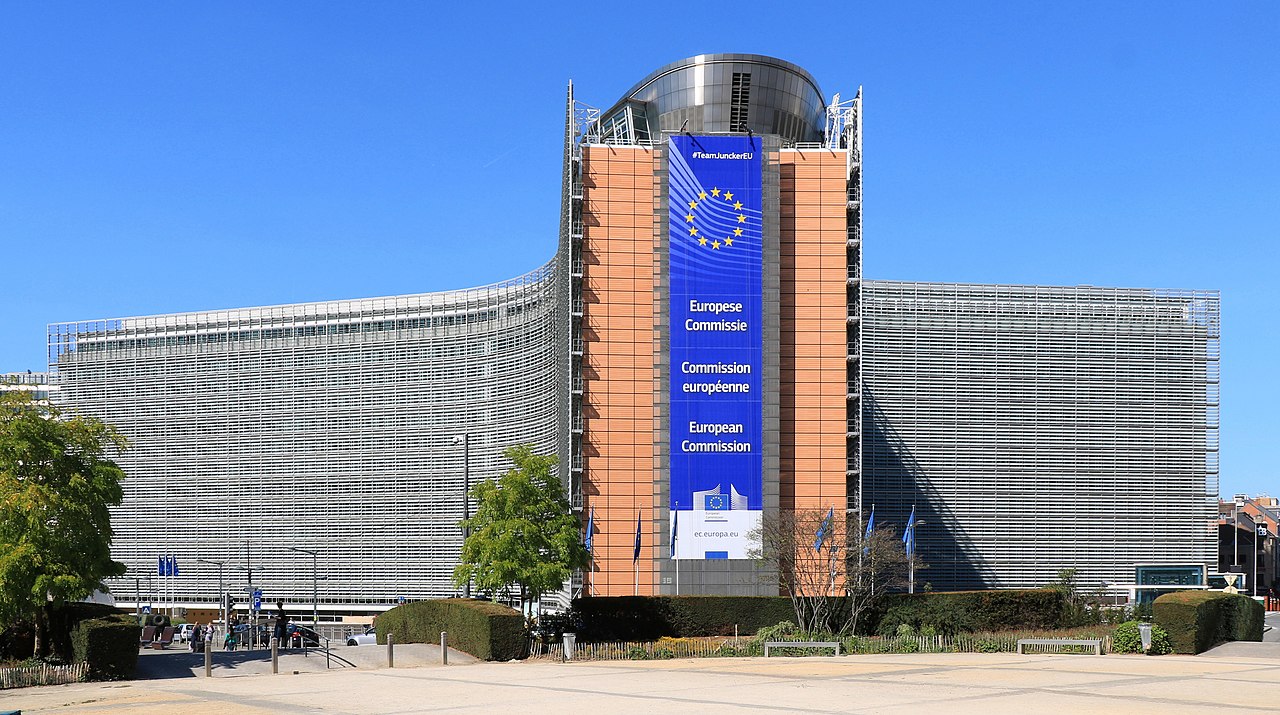
The European Commission is facing criticism from civil society groups and parts of the tech community after unveiling proposals to delay key obligations of the Artificial Intelligence Act and to ease rules on data protection and online tracking. The package, described as the “digital omnibus”, aims to streamline the GDPR, the AI Act, the ePrivacy Directive and the Data Act, while reducing compliance burdens for companies operating in the bloc.
If adopted, the changes would make it easier for technology firms to use personal data to train AI systems without asking for consent. The Commission argues that such measures would help tackle “cookie banner fatigue” by reducing the number of consent requests that internet users face.
The proposals also confirm a delay to central parts of the AI Act, the bloc’s flagship regulatory framework for artificial intelligence. High-risk AI systems, including those used in exam scoring, medical procedures and other sensitive environments, would receive an extension of up to 18 months before compliance becomes mandatory.
This shift follows months of pressure. A report by former Italian prime minister Mario Draghi last autumn warned that Europe had fallen behind the United States and China in emerging technologies. The EU has also been urged by the Trump administration to soften its digital regulatory approach. The EU’s economy commissioner Valdis Dombrovskis argued that “Europe has not so far reaped the full benefits of the digital revolution” and said the package could save businesses and consumers €5 billion in administrative costs by 2029.
The reaction has been polarised. European Digital Rights (EDRi), a network of NGOs, called the plans “a major rollback of EU digital protections” and warned that they risk dismantling “the very foundations of human rights and tech policy in the EU”. It raised particular concerns that changes to GDPR would permit “the unchecked use of people’s most intimate data for training AI systems”.
By contrast, business groups welcomed the shift. The Computer and Communications Industry Association, which includes Amazon, Apple, Google and Meta among its members, said: “Efforts to simplify digital and tech rules cannot stop here”, calling for “a more ambitious, all-encompassing review of the EU’s entire digital rulebook”.
Former commissioner Thierry Breton, however, criticised the move, writing that Europe should resist attempts to unpick its digital rules “under the pretext of simplification or remedying an alleged ‘anti-innovation’ bias”.
Against this backdrop, two Maltese AI experts offer sharply observed two-cents on what the changes could mean for Europe and for smaller markets like Malta.
Alexiei Dingli, Professor of AI at the University of Malta and former member of the Malta.AI task force, argues that the core issue is not regulation but the absence of viable alternatives. “The issue is not regulation per se. In principle, regulation is fine. The real problem is regulating without providing alternatives. We are being regulated but not given other options. Research in Europe is restricted in terms of what we can and cannot do,” he says.

He pointed to the delayed rollout of Apple Intelligence in Europe and Meta’s decision to hold back advanced AI models, attributing both to the impact of EU rules. “That puts us at a disadvantage. We are dependent on these models, and most AI technology comes either from the US or China. ChatGPT, Gemini, these major systems are not European. There is only one large language model developed in Europe, Mistral, and it is not as strong as the others. Most people do not want to use it.”
For Prof. Dingli, the EU’s attempts to tighten rules without expanding investment are counterproductive. “With this stance, unfortunately, we are at a disadvantage. If you ask me, we should absolutely proceed with regulation on principle, but the EU must push much more funding into AI projects.”
He contrasts the EU’s budget with large-scale international investments. “Last January, President Trump announced Stargate, a $500 billion data centre project. Two weeks later, Ursula von der Leyen announced a €1 billion AI First initiative. And just yesterday, the Saudi Crown Prince unveiled another mega investment. It is very clear who is taking the lead. Europe is not in a position to be shooting itself in the foot.”
He argues that Europe must “regulate, yes, but also invest and accelerate” and warns that without such a dual approach, the continent risks technological dependency. “Two or three years ago, we woke up to the fact that we were dependent on Russian oil. This is the same thing with AI technology. By the time we realise it, it will be too late.”
Prof. Dingli also raised concerns about Europe’s lack of ambitious tech infrastructure planning.
“Imagine if ChatGPT decided tomorrow that it would not offer services in Europe. What would we do? Everyone agrees that these tools significantly improve productivity. As a continent, we would immediately suffer a massive productivity dip. The consequences speak for themselves.”
Gege Gatt, CEO of the London-based AI company EBO and Board Member of the Malta IT Law Association, takes a more cautiously supportive view of the Commission’s direction, while emphasising that the delay should be used wisely.

“The Commission’s proposals reflect a pragmatic acknowledgement that Europe’s ecosystem is not yet ready for the full weight of the AI Act,” he says. He noted that the technical standards and conformity-assessment tools required to implement the legislation are still incomplete. “Delaying the most stringent obligations reduces regulatory risk in the short term, giving countries the time to strengthen their innovation practices.”
Dr Gatt argues that Malta, in particular, should treat the transition period as an opportunity. “Malta should use this additional transition time to stimulate patent development and mature compliance frameworks before high-risk obligations bite. It also gives smaller markets like ours the breathing room to build the skills, infrastructure and governance capacity that high-risk AI systems demand, especially in sensitive settings such as health, education and public administration.”
He also highlights the potential benefits for European AI firms. “AI companies like EBO will face a lighter documentation burden, allowing them to invest, build and reach the market faster, with lower upfront cost. This levelling of the playing field is essential in a European landscape where growth often stalls under compliance overheads.”
Dr Gatt insists that the Commission’s proposals do not weaken Europe’s ethical stance. “Importantly, none of this represents a watering down of Europe’s ethical backbone. Oversight remains centralised through the AI Office, and protections for sensitive data and fundamental rights remain intact, in many cases stronger and more principled than what we see in the United States or Asia.”
For him, the shift is more about pace than principle. “Europe is adjusting its pace, not its principles. Technological progress requires clarity, courage and responsibility in equal measure, and this moment should be used to prepare the foundations for a future where innovation and ethics reinforce one another rather than compete.”
As Brussels attempts to balance competitiveness with rights protection, the debate is intensifying. For civil society, the proposals risk undermining hard-won digital safeguards. For industry, the EU is not moving fast enough. For smaller states like Malta, the challenge is twofold: catching up with global innovation while ensuring that regulation remains credible, enforceable and rooted in European values. Nothing is certain, except that the Commission’s next moves next moves will define how Europe accelerates its digital trajectory.




Chairman Joseph Said: MaltaPost ‘resilient’ amid global disruption as profits climb to €6.4 million
He highlights how postal operators worldwide continue to transition from traditional letter mail to parcels.

Graziella Grech reflects on transition, gratitude and reinvention ahead of 2026
Christmas is 'a time for gratitude, humility, and meaningful human connection.'

Holiday staff party style: How to dress festive, fashion-forward and office-appropriate
'But what would I wear?'

6 smart ways to use the Christmas lull to prepare for a strong Q1
Leaders who do not protect time for strategy often find themselves reacting rather than directing.
