


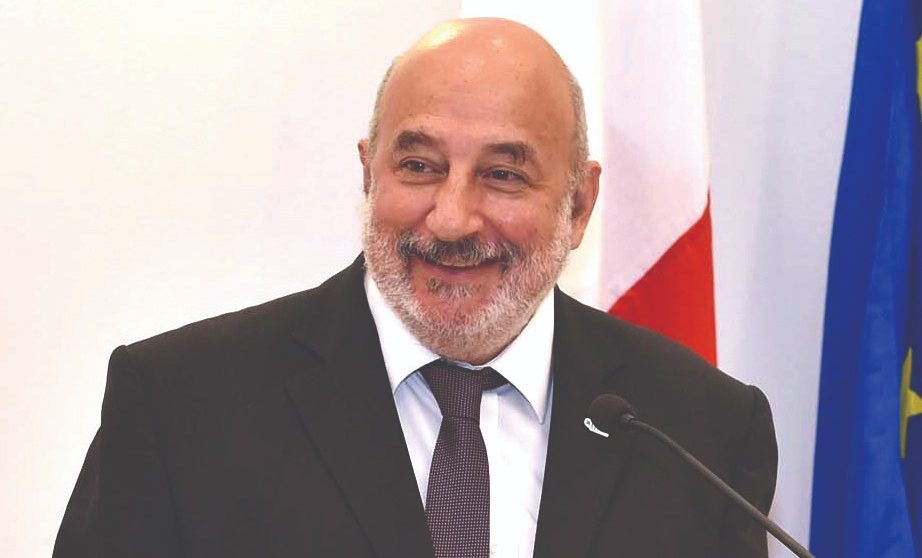
In Malta, “the rising costs of logistics has been a cause of concern over the past two years,” says Joe Farrugia, Director-General of the Malta Employers Association (MEA) in comments featured on the summer 2022 edition of Business Now magazine on rising costs.
Pointing towards global supply chain problems and higher energy prices, he adds: “Our insularity and exposure to energy prices have been major contributors to inflation in Malta.”
Moreover, “rising interest rates may adversely impact mortgage payments, thus affecting numerous individuals and families. One of the major challenges of inflation will be to prevent a wage price spiral that may erode the competitiveness of many enterprises, and thus threaten jobs. However, this does not seem to be the case in Malta as many sectors face a shortage of labour. Yet, sudden increases in labour costs and energy could fuel a secondary wave of inflation as companies will attempt to pass such costs on to the consumer – both in consumer markets and B2B,” the Director-General says.
Elaborating on what can be done to mitigate the impact of these dynamics, Mr Farrugia says that “a fiscal effort will be required to shield such groups from the full impact of inflation.” For instance, while COLA (Cost of Living Allowance) increases for 2023 will definitely be higher than experienced during the past decade, “Government should intervene to protect those who may not even be covered by this mechanism, or who may need additional protection, such as pensioners. Government should also step-up efforts to reduce bureaucratic burdens to businesses and to facilitate access to foreign labour supply to ease pressures in the labour market. Identity Malta will have a key role to play in this scenario,” he asserts.
Looking ahead, the future looks very fluid, he adds, pointing to the continued impact COVID-19 is having in some parts of the globe, such as China, while Russia’s invasion of Ukraine will “become a major determinant of the degree of stability that will prevail in the coming years. A prolonged war will create chronic shortages and the high inflation may well extend into the coming three years. A shorter-term cessation of hostilities, together with a COVID situation which is under control, may result in more stable prices during 2023,” he says.
Elaborating on the local situation, Mr Farrugia stresses that the major priority will be to safeguard competitiveness. “If prices go up globally, we will be affected by the global economic slowdown as is expected to happen in many economies. The IMF has, in fact, revised downwards its projections for global economic growth to 3.6 per cent, and to 1.1 per cent in the European Union. And a deterioration in competitiveness will result in more negative consequences for Malta in the longer term,” he concludes.
This is an extract from an in-depth feature on inflation first carried in the summer 2022 edition of Business Now magazine.

The Convenience Shop appoints Ramon Falzon as Chief Financial Officer
Ramon, a veteran finance executive, brings over two decades of international experience to the role.

Etienne Azzopardi confirmed as Swintt Managing Director after interim stint
He first took on the position in January following a restructuring process.

‘We want to drive international investments towards Malta’ – Laedan Bridge Founder
The Malta-based investment brokerage has successfully secured a seven-figure investment in slot-maker F*BASTARDS.
Rise in UAE expats seeking work in Malta, Kore Group CEO says
Charlotte Sant Portanier says they are applying for jobs in healthcare, catering and hospitality, but also more technical roles.
