

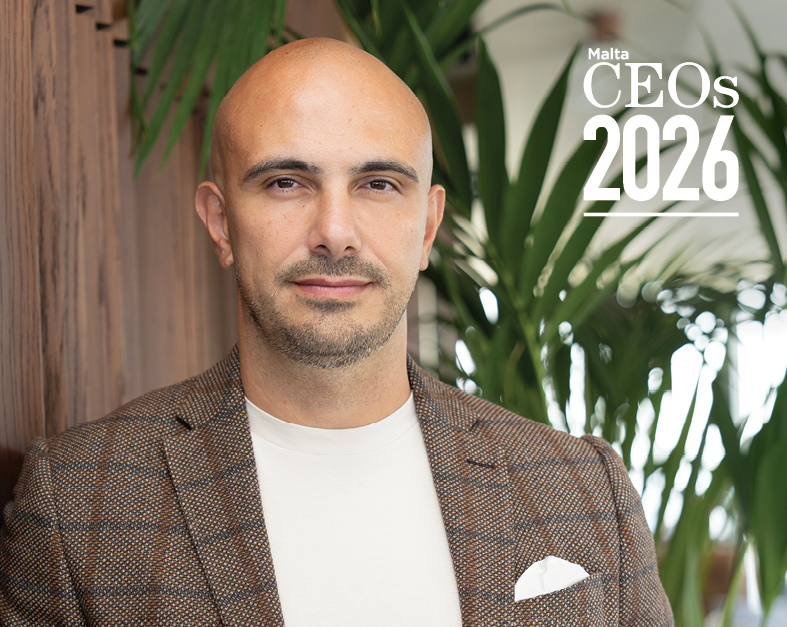
From award-winning chef to CEO of HR Plus, Adrian Buttigieg is redefining what it means to build and retain an effective workforce in Malta and beyond. In an increasingly digital world, he is embedding a culture where people are the greatest asset. His 2026 outlook centres on skills-first recruitment, staff retention and international growth.
Adrian Buttigieg’s journey to the helm of HR Plus began in the high-pressure environment of commercial kitchens. “In hospitality, you learn leadership on the floor, not from a desk. You learn it from Saturday double shifts, staff calling in sick, and from making things happen with what you’ve got. Starting from the ground up teaches you to value every team player,” Adrian explains. Working his way up through the ranks to become Head Chef at a five-star hotel taught him that leadership fundamentals are rooted in humility, curiosity and active listening. Those are the tenets he lives by.
This foundation now shapes his management philosophy at HR Plus, a human resources (HR) and recruitment solutions company which today employs almost 300 people. “At the end of the day, it isn’t rocket science. Everyone is a human being, and respect is key in any position, whether you’re at the bottom or top of the organisation chart.” Yet, the transition from hospitality to recruitment leadership required him to adapt his approach. “I used to spend a lot of time firefighting. Now, it’s about creating direction, setting culture and removing obstacles so the people around me can perform at their best,” he adds.
Adrian credits much of the company’s success to his partnership with Co-Founder Gilbert Xuereb and their balanced leadership dynamic. “We trust each other, and we share the same vision for the company,” he reflects. “We both bring hospitality experience, and what makes our partnership work is that we have the same drive but different characters. I’m the one who jumps in and wants to act, and Gilbert is the gentleman who holds the reins – this balance helps me pause, think and evaluate.”
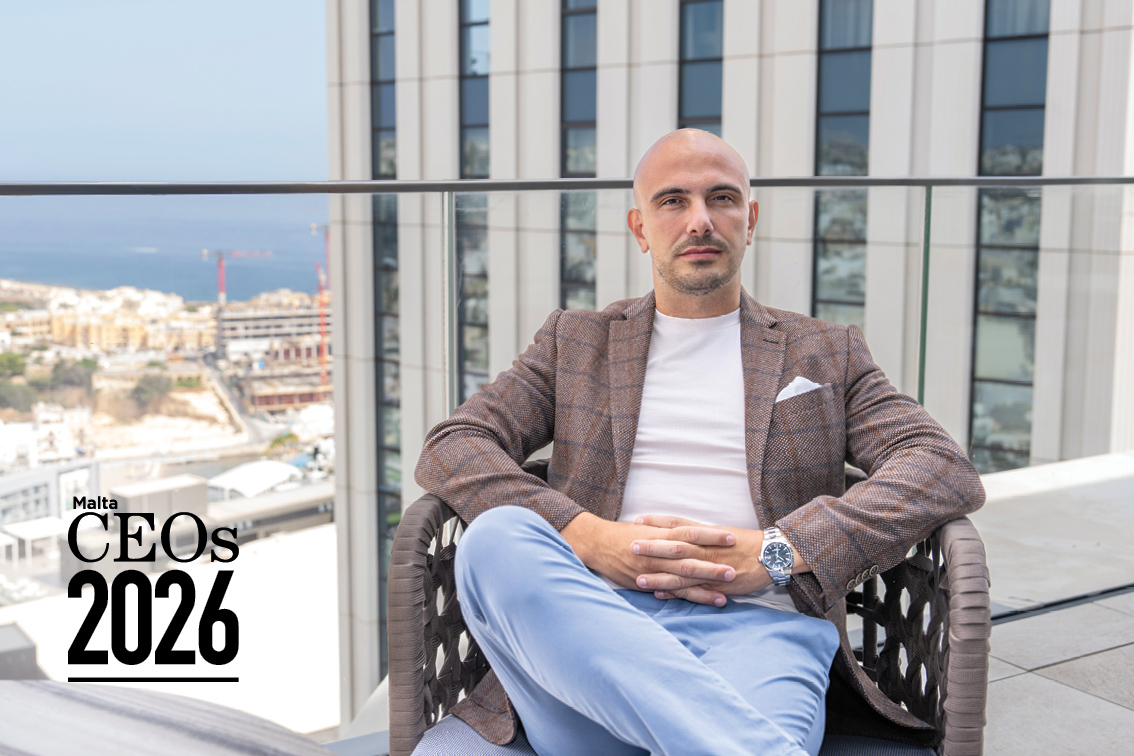
Their shared mindset also informs the HR Plus business model, which differentiates itself from the competition through comprehensive service delivery that extends far beyond traditional recruitment. “HR Plus is not just a CV pusher,” Adrian asserts, positioning the company as a strategic partner across the full hiring journey. “We don’t deal in basic job descriptions; we sit down with clients to understand both the technical and cultural profile they’re looking for. We’re there throughout the process – for the interviews, onboarding, housing, integration, and ongoing HR compliance.”
Adrian’s broader belief is that true recruitment success goes far beyond skills-matching alone. “My mantra – though this may not apply to every position – is that attitude is very important. Sometimes it matters more than the technical aspect. Why? Because almost anyone can learn technical skills. But attitude, cultural approach, integration – that’s character, and you can’t teach that.”
This attitude-first approach stems from Adrian’s deeper business convictions and underpins the entire HR Plus ethos. “We always tell our clients the truth. We focus on retention, progression and culture as currency. If you’re not investing in culture, you’re losing talent,” he says. “Fair pay, respect and structure – these are our three pillars, and business leaders should embrace them naturally. There shouldn’t need to be laws or drama around them, as they should be fundamental practices. Simply put, this is how you should operate.”
Adrian’s philosophy has served HR Plus well and proven resilient in a business landscape undergoing seismic shifts. In particular, labour policy reforms in Malta have brought both opportunities and obstacles. “We were among the first seven companies to receive our licence, which we’re proud of, but the company’s rapid scale-up during the introduction of the Malta Labour Migration Policy has been our biggest challenge,” Adrian admits. “I agree with the adjustments because the market and its people were being exploited, but the pace of change has been intense. Sometimes, policies change week to week, and we’ve had to adapt at breakneck speed.”
In addition, labour shortages and bureaucracy remain persistent issues. “Bureaucracy, unfortunately, is never-ending in Malta,” Adrian observes. “Yet, while there’s ongoing debate around population growth and foreign workers, the demand is undeniable. My phone never stops ringing with clients seeking new employees. The business is there; the economy is doing well. Despite regulatory pressures, market demand remains strong – that’s the reality.”
Media perception, however, often paints a different picture, particularly around foreign worker integration. “There’s an unfair image attached to honest people who come to Malta to support our economy and families. These are good people keeping essential services running, especially in sectors like care, hospitality and public transport. Without them, many of these areas simply wouldn’t function,” Adrian emphasises.
For him, the future lies in skills-first hiring. “Employers are asking what candidates can actually do, not just what certificates they have. When choosing between a university graduate and someone with five years’ experience, the shift is moving towards experience,” he notes. “HR conferences globally confirm this. Certificates aren’t irrelevant, but experience leads.”
Perhaps Adrian’s most significant insight for Malta’s business community centres on staff retention as the ultimate competitive advantage, addressing a fundamental challenge facing Maltese businesses. “People don’t work for companies, they work for people… And they leave because of people. Finding new hires and starting over is a headache. It’s also expensive,” Adrian highlights.
His message to companies in Malta is clear: “Retention is the new recruitment, and most people don’t invest enough in it. There should be more partnering with training institutions. Drive your employees – they are key. Invest in your team, retain your team.” Adrian’s prescription involves giving employees clear development paths. “People hop from job to job because they have no goals, no objectives. Give them career plans rather than just placements. Help them grow into valued members of your team,” he advises.
HR Plus aims to maintain its human-centric approach in 2026 while exploring technology and capability enhancement. “We’re investing in digital tools, optimisations, applicant tracking systems, artificial intelligence (AI) and internal upskilling,” Adrian reveals. Nevertheless, while technology is an integral part of recruitment’s changing landscape, Adrian draws clear boundaries around AI and how it should be used.
“AI isn’t replacing HR; it’s elevating it,” he continues. “The real winners combine tech with a human-first approach. But I will never accept AI doing interviews because we cannot lose that human element. You don’t experience the attitude, culture or character from AI – it can’t read between the lines.” Having said that, Adrian champions AI as a productivity tool. “I use AI, absolutely. It’s like a chef getting a beautiful new knife. We use it for procedures, anything that improves our work. And I encourage my team to embrace it because it’s not replacing anyone. It’s enhancing what we already do well.”
So, what’s the next chapter in HR Plus’s evolution? “Malta’s market is quite saturated, so we’re always looking beyond our borders and seeking to open up to other markets around the world,” Adrian declares. HR Plus is already active beyond Malta’s shores, laying the groundwork for a stronger international presence. By the same token, while strengthening international expansion and building on HR Plus’s foundation of comprehensive service delivery and authentic relationships, Adrian maintains a positive outlook on Malta’s direction.
“Sure, we face challenges like any country – infrastructure constraints, cultural integration and market saturation. But Malta’s economy remains robust. Rather than dwelling on problems, we adapt and find ways forward. Negativity is contagious, so I choose optimism.”
This article is part of the serialisation of 50 interviews featured in MaltaCEOs 2026 – the sister brand to MaltaCEOs.mt and an annual high-end publication bringing together some of the country’s most influential business leaders.
‘Greed harms businesses more than anything else’ – Wolfgang Tweraser
The TW Consulting & Trade Ltd CEO believes Malta has much more to offer: ‘It could be like a little ...
‘We can’t promote tourism without agriculture’ – Malta Food Agency CEO Brian Vella
‘I envision having fewer farmers, but more productive ones.’
‘Not everything can be taught through textbooks’ – MUHC CEO Chris Schinas
‘I see my role as using the university’s name, its facilities and its resources to build a successful commercial arm.’
‘We want to be the Revolut of B2B payments’ – Paytently CEO Samuel Barrett
‘Many companies focus on consumers, but they’re missing how transformative B2B payments can be within today’s payments infrastructure.’
