


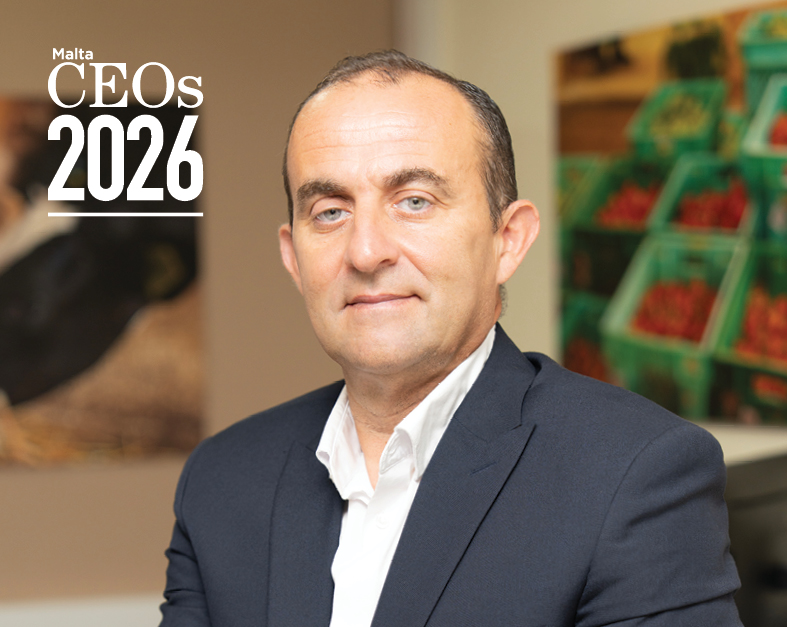
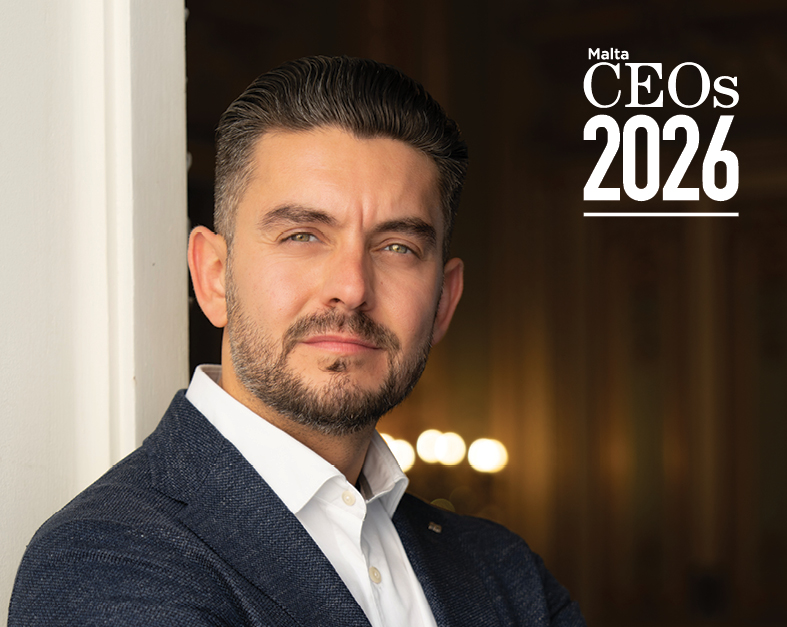
Brian Vella leads the Malta Food Agency at a pivotal moment for the island’s food sector. With a €10 million investment in a new Ta' Qali Farmers' Market and a further €10 million investment in a food innovation hub, he is positioning local food systems for sustainable growth aligned with Malta Vision 2050, the national initiative shaping Malta’s long-term development. Brian’s focus extends beyond agriculture to encompass tourism, heritage and economic resilience through local produce.
“Leadership is as much about understanding people as it is about performance,” says Brian Vella, CEO of the Malta Food Agency. “I’ve found that the more I listen and empower my team, the more they find purpose and deliver results.” This philosophy underpins Brian’s approach to balancing strategic vision with operational pragmatism. It guides him in advancing Malta’s food agenda, navigating regulatory complexity and the diverse ecosystem of farmers, customers and businesses that define Malta’s food sector.
At the heart of Brian’s people-centred strategy is a commitment to bridging generations. “Successful transformation requires genuine engagement with all parties involved,” he asserts. “Fresh thinking within the organisation comes from a deliberate choice to build a multigenerational team, which matters in agriculture’s traditionally conservative environment. The older generation speaks with passion and nostalgia about how things used to be done, but young people bring fresh ideas,” Brian notes. “We must give them space because change requires courage, and our markets are evolving.”
Managing resistance to change was one of Brian’s main challenges in 2025, particularly while implementing reforms at the Pitkalija – Malta’s national fruit and vegetable market. “Transformation requires vision, patience and, most importantly, communication,” he emphasises. A robust communication strategy has been essential given what is at stake: with an annual turnover of €30 million, the Pitkalija is a vital link between producers and the hotel, restaurant and catering (HORECA) sector. “We often say we don’t have enough farmers, yet the market is flourishing,” Brian maintains.
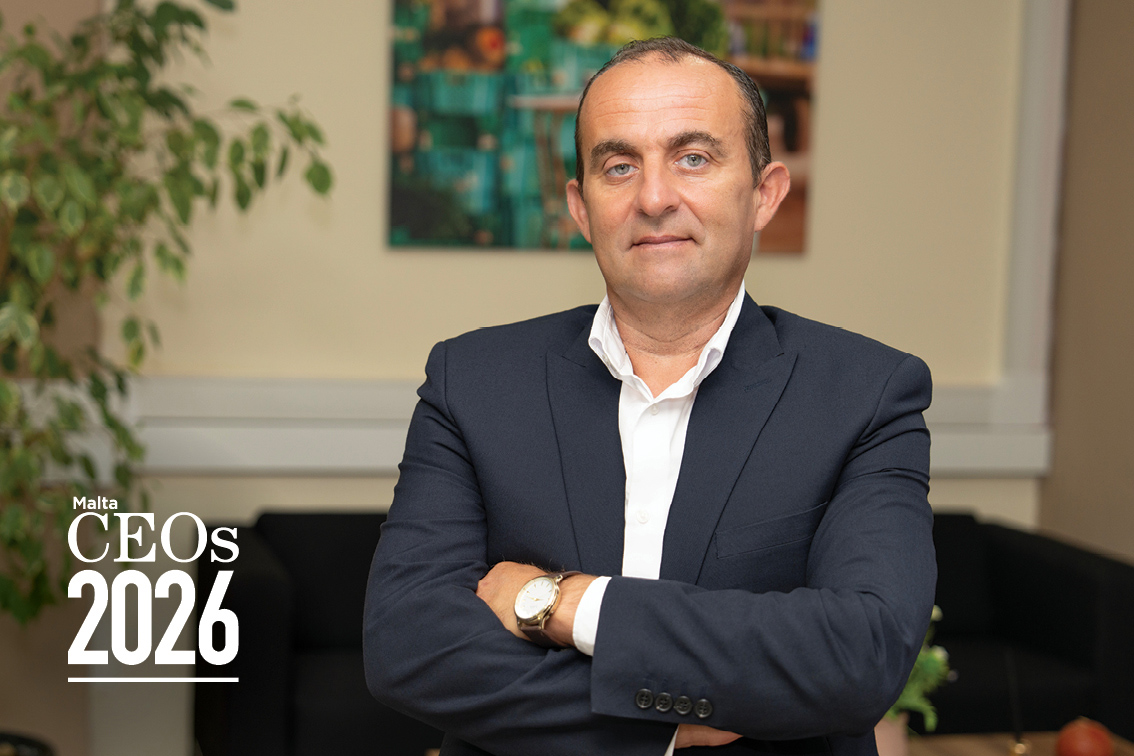
Technology has become a powerful tool in accelerating this effort, transforming how the agency connects with farmers. “We implemented traceability through technology projects, such as developing apps where farmers can track their sales and prices online,” Brian explains. “By strengthening traceability, we’ve built trust with stakeholders. In the old days, farmers brought their produce to market, but no one updated them until month-end. Now they have real-time systems.”
Alongside digital upgrades, food waste reduction has become a cornerstone initiative through the tarmix.gov.mt platform. “Over 40 tonnes of food have been redirected to social causes so far, and there’s strong potential to scale this model regionally,” Brian reveals. The approach reflects a circular-economy mindset. “Today, the Pitkalija operates on zero waste. Remaining produce that’s fit for consumption goes to charities. What isn’t fit goes to WasteServ and is turned into compost, which we then give to farmers free of charge. The compost enriches the land, providing essential nutrients to the soil.”
The initiative tackles a broader national problem. “Malta has one of the highest food waste issues in Europe. We’re not the worst performers, but other countries fare much better,” Brian acknowledges. Historically, food waste was often left to policy-makers to solve; now, the Malta Food Agency has chosen to step in. “We said, ‘We promote food; we push food forward – so let’s do something about food waste ourselves.’”
From tackling waste to embracing digital solutions, the agency’s innovation journey now builds towards the Food Innovation Hub in 2026 – a €10 million investment designed to foster entrepreneurship and product development. “It will serve as a launchpad for agri-tech startups and be the centre for research, development and training,” Brian explains. The agency is collaborating with local universities and EU innovator networks on Malta’s first facility of this kind.
“There will be three state-of-the-art kitchens: one for fish products, one for fruit and vegetables, and one for dairy,” Brian adds. “Farmers can develop products from their produce – jam from strawberries, sauce from tomatoes, even dairy products from livestock.” The initiative addresses the real entrepreneurial challenges Brian has witnessed firsthand: “I met a student who wrote his dissertation around a fish cake he developed. He had a great recipe but was limited to his home kitchen. The hub will give people like him the professional facilities to turn their great ideas into real products.”
Complementing this, the upcoming new Farmers Market in Ta’ Qali promises to revolutionise direct-to-consumer sales. “We’re creating Malta’s first proper Farmers Market in a modernised location,” Brian says. “It will extend the existing park by adding expansive open spaces and minimal construction, as we want to avoid overdevelopment with concrete.”
The market prioritises direct producer-consumer relationships and a wholesome family experience. “Direct consumer sales mean better margins for farmers and fresh, seasonal produce for families,” he highlights. The agency has joined the Farmers Market Federation of Europe to learn from successful models in Italy, Germany and Poland. “This is a way to sustain local agriculture. We’re encouraging all local producers to participate – and we believe it will be a game changer for the sector.”
Yet infrastructure alone is not enough. Talent remains a priority, but attracting it is a persistent challenge across Malta’s agricultural sector. “Farming is not an easy field for young people to enter,” Brian acknowledges. Even so, he is optimistic: “I envision having fewer farmers, but more productive ones. We’ll keep finding people who want to connect with nature and work outdoors.”
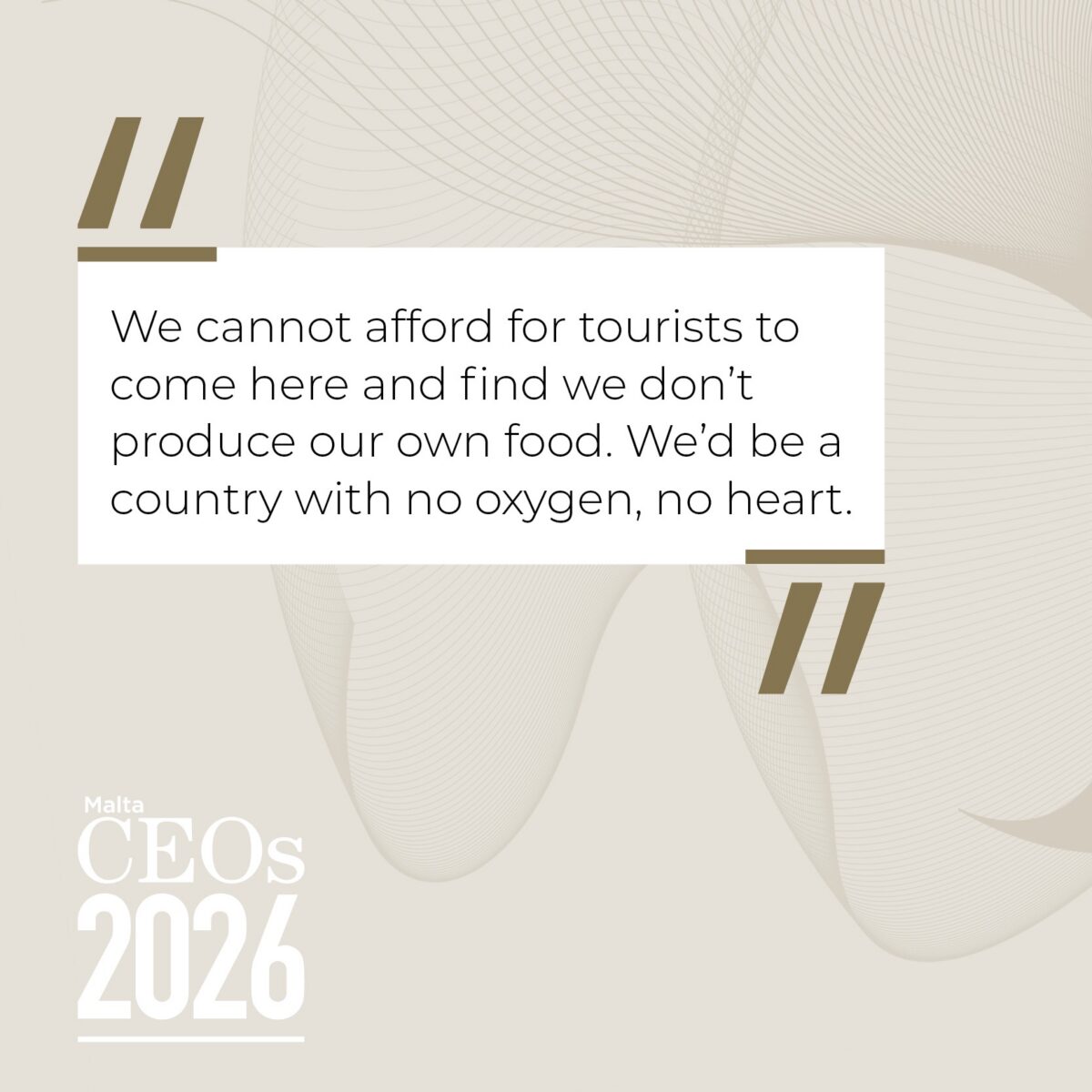
Brian’s optimism is grounded in market creation rather than subsidies alone. “Having a product, a processing plant and funds for a new farm is all well and good, but you must create markets,” he clarifies. That market opportunity is closer than many realise. “We attract huge numbers of tourists, and they’re all looking to eat local produce. Are we giving them what they’re asking for? I’m quite sceptical,” he shares. “We often focus on exporting when we should be serving the local market first – the demand is already here. We cannot afford for tourists to come here and find we don’t produce our own food. We’d be a country with no oxygen, no heart.”
For Brian, food sits at the intersection of Malta’s economy, culture and national identity. “Food and agriculture are part of our soul. We can’t promote tourism without agriculture,” he stresses. “Yes, we have our temples and cathedrals, but food is an integral part of our heritage.” This philosophy also shapes how the agency promotes Malta’s produce. “We don’t only promote the product – we promote its history too, because behind that product is a person with a real story,” Brian points out. “Customers want to connect with the story behind the food they’re eating at home.”
This market-focused stance aligns with the Government’s Malta Vision 2050 framework, which sets the country’s long-term development goals. “We believe that one of the pillars of Malta Vision 2050 is food and sustainability,” he notes. “So we can’t ignore this. We’re working with governmental entities to align our goals and future-proof our food systems.”
Ultimately, Brian frames the Malta Food Agency’s mission as transcending traditional agricultural support. “Our food keeps our whole ecosystem in place. With Malta’s limited greenery and many buildings, we need to maximise the natural spaces we have. The bottom line is food sustains our economy and social life – people must have access to healthy, affordable food, and we plan to ensure that they get it.”
This article is part of the serialisation of 50 interviews featured in MaltaCEOs 2026 – the sister brand to MaltaCEOs.mt and an annual high-end publication bringing together some of the country’s most influential business leaders.

‘Greed harms businesses more than anything else’ – Wolfgang Tweraser
The TW Consulting & Trade Ltd CEO believes Malta has much more to offer: ‘It could be like a little ...
‘Not everything can be taught through textbooks’ – MUHC CEO Chris Schinas
‘I see my role as using the university’s name, its facilities and its resources to build a successful commercial arm.’
‘Retention is the new recruitment’ – HR Plus Managing Director Adrian Buttigieg
‘Starting from the ground up teaches you to value every team player.’
‘We want to be the Revolut of B2B payments’ – Paytently CEO Samuel Barrett
‘Many companies focus on consumers, but they’re missing how transformative B2B payments can be within today’s payments infrastructure.’
