


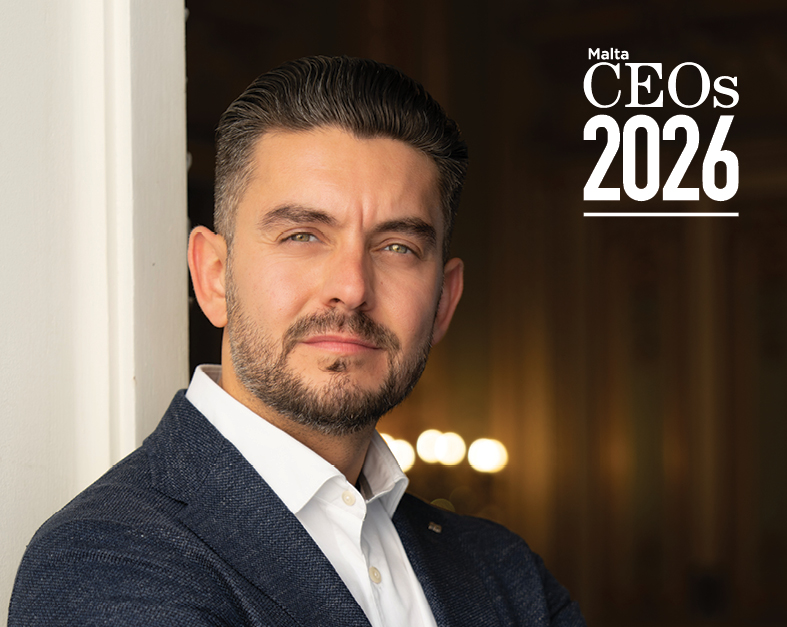
Only a couple of years old, Paytently has rapidly emerged as one of Malta’s most dynamic fintech companies. Led by CEO and Co-Founder Samuel Barrett, the company focuses on payment orchestration for regulated industries and obtained its Payment Institution licence from the Malta Financial Services Authority (MFSA). Backed by major partnerships with Mastercard and Revolut, and strengthened by a new Chief Product Officer, Samuel’s vision is to scale further in 2026 and beyond.
Paytently CEO Samuel Barrett’s career has been defined by spotting opportunities early and executing with pace. Moving from London to Malta in 2016 to establish a presence in the gaming sector for open banking pioneer Trustly, he still recognises the impact of that decision today.
“Building out Trustly’s gaming arm was a huge career milestone,” Samuel recalls. “In six years, I helped grow the company from 30 employees to over a thousand, reaching a €9 billion valuation. That business became the market leader in open banking within the gaming sector. It taught me the power of execution in fast-moving, highly regulated industries, and of transforming a startup into a unicorn.”
Samuel channelled these lessons when launching Paytently in December 2022. “I started the business in my bedroom by telling my wife I was going to start a payments company,” he laughs. Within three years, Paytently has scaled to 35 employees across Malta, Belgium, London, and Portugal, raised €6 million in funding and, in October 2025, secured a Payment Institution licence from the Malta Financial Services Authority (MFSA). “Paytently has proved that the payment orchestration model works at scale. Taking the company from a software payments startup with no licence to a regulated payments institution is one of the biggest achievements of my career – and quite a story for a fintech organisation in the Maltese jurisdiction.”
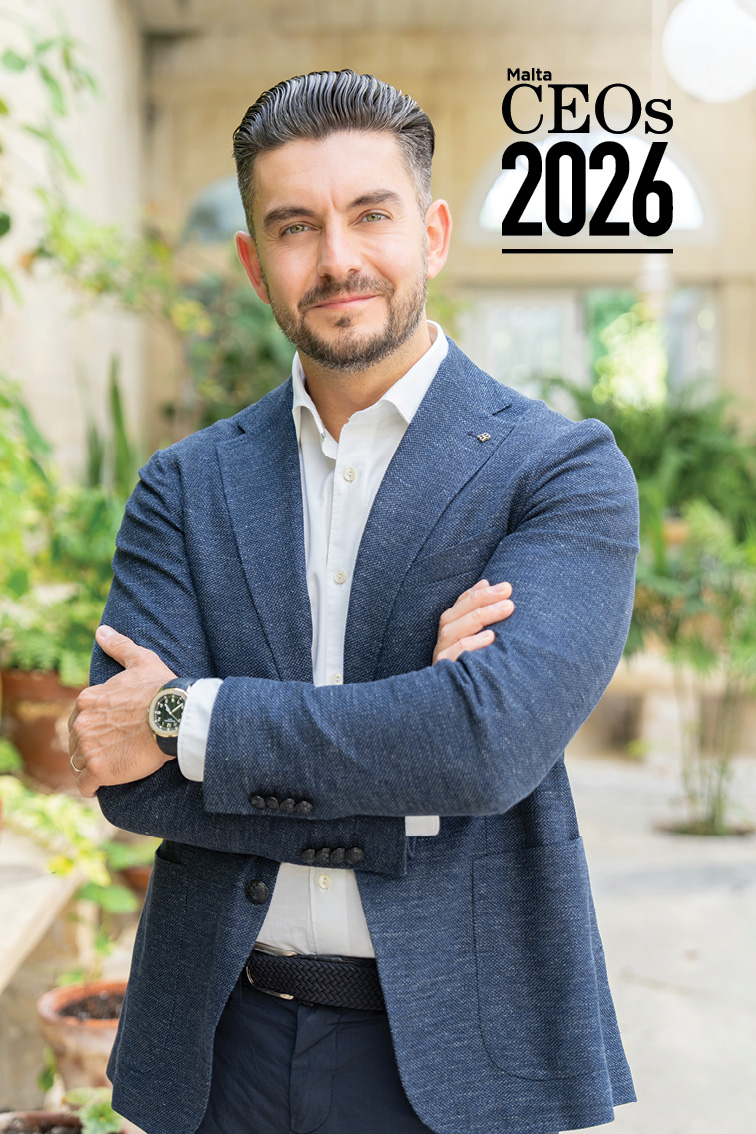
As the company’s progress has accelerated, Samuel’s leadership has evolved to meet the demands of Paytently’s rapid trajectory, particularly as CEO of an ever-expanding team. “My previous roles were purely growth-driven,” he says. “Now I’m equally focused on governance, compliance, long-term sustainability, and strategy. As a CEO, your job is no longer just to win deals but to build an organisation that can thrive without you in the room.”
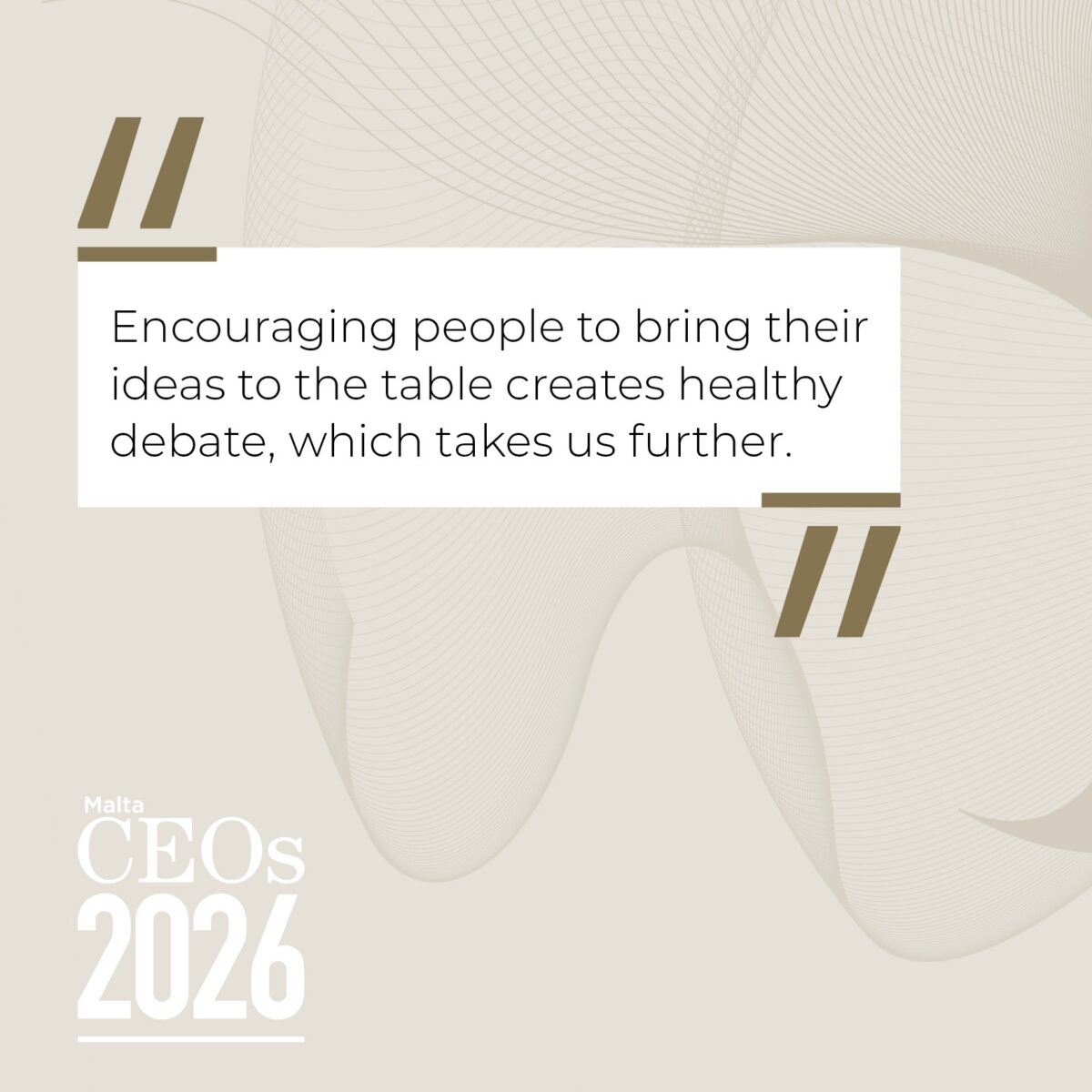
Central to Samuel’s leadership is hiring well and empowering the team – an approach that also keeps him sharp in a dynamic sector. “Paytently has a culture where everybody can share their views without ridicule. They don’t need to hold a senior position to be heard. Encouraging people to bring their ideas to the table creates healthy debate, which takes us further. I value empathetic leadership, giving people the chance to step up and build a strong proposition together,” he adds.
That collaborative culture underpins Paytently’s rapid ascent in the payments orchestration space. The platform connects e-commerce merchants to a global network of acquiring banks and payment service providers (PSPs) through a single integration. “We’ve aggregated a broad network of acquiring banks and alternative payment methods that enable merchants to reach new markets and scale globally as e-commerce sites,” Samuel explains.
Technology is at the heart of this. “Our artificial intelligence (AI) routing engine orchestrates payments in virtually real time, sending transactions to the most suitable acquirer based on acceptance rate, commercial cost or fraud mitigation tools. Customers only pay for successful transactions.”
Paytently’s mission is powered by the combined payments and fintech expertise of its three founders: Samuel alongside Laurent Reysbosch, Chief Business Development Officer, and Nick Tucker, Chief Commercial Officer. “Nick was my right hand at Trustly, while Laurent was once my competitor,” Samuel says. “Over the years, we remained close and became specialists in our fields. By pooling our knowledge, we’ve united behind one vision: to simplify and supercharge payments for global merchants.”
Partnerships with international enterprises already underline this ambition. “Double-digit revenue growth was our biggest performance metric last year, but more importantly, we secured two major strategic partners,” Samuel notes. “One is Mastercard, which chose Paytently as its open banking provider for the iGaming sector. The other is Revolut Pay, Revolut’s new payment method, for which we are the exclusive iGaming distributor. For a small player to be trusted by two global financial institutions to represent their brands and distribute their propositions to the iGaming sector is a huge win.”
In August 2025, Paytently also welcomed Lawrence Koo as Chief Product Officer. “Lawrence is one of the most respected product leaders in open banking. I had the privilege of working with him at Trustly, and his deep expertise in the payments sector will be invaluable to Paytently,” Samuel says. “His ability to drive growth and spark innovation is unparalleled.”
Another milestone in 2025 came with securing the MFSA licence – a pivotal foundation for future growth. “It unlocks new services, markets and segments,” Samuel explains. “Before scaling commercially, we needed that licence. It was probably the most critical decision of the year and it was a tough journey. We had to pause other priorities and focus, while still balancing client demand and our product roadmap. But we now have the rock-solid foundation to take the business to the next level.”
Malta’s position as an international iGaming hub gives Paytently a natural springboard. “Malta makes it simple for a gaming payments business to operate, so it’s an obvious choice,” Samuel highlights. “But our offering also targets other sectors, including financial services, travel, digital goods, retail, and e-commerce.”
Even so, operating in Malta brings challenges, particularly around talent. “Fintech expertise is in high demand. You’re competing with strong employers in gaming who offer great packages and appealing work environments. We’ve been lucky to attract talent, but for positions in areas like software development we’ve had to hire in London, where salaries are higher. You get what you pay for, and building the right proposition is critical.”
Technological innovation continues to set Paytently apart in a competitive landscape. “AI is at the core of our product,” Samuel clarifies. “It drives our routing engine, fraud tools, and real-time and predictive analytics. It’s the number one differentiator between us and other full-stack PSPs – and what will take payments orchestration into the future.”
And the future remains firmly in Samuel’s sights, as he focuses on turning Paytently into Europe’s leading payments orchestration platform, with new product lines, new verticals and profitable operations. While he expects convergence across payments, fintech and embedded finance in the coming years, Paytently’s priority is profitable growth and expansion into new regulated markets. “Globally, orchestration will become standard in business payment stacks, and we’ll see more resilience within payment departments as they adopt orchestration,” he predicts. “But we’re also preparing to enter the US – that’s probably our biggest internal discussion right now.”
Beyond that, Samuel sees another lucrative, yet untapped, opportunity on the horizon. “The B2B payments space is ripe for disruption. Many companies focus on consumers, but they’re missing how transformative B2B payments can be within today’s payments infrastructure. We want to be the Revolut of B2B payments.”
Sustainability is also shaping decisions at Paytently. “We’re embedding environmental, social and governance concerns into product development, building greener transactions and working with inclusive financial services businesses – governance is already embedded through the MFSA licence. Ultimately, it’s about working with the right partners.”
Indeed, to continue nurturing a successful fintech space, Samuel’s message to the island’s business community is clear: “Collaboration is Malta’s superpower,” he concludes. “By working collectively, fintech companies can punch far above their weight globally. Together, we have the potential to make a much bigger splash within the global fintech scene.”
This article is part of the serialisation of 50 interviews featured in MaltaCEOs 2026 – the sister brand to MaltaCEOs.mt and an annual high-end publication bringing together some of the country’s most influential business leaders.
‘Greed harms businesses more than anything else’ – Wolfgang Tweraser
The TW Consulting & Trade Ltd CEO believes Malta has much more to offer: ‘It could be like a little ...
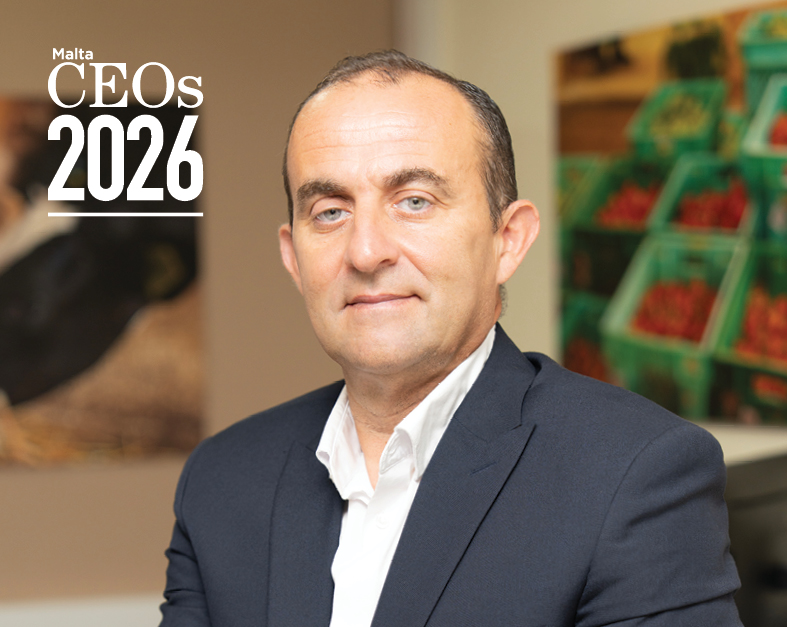
‘We can’t promote tourism without agriculture’ – Malta Food Agency CEO Brian Vella
‘I envision having fewer farmers, but more productive ones.’
‘Not everything can be taught through textbooks’ – MUHC CEO Chris Schinas
‘I see my role as using the university’s name, its facilities and its resources to build a successful commercial arm.’
‘Retention is the new recruitment’ – HR Plus Managing Director Adrian Buttigieg
‘Starting from the ground up teaches you to value every team player.’
