

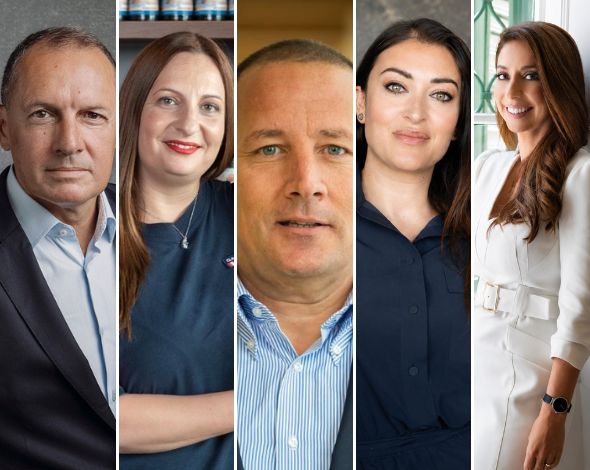
Was there one defining moment that changed everything?
This was the question we asked a number of local CEOs and business leaders as we sought to find out instances that drove people to take the plunge into the business world.
From becoming a mother to gaining experience overseas, some could pinpoint a single turning point, while others said their careers were shaped by countless smaller decisions.
For St James Hospital CEO Jean Claude Muscat, the defining moment came in 2009 when he made the difficult decision to step away from the Malta operations to expand the family business to Libya and Hungary.
After successfully turning around the struggling Capua Hospital, which Saint James had acquired in 2002, Mr Muscat said his decision to expand the business overseas felt as though he was walking away from everything he had spent years building.
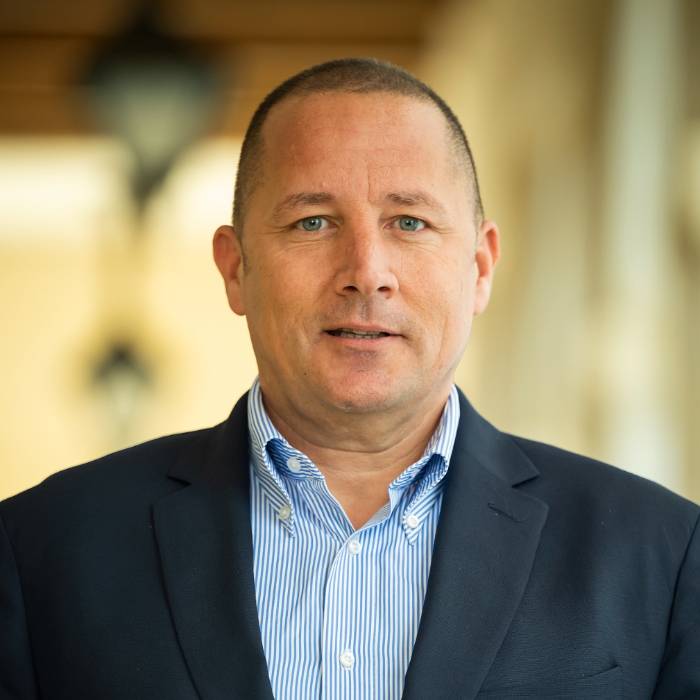
“I found myself reflecting more and more on what the right next step was not just professionally, but personally,” he said.
“Choosing to step away from the Malta operations in 2009 was an incredibly difficult decision that I took. It meant leaving behind a team I believed in, relationships I valued, and a level of certainty I had grown comfortable with and a feeling of losing something that means so much to you.”
“At the same time, there was a quiet conviction that this was necessary. I felt that if I did not take that leap and attempt to expand the business overseas, I might never test the broader potential of what we could build,” he said.
“The idea of developing something internationally, and one day bringing that experience back home, stayed with me throughout.”
Looking back, he said those years in Libya and Hungary stretched him in ways he hadn’t anticipated and ultimately reassured him that the risk had been worthwhile.
“When I was invited back in 2019 to support the Saint James Hospital Group during a particularly critical phase, it felt like things had come full circle,” he said.
“Stepping back in during the restructuring and the opening of the Żejtun Hospital and later taking on the role of CEO in 2021, carried a very different perspective shaped by that earlier decision.”
“Looking back now, what once felt like the risk of losing everything was, in reality, a necessary step in growing not just the organization, but also myself. It is a reminder that some of the most important decisions only make sense with time and distance taking the tough decisions at the right time however remains key.”
Talbot & Bons Co-Founder Amy Talbot actually sat for a degree in Maths & Physics, although she had been dreaming of taking the plunge into entrepreneurship for a while.
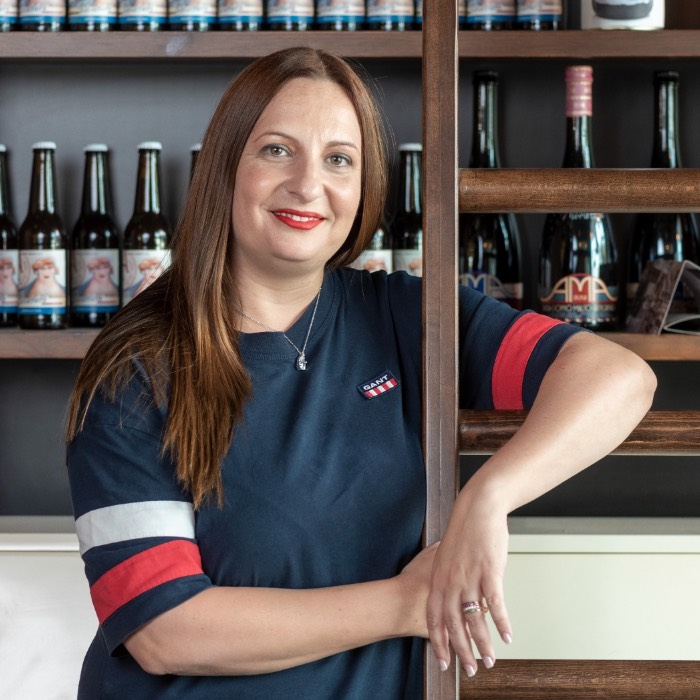
“Deciding to go into entrepreneurship doesn’t happen overnight. It starts with a wish, a thought, a ‘one day I’ll…” and not necessarily having all the roadmap spread out,” she said.
“Then you start building this dream, adding details with every experience, thought, idea. When the right opportunity comes by, you already know what you want and that this is what you’re looking for.”
She said she faced niggling doubts, such as whether her degree was all for nothing and whether she should use her qualifications to seek a comfortable job with a decent wage rather than take the risk.
Since she set up the company with her husband, then fiancé, there was also the additional risk attached with intertwining their professional and personal lives.
“However with the help of my husband, who was always very encouraging and supporting, we went for it when we felt the right opportunity came along,” she said.
“Fourteen years later, our first adventure together in business, Talbot and Bons at SkyParks, is still going strong, and we have since then expanded into accommodation with various boutique B&Bs in the south of Malta.”
“It’s a constant rollercoaster, but one which gives great satisfaction and rewards. All this is thanks to the amazing team that we have, as without them we couldn’t make our dreams a reality.”
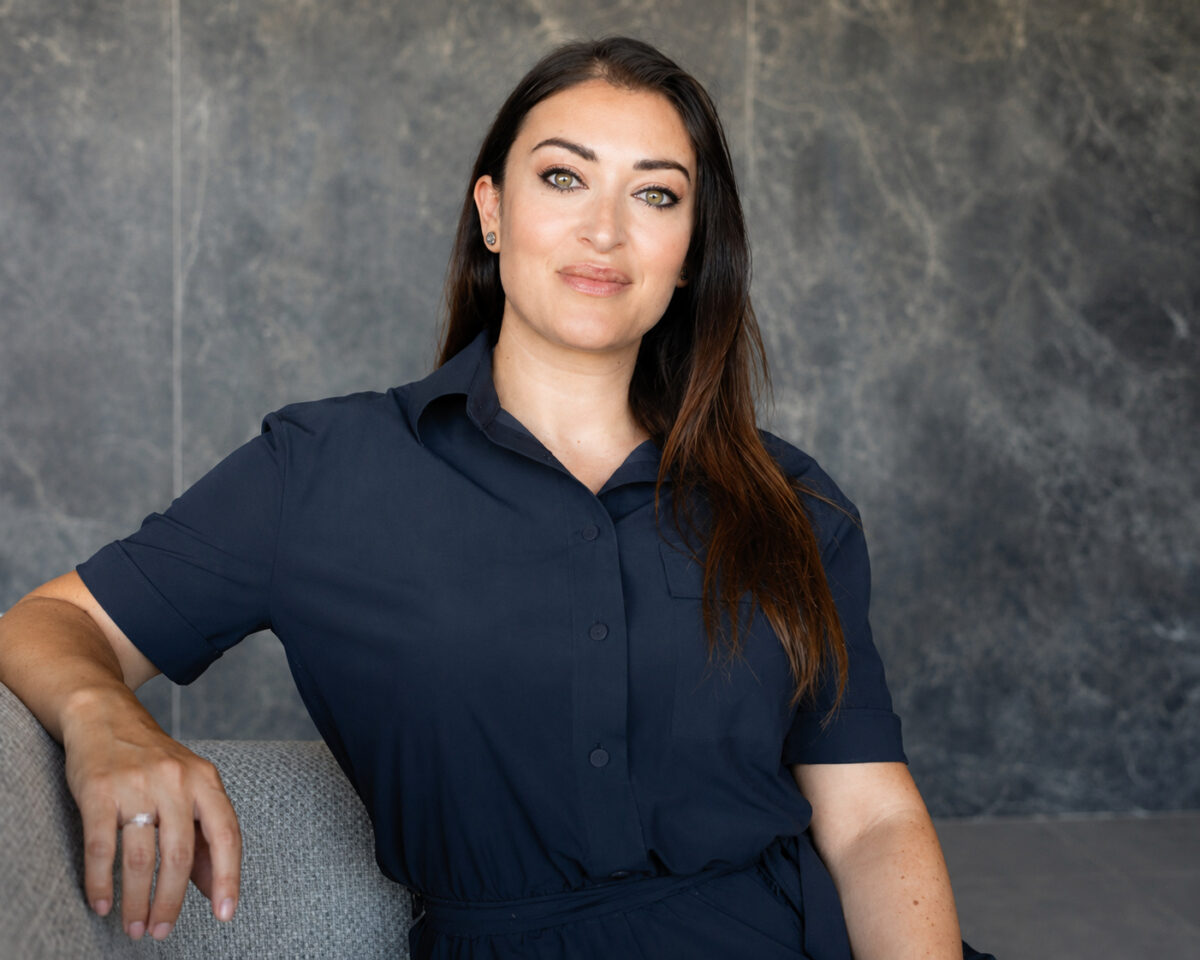
For Waldorf Centres founder Charmaine Mangion, becoming a young mother sparked a vision that would ultimately change the course of her career.
Starting out as a state school teacher, Ms Mangion said she always loved doing things her own way and was lucky enough to be able to bring her own creativity into the classroom.
Her experience of other countries’ approaches to early education made her realise that children deserve calmer environments centred around their overall wellbeing.
However, it was only when she became a 21-year-old mother some 11 years ago and started searching for the right childcare centre for her daughter that she noticed a business opportunity.
“I wasn’t simply looking for childcare; I was looking for a place that felt like not just educational but peaceful,” she recounted.
“Screen-free, calm, filled with natural materials and earthy colours rather than overstimulation. Calming background music and soft lighting instead of flashing toys, bright colours and commercial stimulation.”
“A place where children could connect with nature, express themselves through art freely, move through activities like yoga, and simply be children. I wanted to replace overstimulation with imagination, using natural, open-ended materials that allow children to create their own stories, rather than toys that do the thinking for them.”
“A pine cone lets the child create the story, a toy phone tells the child what to play.”
“That search made me realise there was a gap in the market. More importantly, it gave me a vision that stayed with me every single day.”
She pointed out that the childcare sector was still in its infancy back then, and there were plenty of reasons on the outside not to abandon the security of a stable teaching career to open a childcare centre.
“But sometimes a vision becomes stronger than the fear of failing,” she said.
“The more I tried to ignore it, the more convinced I became that if I didn’t create a service that differentiated itself from what was already on the market, that vision would never become a reality and I would always regret it.”
“So I decided to take the risk, not because it felt safe, but because the vision outweighed the odds.”
“Looking back, I don’t think I became an entrepreneur because I wanted to own a business. I became one because I couldn’t let go of an idea I truly believed would make a difference. Entrepreneurship simply became the vehicle that allowed me to turn that vision into reality.”
Ms Mangion said this same mindset continues to guide her over a decade later.
“More than a decade later, that same mindset continues to guide me,” she said.
“Whether it’s education or any other venture, I believe every successful business begins with a clear vision and is built through relentless attention to detail. Vision inspires people, but it’s the countless small details that bring it to life.”
“I’ve come to realise that opportunities rarely announce themselves. They begin as a vision that refuses to leave you alone. The entrepreneur’s role is to notice what others overlook, obsess over the details, and have the courage to build what doesn’t yet exist.”
“I don’t think entrepreneurship is defined by the sector you’re in. It’s a way of thinking. It’s seeing what could be before it exists, having the conviction to pursue it despite the odds, and understanding that excellence is rarely found in one big decision, but in the hundreds of small details that shape the final experience.”
David Tabone, CEO of The Convenience Shop, argued that business careers aren’t usually shaped by singular dramatic moments but by a series of smaller decisions that compound over time.
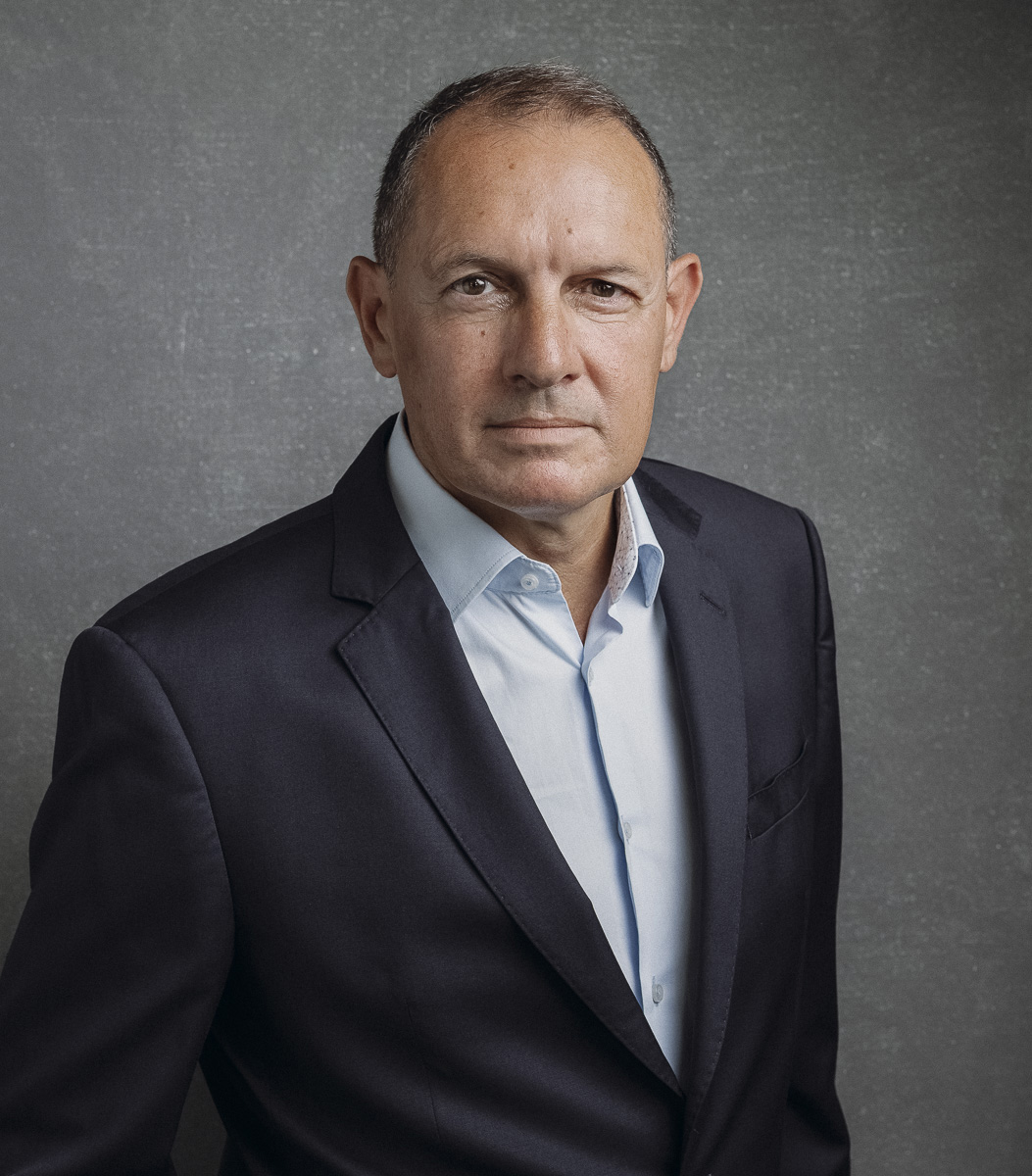
Looking back, however, he said that, when faced with these decisions, he almost always found himself choosing the riskier one.
“Probably the first time that really mattered was when I decided to pursue a career in Hospitality Management rather than becoming an acccountant which is what everyone, including myself, thought at the time,” he said.
“It didn't feel like a big bet at the time, but looking back, that's the decision everything else followed from and it’s the reason I am running The Convenience Shop (Holding) plc today rather than sitting behind a spreadsheet somewhere.”
The life-changing moment for Janice Fenech, General Manager at Storton Fund Management, had nothing to do with business and everything to do with running a half marathon.
“Looking back, it wasn't signing a contract or handing in my resignation that changed my life. It was a rainy Sunday morning on 25th February 2024,” she recounted.
“At the time I was burnt out, mentally exhausted and had very much lost confidence in myself. A group of colleagues had been training for a half marathon for months, but I hadn't even considered taking part.”
“I hadn't exercised properly in years and couldn't imagine completing 21 kilometres.”

“A week before the race, someone dropped out and asked if I wanted their place. I said yes without thinking too much about it. I bought a pair of running shoes and turned up having done absolutely no training.”
“On race day the weather was dreadful. Heavy rain, strong winds and a storm. Seven of the ten people who had planned to run decided not to start. Three of us did. One stopped within the first kilometre.”
“The race felt endless. I was soaked through, my hands became so swollen and numb I could barely move my fingers, and every part of me wanted to stop. But I kept repeating the same thing to myself: If I say I'm going to do something, I'll finish it, even if I have to crawl across the line. And I did.”
Ms Fenech said that fighting her own self-doubt to cross the finish line made her realise that the biggest barriers are often in our minds.
“It reminded me that our minds usually give up long before our bodies have to. More importantly, it made me realise how many limits I'd been placing on myself simply because I believed they were there,” she said.
“Since then I've stopped waiting until I feel ‘ready’ and started saying yes to opportunities that challenge me. Every step I've taken since has been driven by that same belief: if I'm willing to commit, I'll always find a way.”
Whether it was a personal challenge or a vision that refused to fade, these stories show there is no single blueprint for business success.
However, the CEOs and business leaders all shared one defining trait: a willingness to take risks and embrace uncertainty rather than seek the comfort of the well-trodden path.
Whether driven by a single life-changing moment or a series of smaller decisions, they all chose to back themselves and trust their instincts when it mattered most.


Why smart leaders are learning to embrace workplace conflict
The challenge for today's leaders is not eliminating conflict but making sure it is handled constructively.
Stuart Vella Bonello marks next career step as Director in Advisory at KPMG Malta
‘Thank you to everyone who supported me and challenged me,’ he wrote.
‘Still pinching myself a little,’ says Owen Baldacchino on joining Flutter as Head of AML
Owen Baldacchino joins Flutter Entertainment as Head of AML and MLRO.

Meet Cyana: New Greek rooftop restaurant opens this Saturday October 10 at Hard Rock Hotel Malta
Book now for Greek flavours, Mediterranean views and sunset cocktails await at this new rooftop destination in St Julian’s.
