

Budget 2027 continues to place considerable emphasis on social well-being and supporting households, while seeking to sustain Malta’s economic momentum. These are important objectives, and maintaining a balance between social progress and economic development remains essential.
Looking ahead, I believe there is an opportunity to build further on Malta’s economic performance by placing an even greater emphasis on productivity, innovation and the development of higher value-added activities.
As Malta’s economy matures, the focus will increasingly need to be on how effectively we use our existing resources, develop skills, adopt new technologies and help businesses become more competitive internationally.
Encouraging investment in digitalisation, automation, research and development, and employee skills can help companies grow sustainably while creating better-quality employment opportunities.
Keeping the projected deficit at 2.6 per cent of GDP and maintaining debt levels below 47 per cent preserves fiscal agility and international market confidence during ongoing external volatility. The reduced 25 per cent corporate tax rate on retained and reinvested profits for small businesses (turnover under €1 million) is a welcome structural incentive. Encouraging SMEs to reinvest earnings back into technological adoption, digital transformation, and growth is precisely the mechanism needed to build local corporate resilience.
Labour market initiatives push businesses to rethink their operational model. However for this transition to succeed without harming competitiveness, it must be paired with rapid execution of skills upskilling and streamlined support for innovation.
From an investment perspective, I see scope to strengthen the role of private capital in supporting this transition. Private equity and venture capital can help businesses access the funding, expertise and strategic support they need to professionalise, expand and compete beyond Malta’s shores. Well-designed public incentives can complement private investment, encourage additional capital to be deployed and support businesses with genuine potential for sustainable growth.
In this context, the recommendations put forward by The Malta Chamber merit consideration, particularly those aimed at encouraging private investment, supporting innovation and digital transformation, improving productivity and reducing unnecessary administrative burdens.
Measures that help businesses access capital, invest in technology and develop the skills needed to compete internationally can make a valuable contribution to Malta’s next phase of economic development.
The key is to ensure that public incentives complement private investment and translate into sustainable business growth, stronger competitiveness and higher value-added employment.
Social progress and economic competitiveness should reinforce one another. A strong and productive business sector helps create the resources needed to sustain social priorities over the long term. The opportunity ahead is to build on Malta’s existing strengths, encourage more investment in productive activities and create the conditions for Maltese businesses to grow, innovate and compete successfully in international markets.
Looking forward, sustaining Malta’s economic momentum requires translating policy into structured execution, aligning closely with the recommendations put forward by the Malta Private Equity and Venture Capital Association (PEVCA Malta). To successfully pivot from volume-driven expansion to a high-value, productivity led ecosystem, future measures must prioritise targeted private equity and venture capital tax incentives to unlock domestic private capital, streamline regulatory frameworks for alternative investment funds, and foster a robust digital and technological infrastructure.
Cultivating a deep-rooted capital raising culture and backing innovative startups will be critical to ensuring Malta establishes genuine economic substance and long-term competitive resilience.
Key strategic interventions should also include establishing a government-backed fund of funds, which can simultaneously catalyse private investment and anchor a much needed structural reform in national pensions through a dedicated pensions fund.
Ultimately, Malta should aspire not only to be a place where businesses operate, but also a place where businesses are financed, developed and scaled into successful international enterprises.

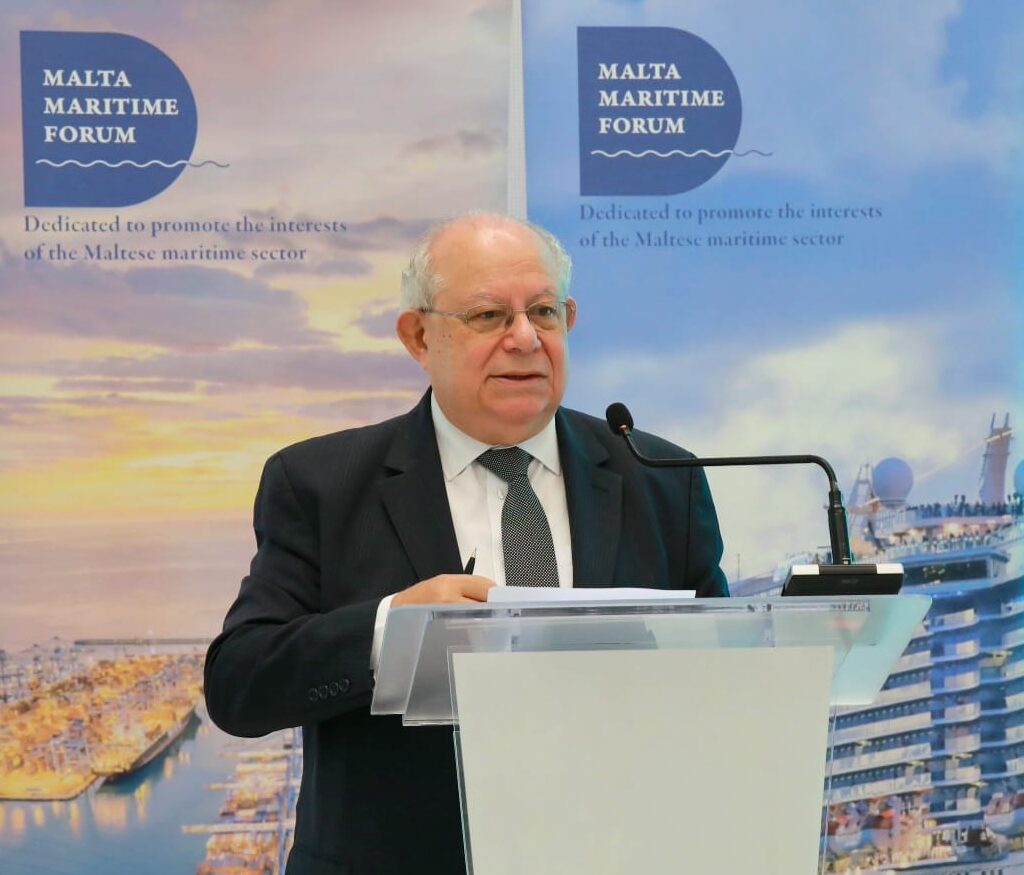
Malta’s maritime sector must look beyond ships and the national register, MMF chairman says
'Next phase of its development must be concerned not only with how much maritime activity passes through', he said

Former BOV Chief Risk Officer Danielle Grima joins Bridge Advice
Danielle Grima draws on her executive and Board-level experience to help financial institutions translate evolving regulatory and supervisory expectations into ...

‘A fantastic milestone’ – Hudson Founder hails H&M’s Malta arrival
Alfie Borg says strong response to H&M opening is testament to the strength of the Maltese market.

You’ve built the business, but can it survive without you?
Succession 'should not begin six months before somebody retires,' writes Nadia Pace.
