


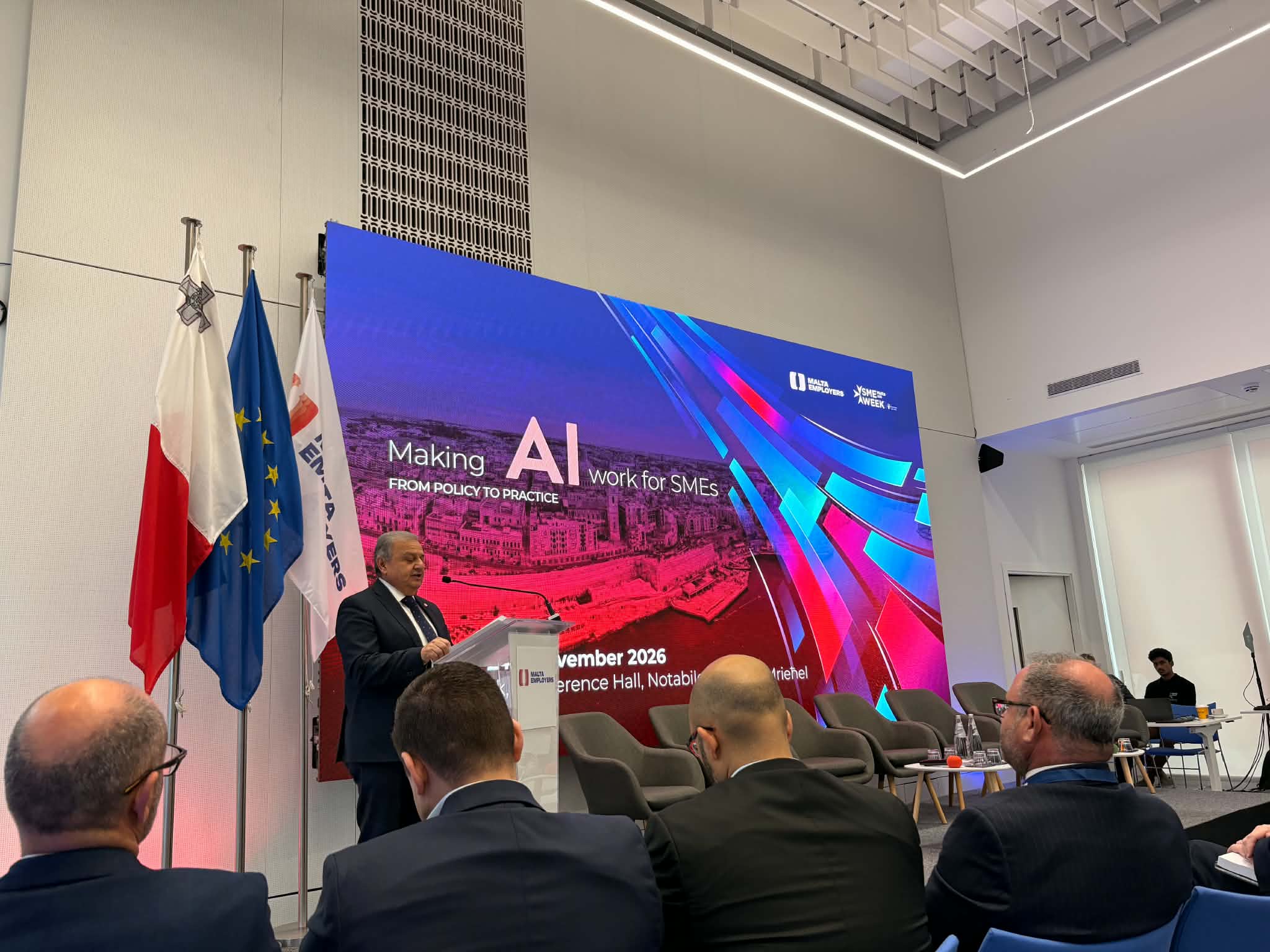
The SME National Forum 2026 brought together business leaders, policymakers and industry experts to discuss AI adoption, workforce development and Malta’s future economic direction.
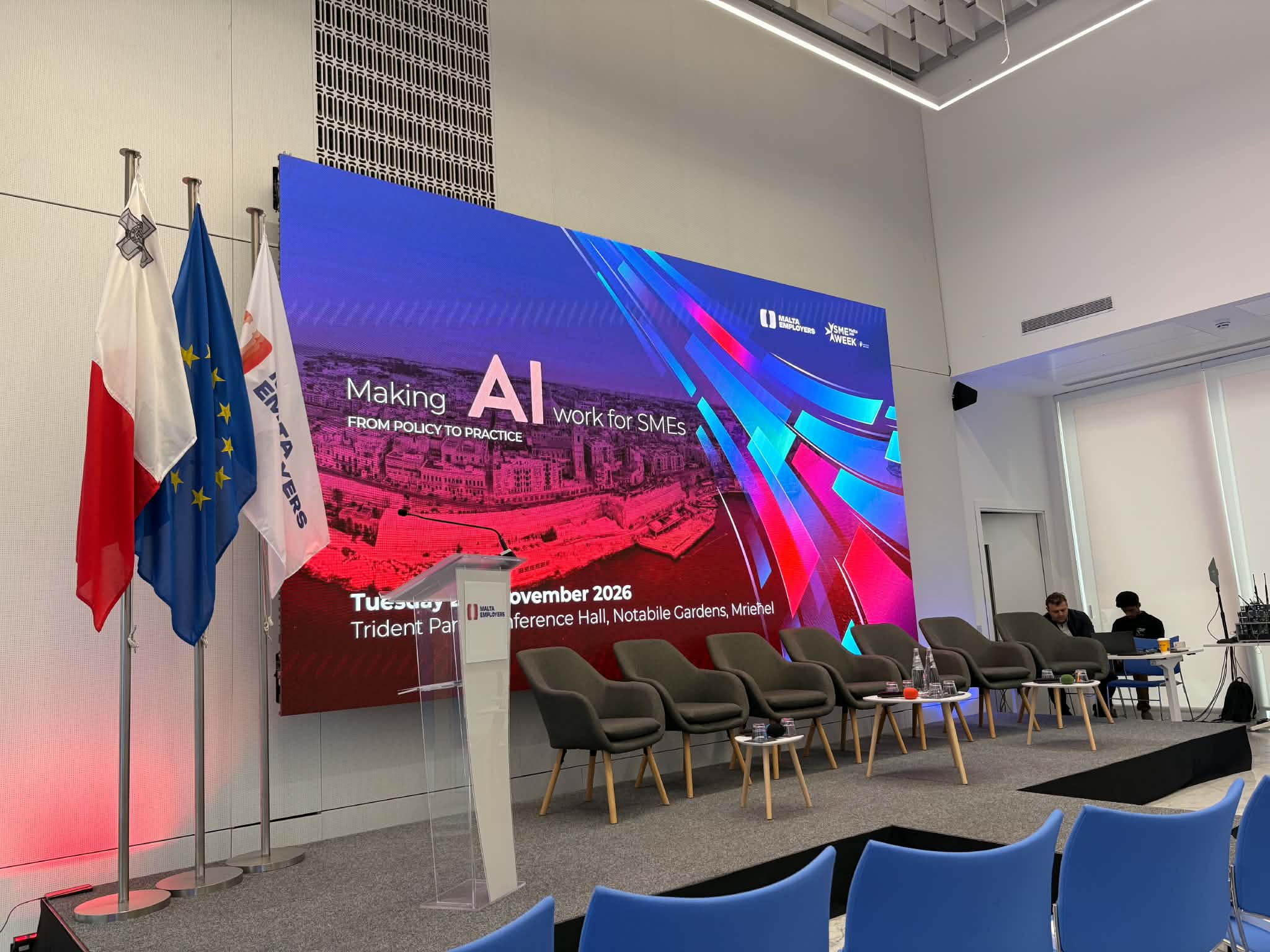
The opportunities and challenges presented by artificial intelligence (AI), the importance of workforce upskilling and Malta’s transition towards a more productivity-driven economy were among the key topics discussed during the SME National Forum 2026, held on 24th November at Trident Park.
Opening the event, host Kevin Spiteri drew on his personal experience of adopting AI, explaining how tasks that previously took him more than a week can now be completed within minutes.
He noted that the time saved has allowed him to achieve a better work-life balance while dedicating more attention to higher-priority tasks.
Malta Employers President Ivan Refalo referred to the findings of the organisation’s SME survey, explaining that its conclusions would be brought to international discussions, given that decisions surrounding AI will have implications for workplaces across the board.
He stressed that the organisation’s ambitions extend beyond simply being well informed.
“We want to influence cultures and behaviours,” he said. “Technology alone changes nothing. What matters is how people use it, and whether AI is introduced with transparency, fairness, and human oversight. We also want employers to have the skills this moment demands.”
Turning to the measures concerning third-country nationals (TCNs) introduced in Budget 2027, Mr Refalo highlighted how employers have long advocated for an economic model that places greater emphasis on productivity, higher value added, technology and innovation.
“I think we can agree that nobody in this room wants an economy dependent on endless expansion,” he said.
Economy Minister Silvio Schembri addressed attendees through a pre-recorded video, highlighting the practical considerations surrounding AI adoption among small businesses.
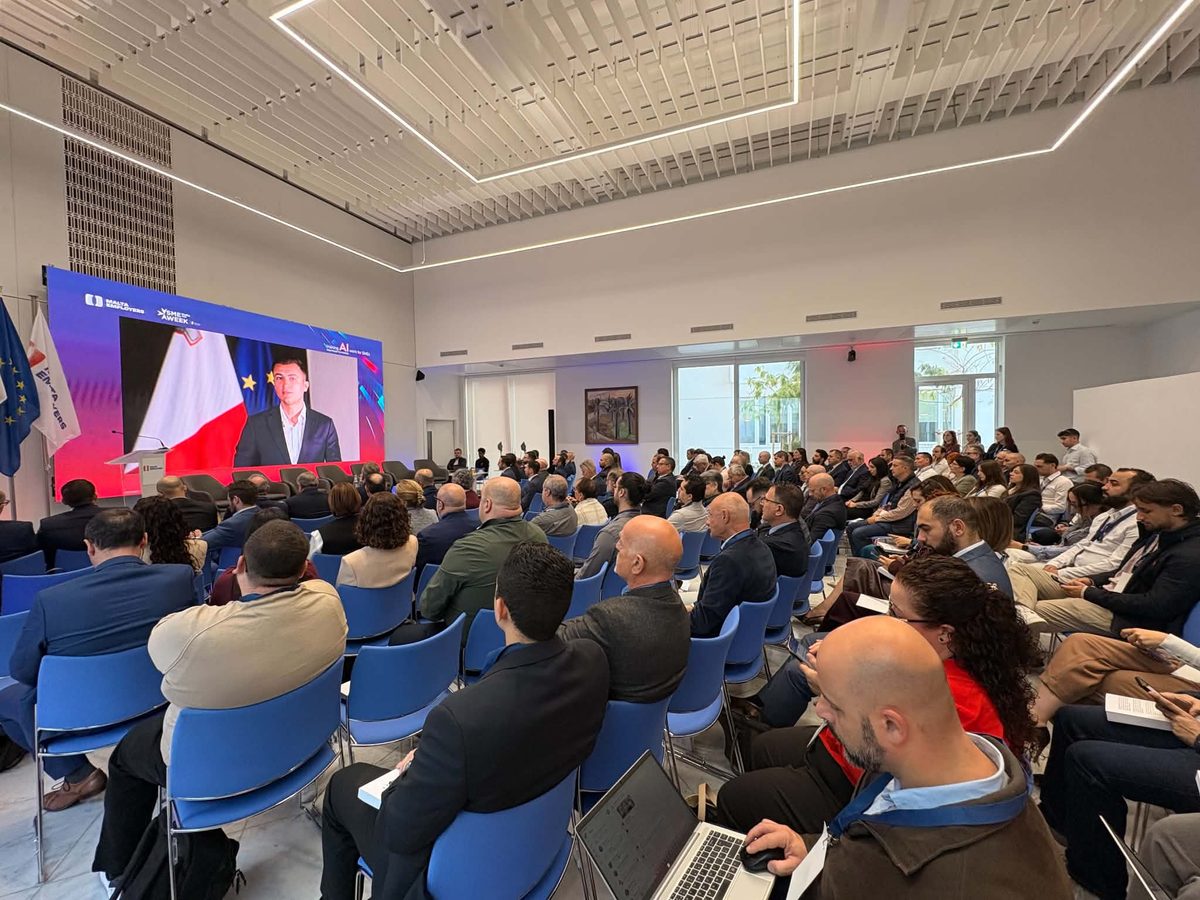
“If you run a small business, the question you’re probably asking about AI is a practical one: Where can it save in time, improve the service I give to my customers, or help my team do a better job?” he said.
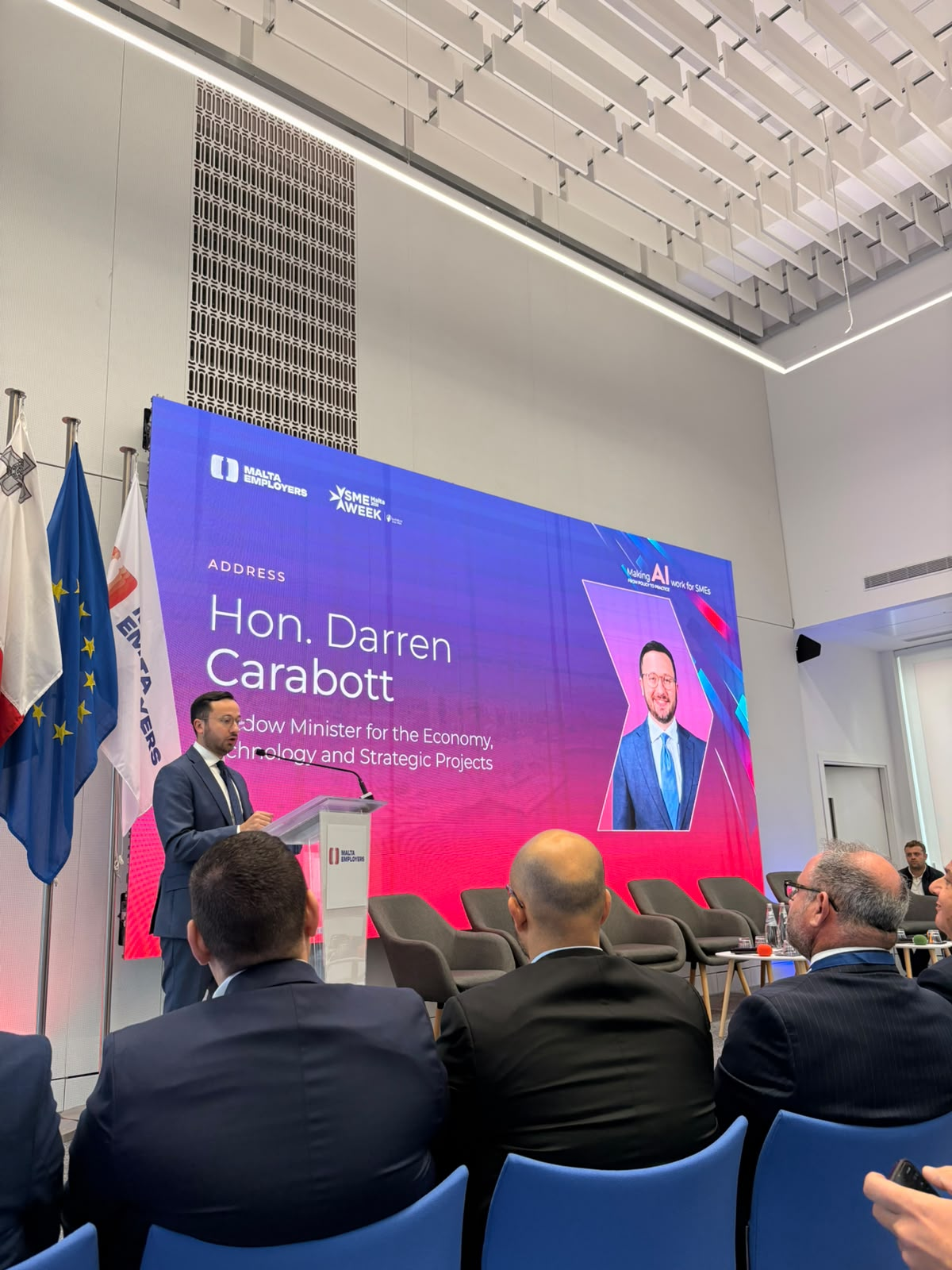
Meanwhile, Shadow Minister for the Economy Darren Carabott questioned what kind of economy Malta wants to develop in the years ahead.
Criticising measures introduced in the Budget, he argued that businesses cannot be encouraged to expand their operations and recruit more employees for years, only to subsequently face additional financial burdens. He referred to companies willing to absorb the costs associated with employing TCNs.
Malta Digital Innovation Authority (MDIA) CEO Kenneth Brincat highlighted the importance of striking a balance between effective and proportionate regulation and creating opportunities for innovation.
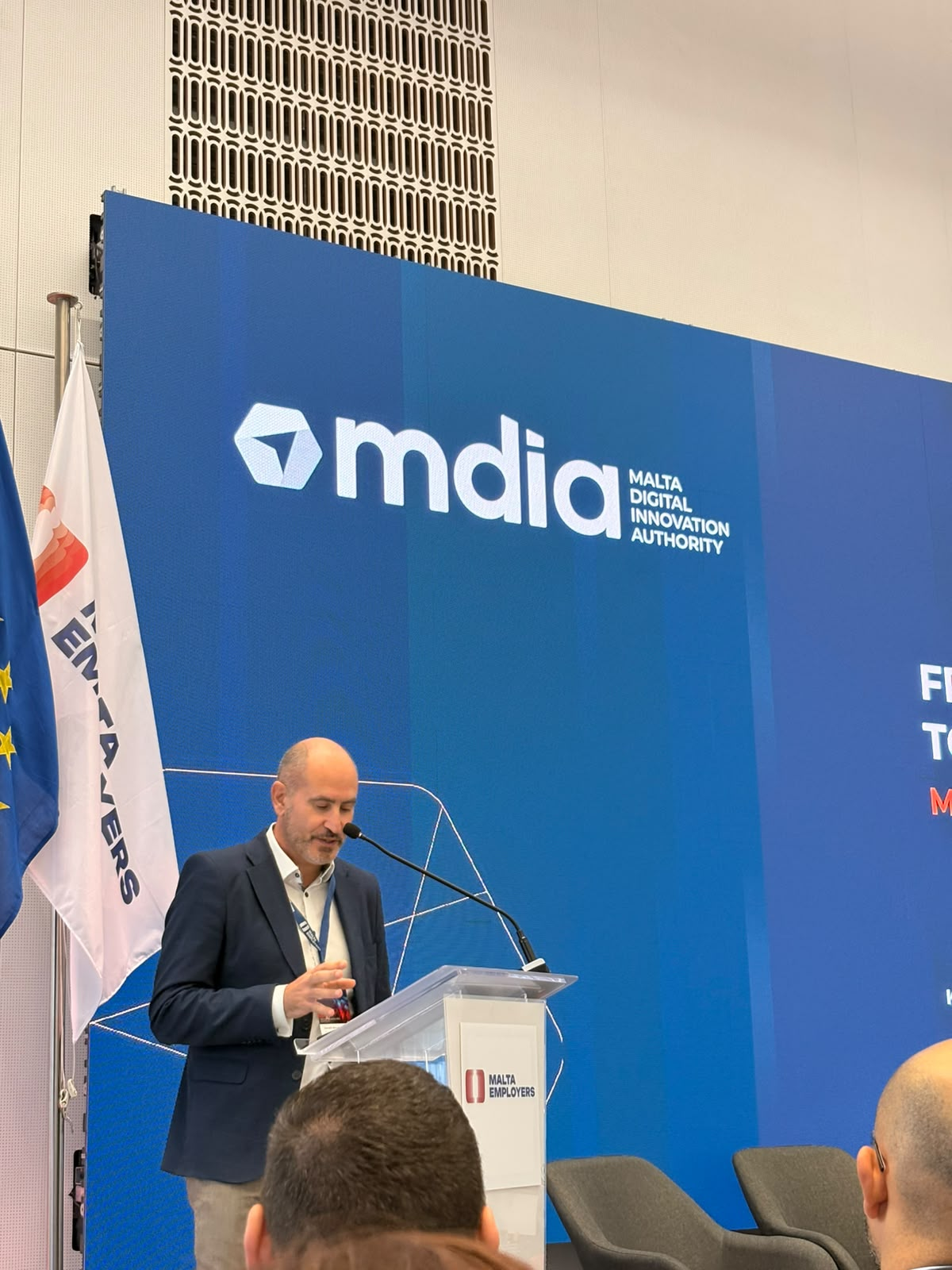
He explained that the authority’s work seeks to foster trust while supporting businesses in their adoption of emerging technologies.
This is particularly relevant to SMEs, he noted, which often have the ambition to innovate but may lack the resources, expertise and capacity available to larger organisations.
Preparing for new skills in a post-AI era
The forum also featured a panel discussion exploring how businesses and employees can prepare for evolving skills requirements in an increasingly AI-driven workplace.
The panel brought together Ruth DeBrincat, Senior Director – Policy and Technical Affairs at the National Skills Council; Edwin Balzan, Digital Innovations Manager at APS Bank plc; Etienne Caruana, Director General at the National Statistics Office (NSO); Kevin Camilleri, General Secretary of the General Workers’ Union (GWU); Stefan Rodoligo, Chief Information Officer at Identità; Martha Muscat, Head of Research and Innovation at Computime FinTech; and Jonathan Gerada, Malta’s Chief Artificial Intelligence Officer.
Ms Muscat highlighted the contrasting attitudes towards AI often found within teams, with some employees struggling to understand the technology while others actively embrace it.
She stressed the importance of individuals understanding their own skills and capabilities, allowing them to use AI as a complementary tool without venturing beyond their areas of expertise.
Mr Balzan emphasised the importance of employers understanding how their workforce is using AI, while ensuring that employees feel confident using the technology and are aware of the information they are feeding into AI tools.
Meanwhile, Mr Caruana identified data integrity and information security as key priorities when introducing AI into the workplace.
He argued that employers cannot reasonably expect workers to adopt AI while simultaneously placing the responsibility for its safe use on their shoulders without adequate support. He highlighted the importance of investing in employee training and appropriate company licences for AI tools.
Mr Rodoligo explained that Identità views AI as an opportunity to improve its operations, while stressing that its adoption should not come at the expense of human decision-making.

From missed calls to robotic dogs: How Maltese businesses are putting AI to work
Three business leaders share how artificial intelligence is transforming their operations, recovering lost revenue and freeing employees from repetitive tasks.

Equal access to training across all roles essential as jobs evolve, says IDEA Group COO
‘Critical thinking and adaptability are essential skills that should be developed at every level of a company.’
Peter Spiteri joins WH as Chief of Corporate Services Transformation
He will focus on strategic development, business growth and the continued enhancement of services available to corporate and private clients.
Alfie Borg sees potential for Malta to become an export hub for Africa and Europe
He advised businesses to study their competitors, understand local pricing and familiarise themselves with the laws that will govern their ...
