

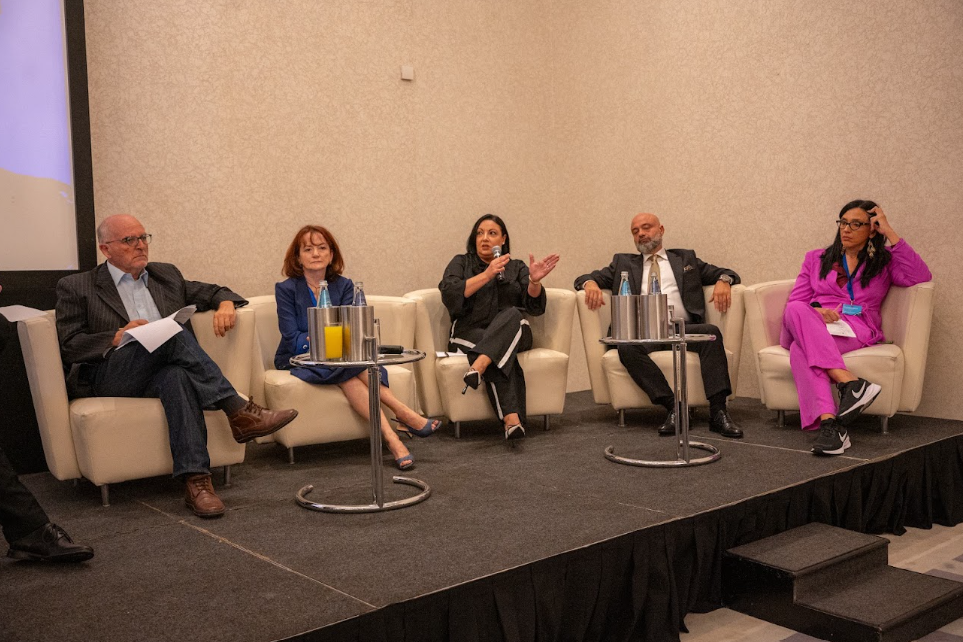
Malta Hotels and Restaurants Association (MHRA) CEO Andrew Agius Muscat has called for a shift away from the cycle of increasing tourism accommodation capacity and attracting more visitors to fill it, arguing that the country must focus instead on what makes Malta distinctive as a destination.
Speaking during the second panel of A Liveable Malta: Tourism Beyond Numbers, a conference organised by Flimkien għal Ambjent Aħjar (FAA) on Tuesday (20th October), Mr Agius Muscat acknowledged the need to reconsider Malta's approach to tourism development.
He explained that the MHRA's pre-Budget proposals focused on making more considered decisions about the sector's future, including protecting the characteristics that distinguish Malta from competing destinations.
He identified different tourism segments, including ultra-luxury and lifestyle tourism, while questioning the sustainability of continuously expanding accommodation capacity.
"We have a lot of beds, we need to fill them, we need more tourists," he explained, describing a cycle in which growing visitor numbers encourage further investment in tourism infrastructure.
"Now we need to break it."
His comments formed part of a wider discussion involving business representatives, politicians and environmental campaigners, who raised concerns about overdevelopment, infrastructure capacity, enforcement and Malta's long-term competitiveness.
Rising property prices threatening Malta's competitiveness
Chamber of Commerce CEO Marthese Portelli argued that Malta's increasing property prices were affecting its ability to compete internationally, including when attracting investment.
She acknowledged that certain businesses engage in abusive practices but maintained that these represent a minority of operators.
Similarly, she cautioned against generalising about wages, noting that while some industries offer comparatively low remuneration, others provide more competitive salaries.
Dr Portelli also highlighted the need to protect Malta's architectural identity, arguing that preserving Urban Conservation Areas (UCAs) should involve more than simply maintaining their formal designation.
She suggested introducing incentives to preserve buildings constructed using traditional Maltese stone, alongside measures discouraging unfinished developments.
According to Dr Portelli, such policies could help protect Malta's built environment while reducing pressure on resources.
However, she maintained that implementing meaningful changes would require political commitment.
Concerns over development and tourism promotion
Momentum Chairperson Arnold Cassola questioned whether sufficient political willingness existed to change Malta's development trajectory.
He criticised the absence of Malta Tourism Authority representatives from the conference and raised concerns about Government-supported promotional campaigns advertising large-scale parties and entertainment events.
Dr Cassola also pointed to what he considered conflicting positions within the tourism and development sectors, arguing that calls to limit accommodation capacity were difficult to reconcile with continued pressure for additional development.
FAA representative Astrid Vella similarly criticised the influence of developers on planning decisions.
She referred to applications for six hotels in Gżira within a single month, questioning whether Malta's infrastructure and communities could accommodate continued expansion.
Ms Vella also argued that tourism promotion should place greater emphasis on Malta's cultural heritage rather than inexpensive entertainment and large-scale parties.
She warned that congestion and deteriorating living conditions could also affect Malta's attractiveness to international professionals, including employees working in the iGaming industry.
According to Ms Vella, some foreign workers choose to leave Malta after several years because of dissatisfaction with the country's living environment.
Infrastructure and transport emerge as key challenges
Transport infrastructure was another major concern raised during the discussion.
Dr Cassola argued that Malta's public transport system had not evolved sufficiently to accommodate population growth and increasing tourism activity.
He called for more frequent and reliable public transport services, shorter routes and dedicated infrastructure for pedestrians and cyclists.
He also questioned whether investment in major projects, such as a metro system, should take precedence over improvements to existing transport services.
Dr Portelli meanwhile highlighted the relationship between development permits and parking availability.
Referring to Planning Authority figures for 2024, she said that approximately 1,500 permits had been issued alongside a parking shortfall of around 4,400 spaces.
She argued that the system allowing developers to pay a contribution when developments do not provide sufficient parking should be reconsidered.
Local councils call for greater resources
ADPD Leader Sandra Gauci, who also sits on the Local Council of St Paul's Bay, raised concerns about the pressures facing the locality, particularly during periods of high tourism activity.
She said the area faced challenges relating to waste management, electricity infrastructure and public safety, while arguing that existing policing resources were insufficient to meet demand.
Ms Gauci called for local councils to be given greater responsibilities and resources to manage these pressures.
In particular, she proposed that revenue from the environmental contribution paid by tourists should be directed towards local councils to support maintenance, infrastructure and other services.
She also advocated a longer-term approach to integrating foreign residents into local communities, alongside measures to address deteriorating pavements and public spaces.
MHRA calls for stronger action on drugs and noise
Returning to the impact of tourism on residential communities, Mr Agius Muscat stressed that addressing problems associated with drugs and excessive noise should form part of Malta's wider tourism strategy.
He called for a zero-tolerance approach towards drug-related activity, arguing that responsibility for tackling the issue should not fall solely on the police.
He said the MHRA had called for stronger national action against drugs, while emphasising the importance of cooperation between public authorities, businesses and the wider community.
Noise management, he added, also required greater attention because of its impact on residents' everyday lives.
The discussion reflected broad recognition that Malta's tourism sector faces challenges extending beyond visitor numbers and economic returns.
While participants differed on the appropriate level of regulation and the extent to which development should be restricted, the debate highlighted the need to address infrastructure, enforcement, housing affordability and environmental protection alongside the sector's commercial performance.
For Malta's business community, the central question remains how to maintain tourism's economic contribution without undermining the characteristics that make the country attractive to visitors, investors and residents alike.
‘Value is about much more than competitive prices’ – The Convenience Shop CEO
The CEO believes value is also delivered through ‘the overall shopping experience, product quality, location, and trust.’
Emanuele Grimaldi takes the helm at the Malta International Shipowners Association
A founding member of MISA, he has extensive experience in leading other shipping bodies.

Izola Bank appoints Edward Grech as new Head of Finance and Treasury
The bank said that the appointment is effective from 14th October.
Christopher Gauci appointed General Manager at Quintano Foods Ltd
He brings more than a decade of senior management experience across the fast-moving consumer goods (FMCG), hospitality and HoReCa sectors.
