


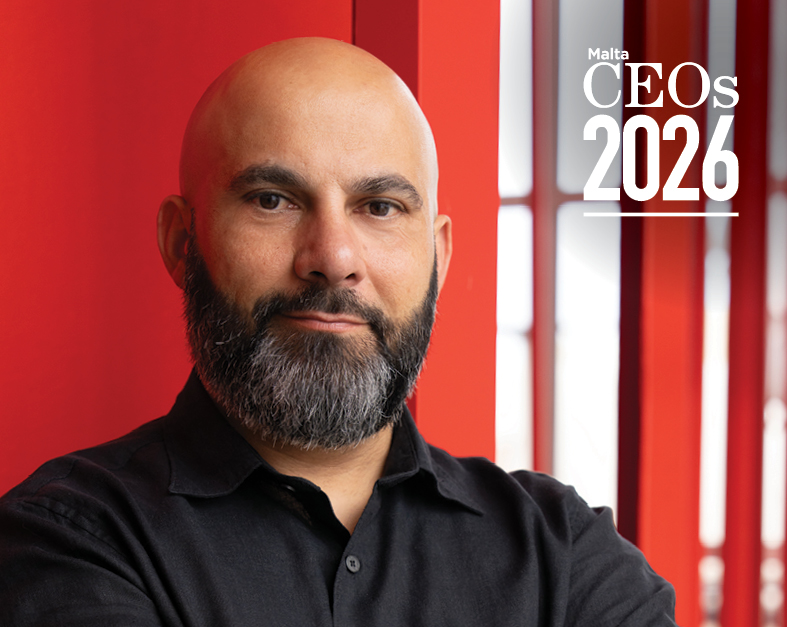
Founded in 2013 as the Central Mediterranean Business School, Knights College today is driven by the opportunities created by shifts in digital technology to train and mentor business students seeking a more pragmatic education, says its CEO and Chancellor, Morgan Parnis. Looking ahead, the college is now poised to consolidate the opportunities that this approach affords.
There is little doubt that the coming years will transform the education sector, with educators having to contend with the possibilities – and demands – created by artificial intelligence (AI) and its increasing influence on learning, training and instruction. For Morgan Parnis, CEO and Founder of Knights College – formerly the Central Mediterranean Business School (CMBS) – these shifts present an unparalleled opportunity for the future of education.
“The sector is changing rapidly, and we’re not waiting for those changes. We are preparing for them now,” he asserts, adding that educators must, above all, “stop thinking linearly.” There is a growing need, he explains, to prepare students for jobs that do not yet exist and to retrain adults to be able to maintain their competitive position within the marketplace. This is where he sees Knights College – an institution that focuses on the skill sets required by the business community – adding real value. “Industry relevance, workplace learning and a student-first approach have always defined us, and they continue to shape everything we are building,” he explains.
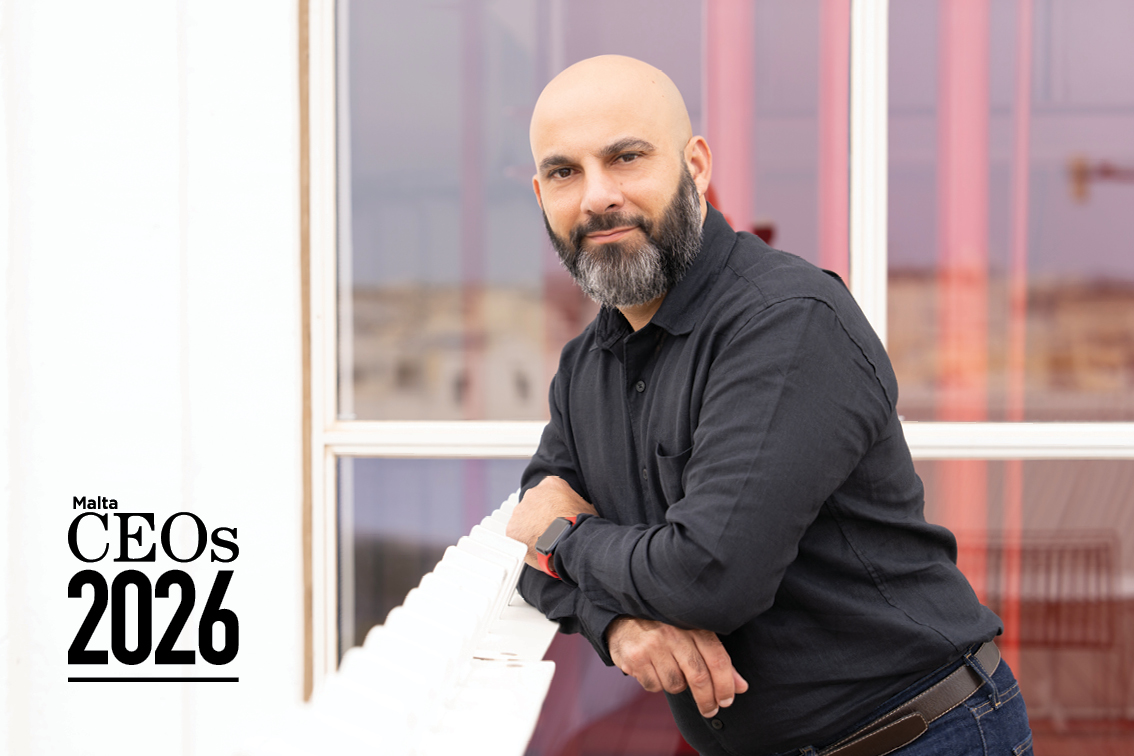
To this end, Knights College has already invested heavily in its digital transformation. “AI is changing how students learn and how institutions operate. The challenge is not to resist it, but to integrate it responsibly. That’s why we are investing significantly in AI mentors and digital learning tools, so that our students benefit from personalised, high-quality support. We don’t use AI for the sake of AI – it’s simply another tool,” he says.
Elaborating further, he explains that the college – which offers qualifications ranging from business diplomas through to doctoral-level degrees – has designed its own AI mentors: Socrates, Athena and Hermes. These have not been introduced “as gimmicks, but as tools that support critical thinking and personalised learning. This is central to our 2030 strategy and positions us ahead of a market that is still adapting to AI. We’re not referring to off-the-shelf generative tools, but to AI designed around individual learning styles,” he explains.
Each mentor serves a distinct function. “Socrates helps students learn and understand how to arrive at answers; Athena supports our faculty in creating content; and Hermes gathers what the student has learnt and assesses whether it aligns with the course’s learning outcomes,” he elaborates. Moreover, students will this year experience interactive talks and video lectures designed to complement classroom learning.
Such a proactive, market-attuned approach is characteristic of Knights College. Established in 2013, the institution evolved from Business Leaders Malta, a company that organises an annual conference for company directors and C-level executives. “During these events, attendees consistently expressed frustration that new recruits often held degrees but lacked practical skills, requiring extensive retraining,” Morgan recalls. “In other words, education was too academic and there was a clear need for a more industry-focused offering.”
In this respect, he believes academic institutions continue to miss a critical opportunity. “Many still underestimate the real potential of applied and work-based learning when it is done properly. Too often, providers place students in industry and hope for the best. We don’t operate that way. We work closely with employers to ensure the workplace experience is fully aligned with the programme, the learning outcomes and the skills students are meant to acquire,” he notes.
Today, the college operates as part of a broader ecosystem designed to address this gap. “Knights College sits within a group that spans research, HR advisory, training, and community care. This keeps us extremely close to industry realities. Our programmes, teaching and strategy are shaped by what employers actually need, not by what’s easiest to deliver,” Morgan explains.
Beyond that, last year, the college continued to evolve, strengthening its academic structures, diversifying its markets and bolstering organisational capacity through recruitment. It also completed a rebranding from CMBS to Knights. “Over time, our academic offer, international presence and long-term ambitions grew far beyond the original CMBS framework. We needed an identity that could accommodate that growth. Knights College reflects what we are becoming, not just what we were,” he says.
The choice of the name ‘Knights’ was intentional, he continues. “The knight chess piece moves in non-linear ways, and we were drawn to that strategy component. It mirrors how modern education should function – allowing people to break rigid structures, think differently and take strategic leaps that aren’t always predictable or linear,” he explains. “Looking back, the decision to rebrand laid the foundation for the next decade of Knights. It aligned our purpose, our people and our systems with the institution we aspire to become, rather than the one we used to be.”
In 2025, the college also reworked its entire academic and quality framework and obtained an ISO 9001 to support scale. “This required new systems, new leadership roles and stronger internal structures, ensuring that growth never compromises rigour,” he says.
“We have also expanded strategically into new regions, particularly Africa and the Middle East, alongside exploratory partnerships in countries such as Canada and Australia. This reduces dependency on any single market and reflects where global demand for applied learning is strongest. These shifts were not reactive; they were intentional steps to build a more resilient, future-ready institution aligned with industry, technology and global demand,” he explains.
The college was also accepted as a full member of the European Association for the Applied Sciences in Higher Education (EURASHE). “Our academic identity is rooted in applied, industry-relevant education, and EURASHE represents exactly that space in Europe. Joining was about aligning, not badge-collecting. And this is just one of several memberships we are pursuing with the same mindset. Every organisation we engage with is chosen deliberately, with the intention of being an active contributor rather than a passive member,” he explains.
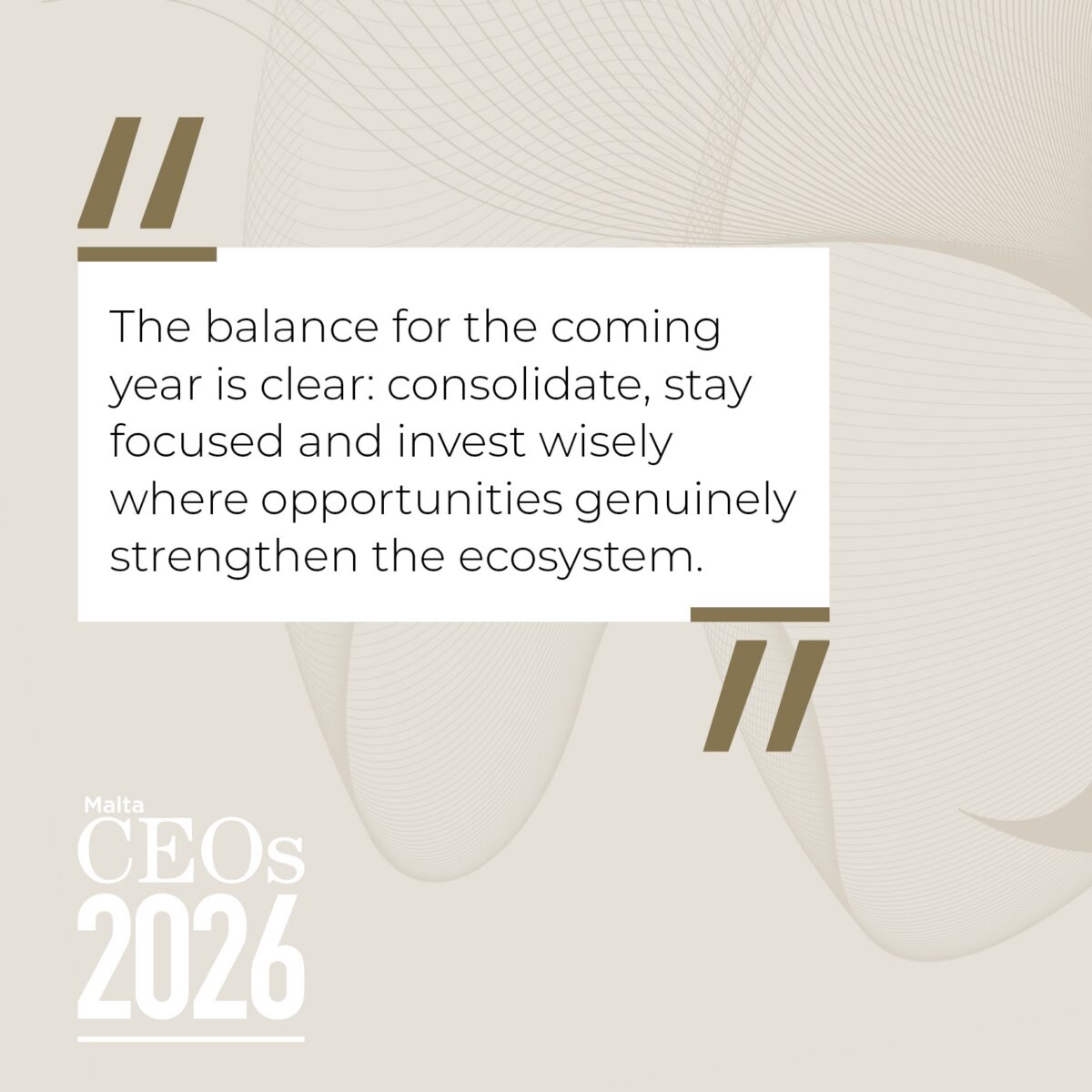
The next few months will prioritise the consolidation of this progress. “We have grown quickly, restructured and internationalised, and now our priority is to strengthen the foundations and ensure our systems, teams and finances are aligned and scalable. When growth is rapid, the base must be stable. And, of course, financial discipline remains central, so the balance for the coming year is clear: consolidate, stay focused and invest wisely where opportunities genuinely strengthen the ecosystem,” he says.
Yet, as an entrepreneur, Morgan is always keen to keep his ear to the ground for any opportunities that fit the college’s broader ecosystem. “But never at the expense of focus,” he insists. “I often remind my team of Aesop’s fable about the dog that loses its bone while reaching for its reflection. If you chase everything, you risk losing what you already have. We won’t make that mistake.”
His message to Malta’s business community is to innovate and be ambitious. “Malta’s next chapter will reward courage, collaboration and long-term thinking. We are a small country with a strong economy, but the future will not be built by doing more of the same. It will be shaped by leaders who invest in people, embrace innovation and hold themselves to higher standards. We must stay hungry. Ambition should be encouraged, not feared. The economy grows when people are willing to sail into uncharted waters, take responsible risks and build organisations that outlive their founders,” he concludes.
This article is part of the serialisation of 50 interviews featured in MaltaCEOs 2026 – the sister brand to MaltaCEOs.mt and an annual high-end publication bringing together some of the country’s most influential business leaders.

‘Greed harms businesses more than anything else’ – Wolfgang Tweraser
The TW Consulting & Trade Ltd CEO believes Malta has much more to offer: ‘It could be like a little ...
‘We can’t promote tourism without agriculture’ – Malta Food Agency CEO Brian Vella
‘I envision having fewer farmers, but more productive ones.’
‘Not everything can be taught through textbooks’ – MUHC CEO Chris Schinas
‘I see my role as using the university’s name, its facilities and its resources to build a successful commercial arm.’
‘Retention is the new recruitment’ – HR Plus Managing Director Adrian Buttigieg
‘Starting from the ground up teaches you to value every team player.’
