


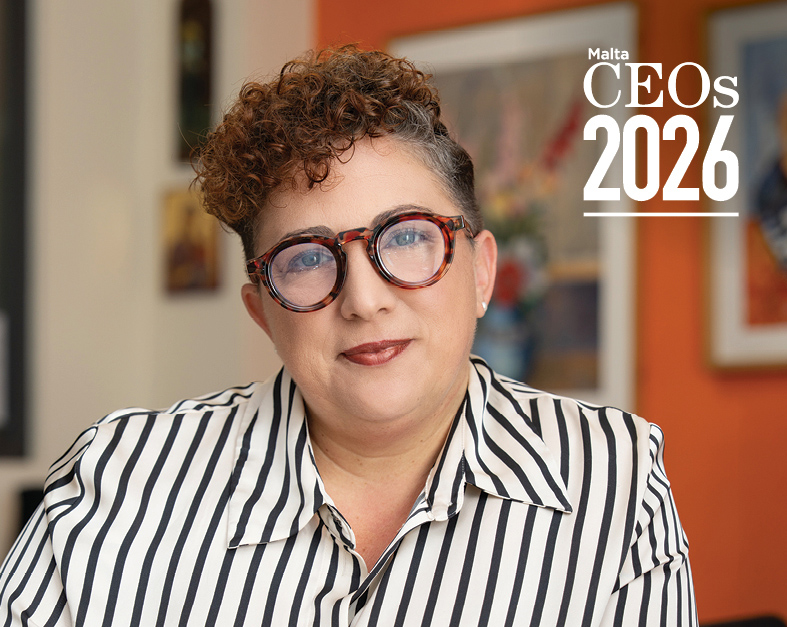
As the second-generation leader of a 47-year-old family business, Sue Pisani is navigating a rapidly evolving events and AV industry. Amid global uncertainty and technological disruption, she champions a people-first approach, focusing on team retention and strategic investment to uphold a legacy of ethical business, positioning Studioseven for a sustainable and collaborative future.
For Sue Pisani, 2025 was a year of navigating a “new reality”. As CEO of Studioseven – a stalwart in Malta’s audiovisual and events industry – she faces a landscape reshaped by global instability and shifting client behaviour.
“2025 was particularly challenging, as our industry continued to evolve,” Sue begins. “International circumstances didn’t help, as companies worldwide tightened budgets, creating uncertainty that discouraged them from choosing new destinations for their trade shows and events.”
This climate has fostered a culture of extreme last-minute planning – a significant departure from pre-COVID-19 norms. “Foreign companies that normally organise events in Malta are leaving it to the very last minute,” she explains, adding that these compressed timelines put immense pressure on her team. “We’ve had to step up our planning of everything. Things in our world happen so fast.”
Sue recounts a recent request to organise a procurement-led event in less than seven days with incredulity – noting that, while turning down business is always painful, it has become a necessary reality. “Our team is constantly busy. It’s a good problem to have, but it does hurt when key customers decide they want to organise something on a date when you are already at full capacity,” she admits.
In response to these market realities, Studioseven’s most significant strategic investment has been in its team. “In 2025, our biggest investment was definitely in people,” Sue states unequivocally. While 2024 focused on leveraging grants for equipment, the current challenge is attracting and retaining talent in an era where bouncing between companies for a higher salary has become the trend.
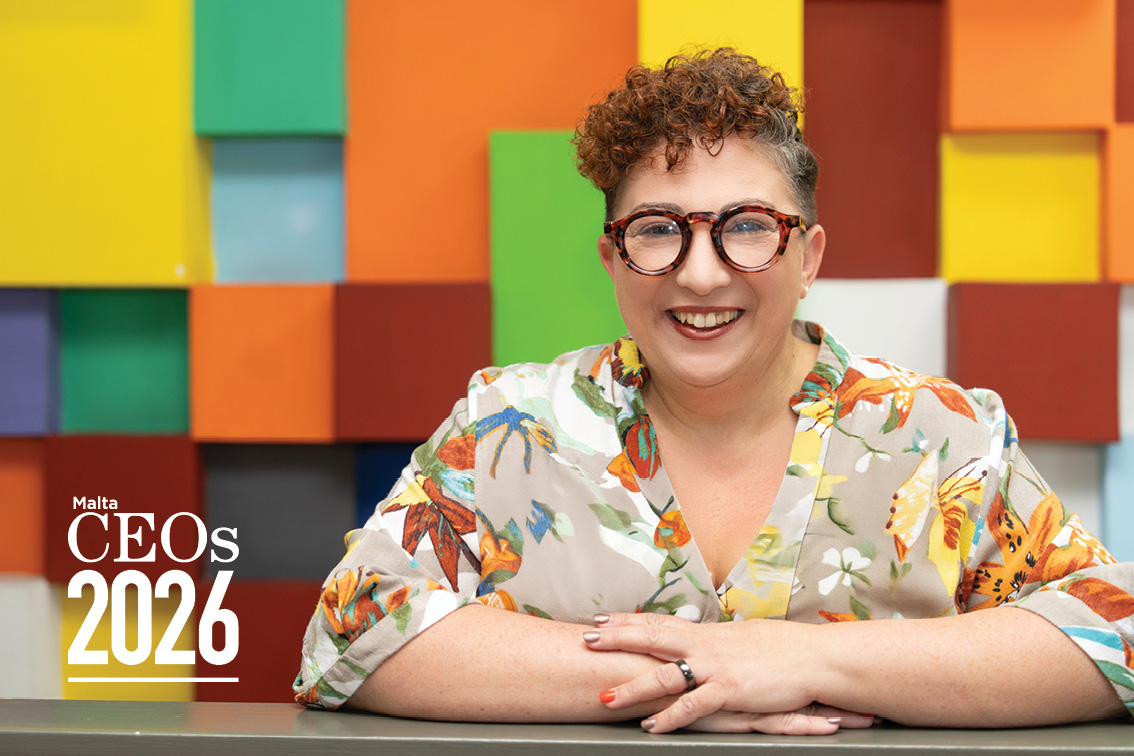
This involves more than just technical skill; it requires finding people who fit the team’s dynamic and can adapt to the company’s fast-paced, Mediterranean work culture. “It’s not just the skill set. We go beyond that into making sure that the team blends and manages to work together well.”
Taking the helm of a family business as a second-generation leader, Sue has brought a different, more operational perspective compared to her father, who she describes as “a complete visionary”.
“He would paint something in his brain, envisage it, and then find a way to create it. I am more of a practical person,” she reflects. “Throughout my journey here, I’ve always been the one to figure out how to sort this and how to better that department, and who needs more help and why.”
This hands-on approach has seen her navigate every department – from media production to human resources – to create efficient processes and support her teams. It’s a balancing act she constantly strives to perfect.
A pivotal decision in her leadership journey was professionalising succession by establishing a board with non-executive directors. For a family business run by two siblings, this was a strategic move to ensure continuity and bring in external perspective. Comprising a financial expert and a strategist, the board provides vital support, Sue maintains. “It’s a valuable sounding board, especially since this role offers no one to report back to. When I’m uncertain about key decisions, the board helps validate and support them,” she explains.
This blend of gut feeling and external validation is vital in a sector where forecasting has become almost impossible. When asked about the most critical decision of the past year, Sue points to two key areas: taking calculated risks on long-term client commitments in an uncertain future, and having the conviction to walk away from opportunities that don’t feel right.
Looking ahead, on the other hand, Sue is cautiously navigating the rise of AI. While she acknowledges its utility for internal and administrative tasks, she remains a firm believer in the irreplaceable value of the human touch. “AI is taking us into an entirely different level of uncertainty in my opinion,” she says. “It’s very helpful, but the human touch is still going to be needed when you offer a service.”
Sharing a powerful example from one of Studioseven’s key services – simultaneous interpretation, where AI has been touted as a replacement – Sue explains: “The concern was that our equipment would become obsolete if AI replaced human interpreters. Yet, nearly five years on, the technology continues to fall short: it struggles to provide the right expressions and terminology in every situation. As a result, conversations can end up going completely off track.”
To address a more immediate, local challenge – the lack of formal AV education in Malta – the management team has led the launch of Studioseven’s own audiovisual academy. The idea, born during COVID-19, aims to tackle a persistent skills gap. “This problem existed even before the pandemic, with a grey area caused by the absence of a proper educational system for the AV industry in Malta. It was only getting worse,” she explains. “So we said, why not try and look for our own future employees and help our industry in general at the same time?”
As a result, the academy offers customised, hands-on training for a diverse audience – from 13-year-old “geeks who love technology” to mature students up to 60 years old seeking a new career.
Beyond developing local talent, Sue is passionate about elevating Malta’s standing in the business tourism sector, though she laments the persistent political focus on quantity over quality. “What is frustrating is that the political agenda has always prioritised numbers over the quality of tourism,” she states. Meanwhile, poor connectivity also remains a major hurdle in the CEO’s view.
As she looks towards 2026, her main priority is not aggressive growth, but consolidation. Her vision for Studioseven’s role is not one of dominance, but of collaboration to raise the entire industry’s standards. “Good service can only be delivered when you uphold high standards, particularly in terms of human capital,” she says.
This philosophy underpins her ethical approach to business, a legacy inherited from her father. “I don’t see our competition as a threat, but as a collaborator to grow the industry on the island. Our future lies in fostering a culture where other companies view us as collaborators, not just competitors,” she concludes. “We’ve been around for so many years, and I’m always happy to hear collaborators say that we can be trusted, while others cannot. To me, that is the most important referral.”
This article is part of the serialisation of 50 interviews featured in MaltaCEOs 2026 – the sister brand to MaltaCEOs.mt and an annual high-end publication bringing together some of the country’s most influential business leaders.
‘Greed harms businesses more than anything else’ – Wolfgang Tweraser
The TW Consulting & Trade Ltd CEO believes Malta has much more to offer: ‘It could be like a little ...
‘We can’t promote tourism without agriculture’ – Malta Food Agency CEO Brian Vella
‘I envision having fewer farmers, but more productive ones.’
‘Not everything can be taught through textbooks’ – MUHC CEO Chris Schinas
‘I see my role as using the university’s name, its facilities and its resources to build a successful commercial arm.’
‘Retention is the new recruitment’ – HR Plus Managing Director Adrian Buttigieg
‘Starting from the ground up teaches you to value every team player.’
