



Work life balance and family friendly measures were two key issues that emerged during the electoral campaign.
Whereas the focus over the past years has been on growing the economy, which remains an important task for the next government, the work-life balance of Malta’s workforce has increasingly come into the spotlight.
People rightly want to spend more time with family, and want to better feel the positive benefits of an economy which has grown. There is also the issue surrounding the country’s low birth rate hovering in the background, which the political parties are well aware of.
In 2024, Malta had the lowest fertility rate in the European Union, at 1.01 live births per woman. Maltese people are just not having as many children as they once did, and this could be due to a multitude of different factors.
The size and cost of property, the quick pace of daily lives, time constraints, rising costs, people no longer wanting big families, these could all be contributing.
The Government in the last Budget changed tax brackets to favour parents having more than one child. This was a measure indicating an attempt to tackle the birth rate problem. But will this be enough? Doubtful.
Both major political parties have come out with their own set of family friendly measure proposals during the electoral campaign aimed at supporting new parents. These include increasing maternity and paternity leave and the introduction of paternal leave, paid for by the government, for example.
These are good, solid proposals, and would definitely lead to a happier workforce. Spending time with a new child is precious for parents.
At a time when life is so busy, when stress levels are high and when parents cannot afford not to work, extending paid leave to spend with family at such a critical point is welcome.
Both parties alleviating the financial pressure from businesses for their proposed leave extensions in this regard is also an important factor worth noting.
At the same time however, the financial aspect is not the only issue that needs to be tackled. During an interview with this media house, President of the Malta Chamber of SMEs Paul Abela highlighted the issue smaller businesses would face with finding temporary replacements for workers who go out on long parent-related leave.
While saying that it might not have a major impact on larger businesses, he said the situation is different when looking at micro-enterprises who have a handful of employees.
Businesses already struggle to find employees as it is and a shop with, for instance, 2 employees might struggle to find a replacement if one goes out on parental leave for six months. This is a challenge the next government, when implementing its pledges, would also need to tackle.
The Prime Minister made the argument that his party’s proposed family-friendly measures would not negatively impact productivity, as happier employees are more productive. Yes, happier employees are more productive, but that does not mean there would not be an impact because of the extra time an employee would be out on leave.
So while the proposals made are good and should be implemented, serious thought must also be put into tackling the personnel challenges businesses, especially small ones, will face. And here discussions should take place, immediately, within the MCESD and with experts as to how that particular challenge could be overcome.
Some way of alleviating the personnel pressures off businesses would need to be found.
Aside from the family-friendly measures, both parties also issued work-life balance proposals.
The PN, for instance, among its proposals said it would launch a pilot project in select areas of the public sector, in consultation with the MCESD, that would measure productivity, quality of service, employee wellbeing and the impact on families, to explore different models of a four-day week.
The PL pledged to launch a discussion with social partners over the right to request flexible work arrangements, where an employee would have a right to request remote working, flexi-time, a compressed week, or reduced hours, and where an employer would need to give a response within a stipulated timeframe. The employer could refuse this request if the nature of the job does not permit flexibility or if it would negatively impact business operations, according to its proposal
While there is absolutely nothing wrong with exploring the possibility of job-flexibility options, any government-pushed implementation must be matched with solutions to their potential impacts.
Director General of Malta Employers Kevin J. Borg is right to say that job flexibility, in terms of whether employees are offered flexible hours or remote working for example, should be left up to the employer. No two businesses are the same after all.
Where automation could, for instance, help make up for a 4-day week in some sectors, it is not possible in others where businesses would still need to open each day. Even in a compressed week scenario, that could still mean some having to find more employees when the country is experiencing a labour shortage, and where the impacts of overpopulation are already being felt.
As for the potential implementation of measures like a compressed week or a 4-day week in certain areas of the public sector, care must be taken due to the pull-factor this might result in.
A future government must ensure that there will not be any unwanted outcomes.


Two masterpieces, one remarkable instrument
Michael Pantalleresco explores the poetry, passion and brilliance of the clarinet in works by Mozart and Weber.
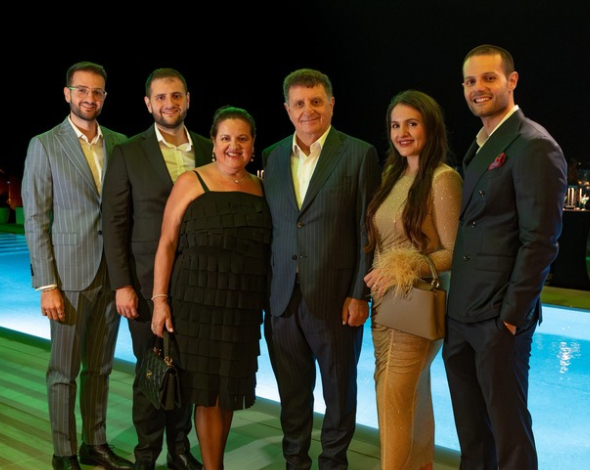
‘A setting we couldn’t be prouder of’: db CEO on Hard Rock Hotel’s new rooftop restaurant
Cyana’s head chef is Spiros Tzilis, a Greek chef who has worked at Michelin-starred restaurants.

‘AI might be faster and cheaper, but at what cost?’ – Aramis Capital MD
He warns that businesses risk sacrificing service quality, human judgement and accountability in their pursuit of greater efficiency through artificial ...
‘We’re already late’: Employers chief calls for cross-party mass transport agreement
Through cross-party agreement, the solution will endure beyond individual legislatures, he explains.
