


Traditionally perceived as a policing function, internal audit today is increasingly regarded as an opportunity for strategic foresight. In non-regulated companies, the existence of internal audit is down to the initiative of the company itself, as there is no legal obligation, however those who have such a function in place understand the value it brings to organisations.
“Internal auditing is today becoming far more structured and far more relevant to the strategic direction of an organisation,” Mr Millo explains at the outset. “Whereas external auditors’ mandate focuses on the financial aspect of an organisation, internal auditors have a broader perspective, allowing them to obtain insights and an understanding that cuts across processes, systems, teams, and units.”
In fact, even though internal auditors are often employed by the organisation itself, they are still required to act as distanced observers. “Internal auditors are required to maintain an independent and objective outlook in their work, while remaining loyal to the organisation. That duality demands a unique skill set, one that combines professional scepticism with an understanding of organisational realities,” Mr Millo notes.
Appointed Chairperson of the Institute of Internal Auditors – Malta Chapter (IIA Malta) in August 2025, Mr Millo brings with him more than three decades of experience across accounting, financial auditing, and internal audit.
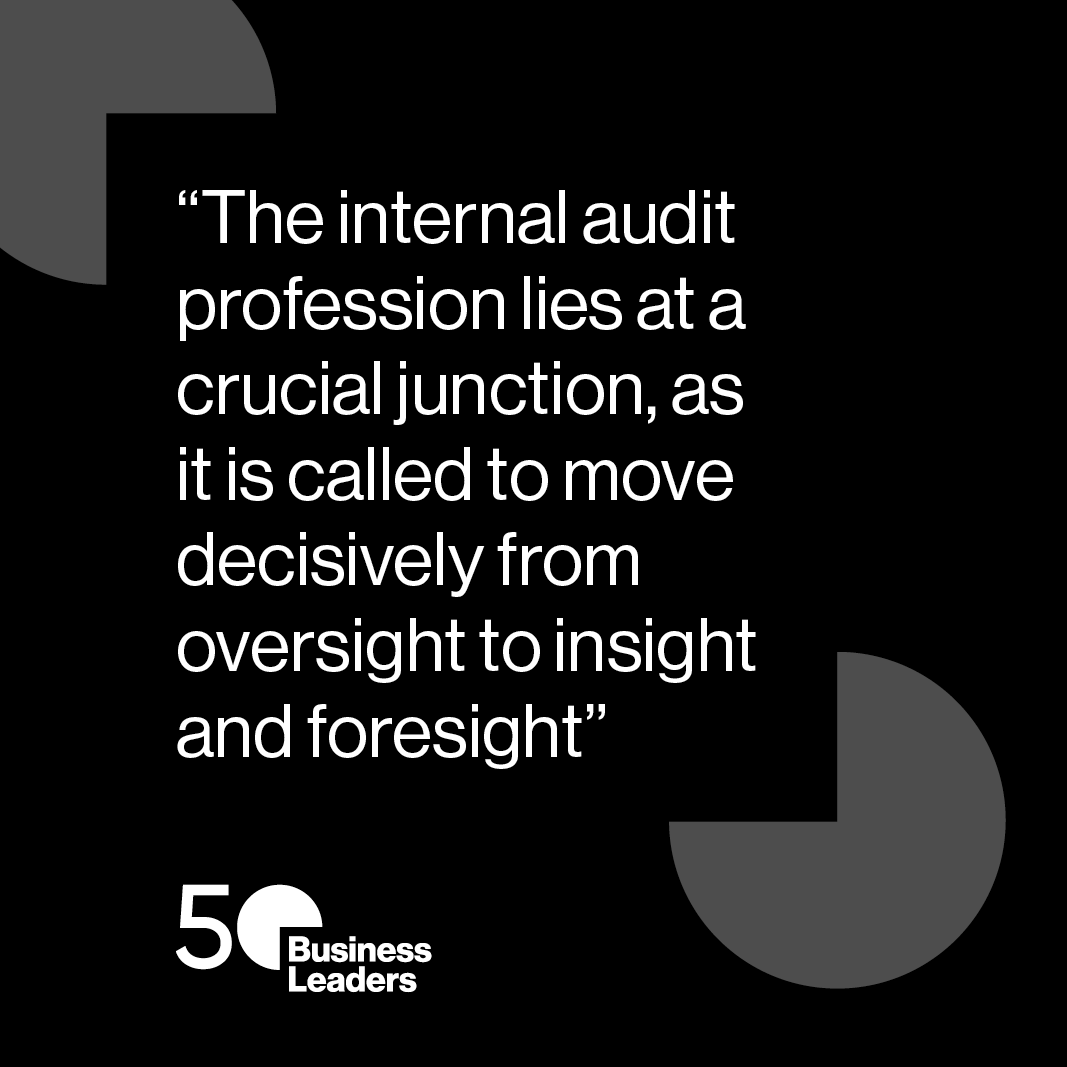
“The internal audit profession lies at a crucial junction, as it is called to move decisively from oversight to insight and foresight. Internal audit is not there to trip organisations up,” Mr Millo insists, “but to help them understand where they are exposed, what resources they already have in-house, and how they can strengthen controls while supporting growth. Organisations that are moving away from regarding the Internal Audit function as a box-ticking exercise, but rather a structured way of improving how their organisation can operate, are better for it,” Mr Millo argues.
Mr Millo speaks with pride about leading an internal audit function within an organisation that is not legally obliged to have one, viewing this as a clear signal of an understanding of the value the function brings and maturity in governance. At the same time, there is a growing push for a stronger advisory role in the internal audit profession, where boards and audit committees increasingly expect internal audit to contribute to strategic conversations rather than simply report on past events, meaning legal obligation is no longer the only reason an internal audit function exists.
“Such expectations come with significant responsibility,” he warns. “Independence and integrity remain non-negotiable. Internal auditors are answerable to boards and audit committees, so they must constantly balance loyalty with integrity. Leading by example, through quality of work, objectivity, and ethical conduct, is essential to maintaining the trust that underpins the profession,” Mr Millo adds.
Asked about the role of technology in the profession, Mr Millo notes how advances in technology are bringing a veritable renaissance to the profession, allowing a shift towards more meaningful analytical work, rather than the labour-intensive functions that traditionally characterised an audit. “Artificial intelligence (AI) is already being used to assist with reporting, standardising outputs, and speeding up processes that would take up endless man-hours in the past. The next frontier is real-time auditing through advanced data analytics, which has the potential to deepen assurance work and provide more timely, forward-looking insights to decision-makers.”
These themes, and many more besides, will take centre stage at a conference being organised by the Malta Financial Services Authority, in collaboration with IIA Malta on 12th February 2026 at the Radisson Golden Sands.
Titled “From Oversight to Insight – Internal Audit in Financial Services”, the event aims to bring together directors, audit committee members, senior executives, and internal auditors to explore the emerging trends in governance and assurance. With keynote contributions from senior European internal audit figures, the conference is designed to highlight the profession’s role in building resilient, well-informed organisations.
“Internal audit is no longer just about compliance. It is about helping organisations anticipate risk, embrace innovation responsibly, and strengthen trust with stakeholders, while supporting sustainable, long-term value creation,” Mr Millo concludes.
For more information and to book your seat at the conference on 12th February 2026, visit the IIA Malta website.
‘Without skilled professionals, Malta cannot achieve its full potential’ – FinanceMalta CSO
Human capital remains the sector’s ‘most critical resource,’ says Bernice Buttigieg.
Who is responsible when AI is used for harm?
A deadly attack in Canada reignited a debate over whether tech companies should be held accountable for how their tools ...
Corinthia CEO: ‘Bringing Corinthia to China marks an exciting milestone’
Maltese hotel group signs landmark Chengdu project, marking first entry into China with a 225m mixed-use tower set to open ...

Evans Building decision robs Malta of a perfectly compliant quality bid – Eden Leisure CEO
The original winning consortium would have brought luxury hotel brand Anantara to Valletta.
