


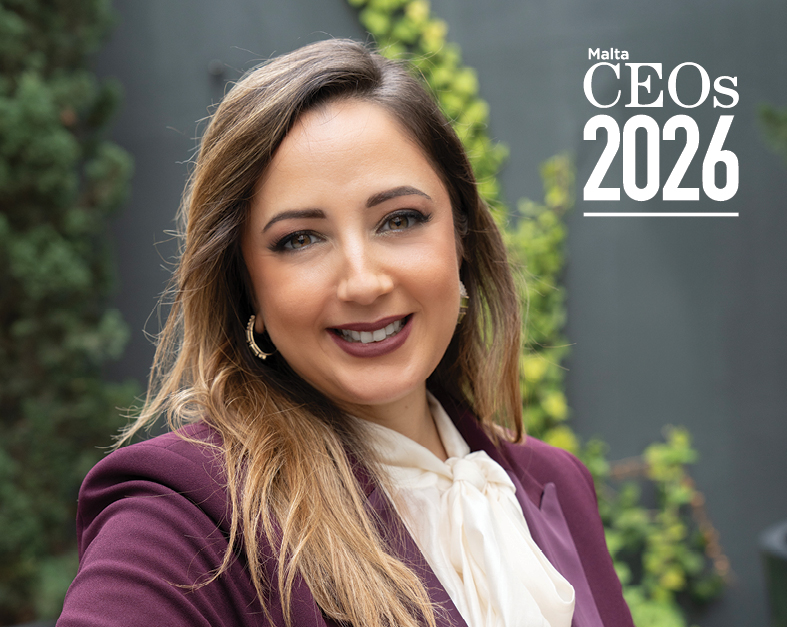
As CEO of Europe’s first Climate Action Authority, Ing. Abigail Cutajar is leading Malta’s response to climate change. Leveraging her technical background and strong focus on team empowerment, she has laid the groundwork to establish governance and coordination structures across the public sector. As Malta faces increasing climate vulnerability, the Authority’s 2026 agenda centres on streamlining processes and incentivising businesses to accelerate their decarbonisation efforts, while further developing the island’s climate governance framework.
Xummiemu shaped an entire generation of Maltese children’s environmental awareness, including that of Ing. Abigail Cutajar. “I was always interested in the environment – though sustainability wasn’t really a widely used term back in the day,” she says. “I remember asking my mum how to separate waste and reduce water and electricity consumption.” That early awareness evolved into a deliberate choice to study mechanical engineering before specialising in sustainability and green building certification abroad.
Returning to Malta 15 years ago, Abigail found herself uniquely positioned but initially isolated. The timing was particularly challenging. A construction boom was under way, yet sustainable practices were neither mandatory nor widely understood. “Sustainability, or the concept of opting for green buildings, wasn’t even being discussed,” she admits.
Public consciousness began to shift a few years ago. “We started to truly understand climate change when extreme heatwaves hit home,” she reflects. “Of course, we’d hear about wildfires in Australia or Greece, droughts, flooding, coastal erosion – to which we’re very susceptible – but it didn’t register until we felt a definitive shift in seasonality ourselves.”
Now, just over a year into operation, the Climate Action Authority (CAA) represents a new chapter in Malta’s climate response. As the first institution of its kind in Europe, it is already drawing international attention by assisting the UAE to establish its own climate action authority and by participating in the International Climate Change Councils Network, where efforts and ideas are shared globally.
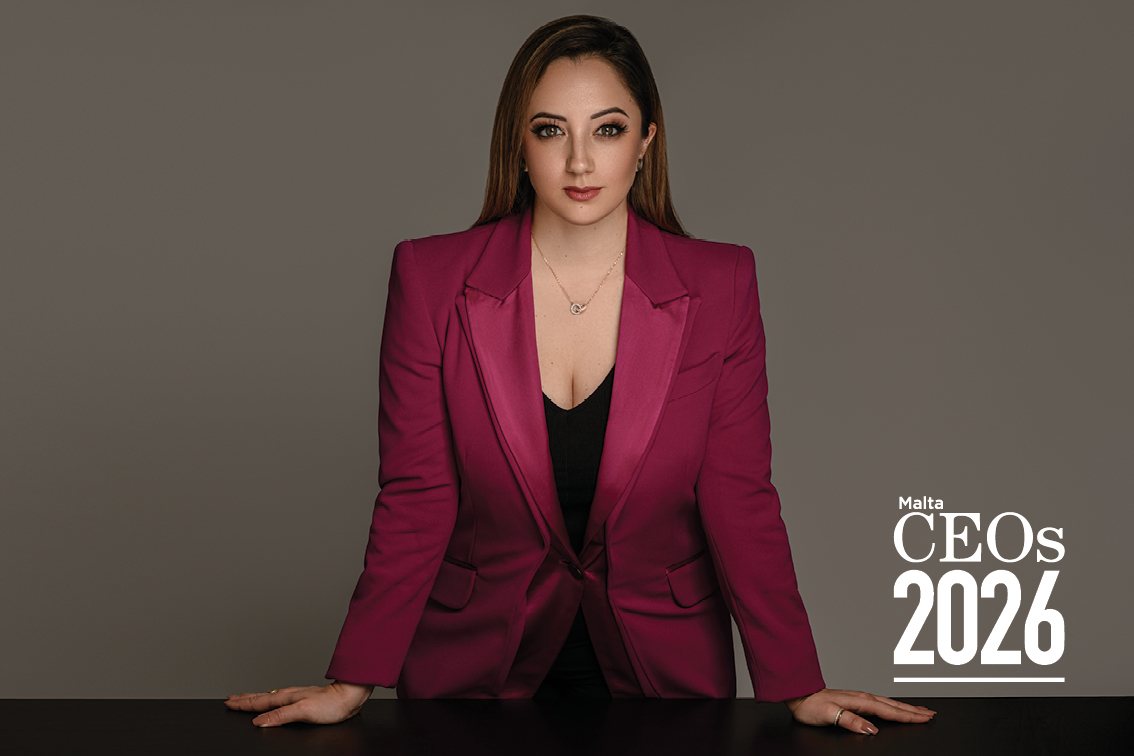
Building the CAA from nine people at its predecessor, the Malta Resources Authority, to over 30 professionals today was, Abigail says, the straightforward part. She deliberately structured the team with clear hierarchies rather than flat structures, ensuring visible pathways for progression. “It’s essential to value people for what they do – you should seek talent and elevate it,” she asserts. This approach, combined with her open-door policy, has attracted and retained a young, enthusiastic team whose ideas and energy she credits as vital to the CAA’s rapid progress. Central to her leadership is a simple principle: “You are only as good as the people around you. I honestly believe this,” she says. “Involving your team is essential. Listen to what they have to say, amend policies when necessary and be willing to shift the way you operate.”
The CAA’s relationship with the Government required equal attention. “The governance framework was carefully designed with accountability built in,” Abigail explains. “Climate action coordinators were established across all departments in the Government – the Permanent Secretaries themselves – creating direct lines of coordination.” Whenever action is needed for a particular sector, Abigail’s team goes directly to the National Climate Action Coordinator and works with them to create solutions. She adds that the CAA must be consulted whenever any policy, legislation or strategy impacts the climate – not only at the public consultation stage but from the initial phases too.
Crucially, there is also a National Climate Action Council of academic experts and specialists who provide advisory oversight to both the Government and the CAA. “If we’re veering off course, they steer us back to where we need to be,” Abigail notes. “That independent check matters.”
Projects in the CAA’s first year included photovoltaics in schools through collaboration with the Ministry for Education, solar carports designed by university students for underutilised tarmac spaces and trickle chargers integrated with lampposts, which Abigail says had never been implemented in Malta despite numerous attempts.
The Authority’s regulatory function has been equally significant, with industries that contribute to carbon emissions, including aviation, maritime, construction, and transport, falling under its remit. In 2025, the CAA achieved a 99 per cent conformance rate across hundreds of operators. Abigail attributes this to the Authority’s deliberately supportive rather than punitive approach, recognising the complexity of new obligations similar to environmental, social and governance (ESG) conformance and Corporate Sustainability Reporting Directive (CSRD) requirements.
“We’re one of the few countries that gives consultancy advice as a competent Authority for free. We’re here to explain what businesses must do, how they can open accounts and how they need to be verified,” Abigail points out. “The aim is not to punish operators, but to encourage them to adopt less carbon-intensive practices. This is the principle behind the Emissions Trading Scheme and the Carbon Border Adjustment Mechanism. If companies continue operating as before, penalties alone will achieve nothing.”
The pivot to private-sector engagement defines 2026. “There’s a lot already happening, with keen CEOs who are ahead of the curve on sustainable operations. But businesses that are genuinely shifting their patterns should be incentivised more,” Abigail insists. “We need to push further than energy and operational efficiency. If we can reward companies that build and operate better, we should capitalise on that.”
The biggest challenge, Abigail says, lies in overcoming short-term thinking. “The immediate concern for many CEOs is their profit margin. And, of course, I believe there will be profit, but we need to give it time,” she says. Meanwhile, the risk of inaction is already materialising. “Banks are increasing risk percentages on companies unprepared for the transition, and this trend will intensify, particularly with insurance providers.”
As a vulnerable island dependent on imports and exposed to coastal erosion, Abigail argues that Malta must prioritise both mitigation and adaptation. “Livelihoods are at risk, and we are susceptible to an increase in diseases, health issues and food scarcity,” she warns. The National Adaptation Plan, a major focus for 2026 and beyond, is designed to strengthen Malta’s resilience to climate impacts before effects become more severe and costly to address. With input from social partners through the Malta Council for Economic and Social Development (MCESD), the plan takes a pragmatic approach. “Every proposal has been reviewed holistically, because understanding the cost of not doing something is just as important as the cost of moving forward.”
Her message to Malta’s business community is direct: “I have faith in the companies that have not wavered in this transition, despite setbacks and geopolitical uncertainty. Ultimately, it is paying off and will continue to pay off. They will be ahead of the curve in the coming years.”
Abigail highlights that results are already visible. Maritime operators report 30 to 40 per cent savings by converting from conventional fuel to hybrid systems. “These aren’t just my claims,” Abigail stresses. “The technology supports this, and cleaner alternatives increasingly outperform conventional options.”
Abigail is energised by the work that still lies ahead. Malta is developing adaptation frameworks before the EU has set requirements, yet sectors such as transport and construction, as well as pollution control, require sustained effort. For her, the commitment remains deeply personal. “What keeps me up at night is thinking about how and what I can do to really contribute to this transition. This is a collective effort, and it’s important to understand that the Climate Action Authority alone is not the answer, but it can be a catalyst for change. Our door is always open to any business ready to be part of the solution.”
This article is part of the serialisation of 50 interviews featured in MaltaCEOs 2026 – the sister brand to MaltaCEOs.mt and an annual high-end publication bringing together some of the country’s most influential business leaders.


‘Greed harms businesses more than anything else’ – Wolfgang Tweraser
The TW Consulting & Trade Ltd CEO believes Malta has much more to offer: ‘It could be like a little ...
‘We can’t promote tourism without agriculture’ – Malta Food Agency CEO Brian Vella
‘I envision having fewer farmers, but more productive ones.’
‘Not everything can be taught through textbooks’ – MUHC CEO Chris Schinas
‘I see my role as using the university’s name, its facilities and its resources to build a successful commercial arm.’
‘Retention is the new recruitment’ – HR Plus Managing Director Adrian Buttigieg
‘Starting from the ground up teaches you to value every team player.’
