

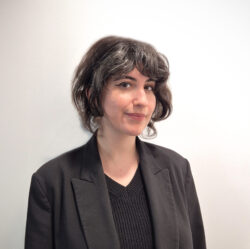

“I’m going to hold your hand when I say this. If you are not an exceptional communicator, remote work may not be for you. Not average. Exceptional,” says Francesca Ellul, Founder of Pursue Consultancy.
It is a blunt assessment, but one that cuts through the ongoing optimism around flexible work.
As businesses across Malta and the EU continue to experiment with hybrid and remote models, the conversation has largely focused on benefits: flexibility, autonomy, and improved work-life balance. But Ellul’s experience running a fully remote company points to a less discussed reality. Many employees are simply not equipped for it.
“As someone who runs a 100 per cent remote business, I’ve learned that most people can’t work remotely,” she says. “Because their understanding of ‘strong communication’ isn’t actually strong enough.”
The shift from office to remote work is not just a change in location. It is a fundamental shift in how performance is perceived and evaluated.
“In a remote team, your manager and peers don’t see your effort. And more importantly, they don’t see your struggles,” she explains. “We measure output. When things aren’t delivered, it’s a problem.”
This creates a gap that can only be bridged through deliberate, consistent communication. Without it, even capable employees risk being misunderstood or overlooked.
“Unless you speak up, raise questions, issues and manage expectations clearly, things fall apart,” Ms Ellul says. “You need to be comfortable over-communicating at times, especially if you want the independence to work autonomously.”
In this environment, soft skills become operational requirements. The ability to articulate thoughts clearly, manage upwards, and take ownership without supervision is no longer a bonus. It is essential.
“Remote work rewards people who can articulate their thoughts clearly, manage up confidently and take ownership without being chased,” she adds. “It exposes those who can’t work independently or communicate effectively with their team and manager.”
Her comments land at a time when Malta, like much of Europe, is still negotiating its relationship with remote work.
Locally, the workforce is almost evenly split. Around 53.5 per cent of workers operate under hybrid or fully remote arrangements, while 46.5 per cent remain office-based full-time. Across the EU, however, the picture is more fragmented.
Countries such as the Netherlands, Ireland, Finland and Germany have embraced flexible work models, with participation rates nearing or exceeding 70 per cent. At the other end of the spectrum, Portugal, Italy, Cyprus, Greece and Croatia remain among the least flexible.
The divide is also reflected across demographics. Men are more likely to benefit from flexible arrangements in nearly all EU countries. Cyprus records some of the lowest participation rates overall, while the Netherlands stands out as a clear leader, with 83 per cent of men and 72 per cent of women working remotely or flexibly.
Despite this uneven adoption, the broader trend remains clear. Remote work is not receding.
While major global companies including JPMorgan, Amazon and Goldman Sachs have pushed for a return to office, often citing productivity and culture concerns, employee demand continues to move in the opposite direction.
The desire to work exclusively from home has nearly doubled, rising from 13 per cent in 2020 to 24 per cent in 2024. More broadly, 74 per cent of EU workers say they prefer to work remotely at least a few times a month. Around 31 per cent would opt for remote work several times a week, 24 per cent daily, and just 18 per cent say they would never choose it.
In other words, there is tension between what employees want and what organisations can realistically sustain.
Ms Ellul’s perspective suggests that the answer is not simply to offer or withdraw flexibility, but to better define what successful remote work actually requires.
“So if you’re looking for remote opportunities, work on your communication first,” she says. “It won’t work otherwise.”
In other words, the future of work may well be remote, but it will not be effortless.
Michael Stivala re-elected MDA President, calls for better forward planning
'Malta urgently needs better forward planning, particularly in infrastructure, transport, utilities and community facilities.'
Effective leadership ‘starts with listening’, says ETERNA Group’s Priya Lakshmanan
Priya Lakshmanan, newly appointed Chief Strategy and Optimisation Officer at ETERNA Group, speaks about the leadership qualities needed to drive ...
Fenech & Fenech Advocates appoints Antonio Ghio as Chief Innovation and Technology Officer
Antonio Ghio is an IT Law expert and has been with the firm for the past 25 years.
‘Considerable potential’ for Malta to develop as a private equity and venture capital hub – PEVCA head
He said that private equity and venture capital play a vital role in modern, innovation-driven economies.
