


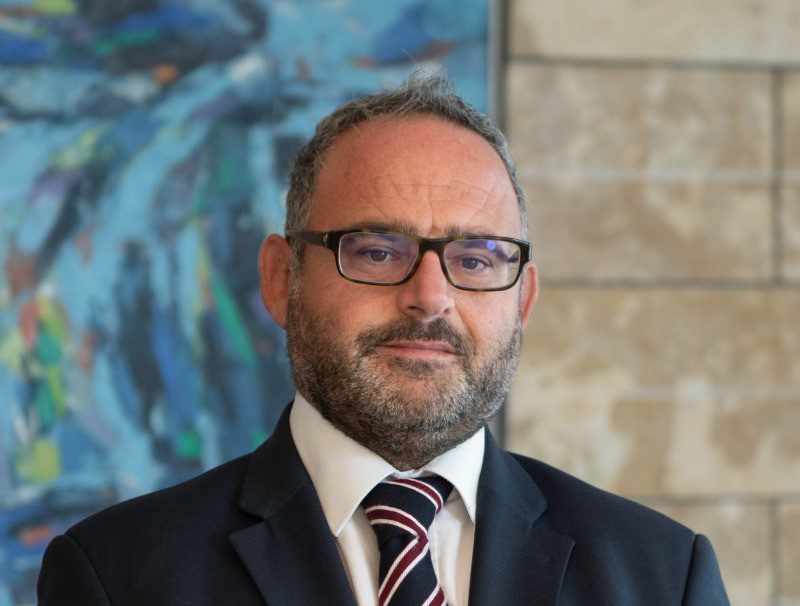
Malta’s reliance on labour to fuel economic growth “needs to be reversed,” says Malta Employers Director General Kevin J. Borg.
In the association’s pre-Budget document, he pointed to statistics showing that Malta’s economic growth relies on labour productivity to a much higher extent than capital.
“This may and needs to be reversed,” he said, “through the appropriate Budget measures to incentivise investment in digitalisation, automation, AI, and robotics across all sectors.”
Mr Borg described these technologies as “the foundation of Malta’s next leap in competitiveness, resilience, and value creation within new and traditional sectors alike.”
Such targeted incentives to boost productivity must be coupled with a “radical transformation” in Malta’s education system, said Malta Employers.
Noting that people are the islands’ “only natural resource”, the association is calling for a renewed emphasis on transversal skills in lieu of rote learning and exam-based teaching.
Such transversal skills include adaptability, digital agility and critical thinking.
Malta Employers also emphasises the role work-based learning has to play, arguing for its expansion across all levels of education, “giving students real exposure to the workplace, teamwork, communication skills, critical thinking and practical problem-solving.”
A detailed report of Malta Employers’ pre-Budge proposals can be found here.



‘It’s a privilege’: Rosanne Bonnici becomes only Maltese member of International Trust Law Academy
“It is a privilege to be recognised alongside such a distinguished group of practitioners from around the world,” she said.

EBO CEO: New investment will support healthcare AI company’s international expansion
The Malta-founded company plans to deepen its presence in the UK and Southeast Europe while expanding into the US.
AeroItalia VP: How €5 million helped airline to seize opportunity from market disruption
Marco Carcioffo says AeroItalia's relatively simple consolidation strategy allowed it to capitalise on an unusual opening in Italy's aviation market.

Theodoros Papadopoulos steps down as BOV Chief Customer Experience Officer after five years
'Now, on to helping people grow beyond what they thought possible,' he says.
