



Despite being billed as a major step towards simplifying cross-border business in Europe, the European Commission’s proposed EU Inc. framework is already drawing sharp criticism from industry voices in Malta.
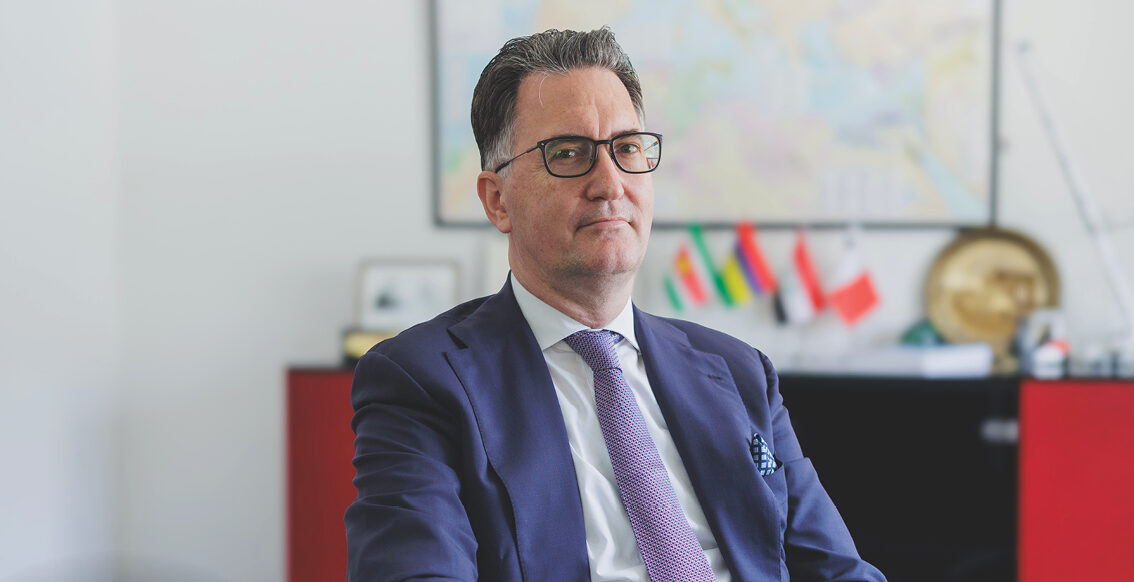
Bernard Mallia, CEO of Equinox Group, has warned that the initiative risks being either “money down the drain” or, more seriously, an “existential threat” to Malta’s competitiveness, raising concerns about unintended consequences that could outweigh its intended benefits.
What is EU Inc.?
The European Commission’s recently unveiled “EU Inc.” proposal has been positioned as a major step towards reducing regulatory fragmentation across the Single Market, allowing companies to set up and operate across the EU under a single, optional corporate framework.
The initiative aims to enable businesses to register within 48 hours, operate through fully digital processes, and avoid navigating 27 different legal systems. It is also seen as a key pillar in the EU’s broader competitiveness agenda, particularly in supporting startups and scale-ups.
However, not all observers are convinced that the proposal delivers a complete solution. Bernard Mallia, CEO and Customer Liaison of Equinox Group, tells MaltaCEOs.mt that while the initiative addresses surface-level inefficiencies, it risks overlooking deeper structural issues within the EU.
‘A structural problem without addressing the root causes’
Mr Mallia describes the proposal as an attempt to tackle fragmentation without confronting what he sees as its underlying drivers, namely the existence of multiple tax, labour, business registry and social security systems across Member States.
“The ‘EU Inc.’ proposal is the example par excellence in that it attempts to solve a structural problem without having the political mandate to address the actual root causes,” he says, arguing that such an approach risks producing “half a fix”, which in some cases could prove more problematic than no reform at all.
A key concern raised by Mr Mallia is that the creation of a unified corporate framework could pave the way for future tax harmonisation, even if this is not explicitly included in the current proposal.
He points to what he describes as a long-standing pattern of “competence creep” within the EU, whereby initiatives evolve beyond their original scope over time. In this context, a standardised corporate structure could highlight differences in how companies are taxed across Member States, potentially prompting calls for alignment.
Such developments could revive initiatives such as the Business in Europe: Framework for Income Taxation, which aims to create a common corporate tax base across the EU. According to Mr Mallia, the 28th regime could therefore act as a foundation for future changes in taxation policy, even if indirectly.
While the current proposal does not directly affect taxation, Mr Mallia argues that Malta’s competitive position could still be at risk if further harmonisation follows.
Malta has traditionally relied on a combination of regulatory flexibility and a competitive tax system to attract international business, offsetting its structural limitations as a small and geographically peripheral country.
“If the corporate establishment process becomes entirely standardised across the EU, competition defaults to factors like geographic location, logistics and domestic market size,” he explains. “In that arena, Malta cannot possibly compete with larger economies.”
In such a scenario, the erosion of Malta’s regulatory and fiscal advantages could weaken its appeal as a jurisdiction for non-tourism sectors.
Limited upside for inbound investment
The proposal has been framed by some as an opportunity for smaller Member States to attract new business. However, Mr Mallia is sceptical that Malta would significantly benefit in this regard.
He argues that large companies seeking to scale across Europe under the EU Inc. framework would likely favour major mainland hubs with stronger infrastructure and proximity to larger markets.
While acknowledging that Maltese startups could benefit from easier expansion into other EU countries, he warns that the same framework could incentivise them to relocate abroad, particularly if Malta’s competitive advantages diminish.
A call for a cautious and strategic approach
Looking ahead, Mr Mallia stresses the importance of Malta adopting a pragmatic and defensive stance in upcoming EU negotiations.
He suggests that Malta should support efforts to reduce administrative burdens and improve Single Market efficiency, while firmly safeguarding its fiscal sovereignty and regulatory autonomy.
This could involve resisting provisions that may later facilitate tax alignment and forming alliances with other smaller Member States, such as Ireland, Cyprus and Baltic countries, that share similar concerns.
At the same time, he indicates that Malta could engage constructively in discussions on tax harmonisation, provided that such efforts do not undermine its competitive position.
The EU Inc. proposal represents a significant step in the EU’s ambition to deepen economic integration and strengthen its global competitiveness. Yet, as the debate unfolds, it also highlights the delicate balance between harmonisation and national flexibility.
Now the challenge will lie in supporting a more efficient Single Market while preserving the distinct advantages that have underpinned its economic model.



‘I used to use Blockchain.com to buy game items… now I’m CEO of its Malta hub’
Fiorentina D’Amore had opened her first crypto wallet with Blockchain.com, back when one bitcoin was only worth around €2.50.

KM Malta ‘committed to development of future aviation workforce’ – Chief People Officer
New MoU aims to strengthen MCAST students’ knowledge of the aviation sector.

Adrian Galea responds to EU Inc. criticism, argues proposal could unlock growth for Malta
He believes it could represent a 'step function improvement' for Europe’s startup ecosystem.

KM Malta ‘not insulated from market volatility,’ says Executive Chairman
David Curmi nonetheless stressed that the airline has measures in place to manage the risk responsibly.
