



Business leaders are expected to make their voices heard to bring about effective change and improvement within the operation they manage.
However, there are occasions when these business leaders say one thing in front of people, yet opt to do something completely different behind closed doors. This can lead to a loss of trust from their employees, as well as their customers.
As a result, it is critical for business leaders to understand what their employees and clients see when they look at them. Do they see someone that is trustworthy, altruistic, and practices what they preach, or someone that does neither?
GSE Technologies CEO Sabrina Agius explored this on Thursday, highlighting three questions business leaders need to ask themselves if they consider themselves a “leader”, a “game changer”, and someone that “preaches for change”.

She started off with: “Are you ready to work together with others for effective change to happen?”
Teamwork is an integral part of the process for effective change, and failure to work with others can either completely limit that change, or else misguide it, resulting in problems in the future.
Ms Agius also questioned whether business leaders are interested in truly bringing about “real change”. If business leaders talk up a particular change as something more significant than it actually is, in the expense of more noteworthy and effective changes, then they will end up facing more issues in the long run.
Lastly, she asked whether business leaders are “interested in supporting others that can do better”.
Employees see CEOs and other leaders as people to look up to and seek assistance from when times are tough. If that particular leader is not willing to offer their support, then employees will end up working inefficiently or become demotivated, all consequences that will have an impact on the final product or service being offered to customers.
“I ask because I meet so many of these so-called leaders on a daily basis. I trust their words and their altruism shown. Yet when it comes to the crack of it all these fancy words vanish and altruism is gone when behind closed doors,” Ms Agius explained.
She noted that for such leaders, collaboration is “not an option” because “all they are interested in is making a buck”. She stated that this is a “reality” that she faces “every single day”.
“So much so for representing fancy brands and corporates. Words are nothing without action,” she continued.
Ms Agius concluded by asking: “Are you leader that lives the values you preach? If you are, then I am ready to collaborate with you to enforce the change that is so much needed.”
Ms Agius co-founded GSE Technologies, a company aimed at making the world a greener place through technologies focused on decarbonisation and sustainability, in June 2020. Just a few months later, she was appointed CEO, a position she has held ever since. She has extensive experience in various industries and describes herself as having entrepreneurship in her “blood”, while also having a “thirst to innovate”.

‘The courage to trust others’: Liz Barbaro Sant reflects on Alberta succession
She spoke out after Andrew Vella Zarb was appointed CEO of Alberta Fire & Security.
Anthropic IPO: Stephen Borg stresses importance of sustainable profitability
He said Anthropic's IPO attracted 'good interest' among Maltese investors.
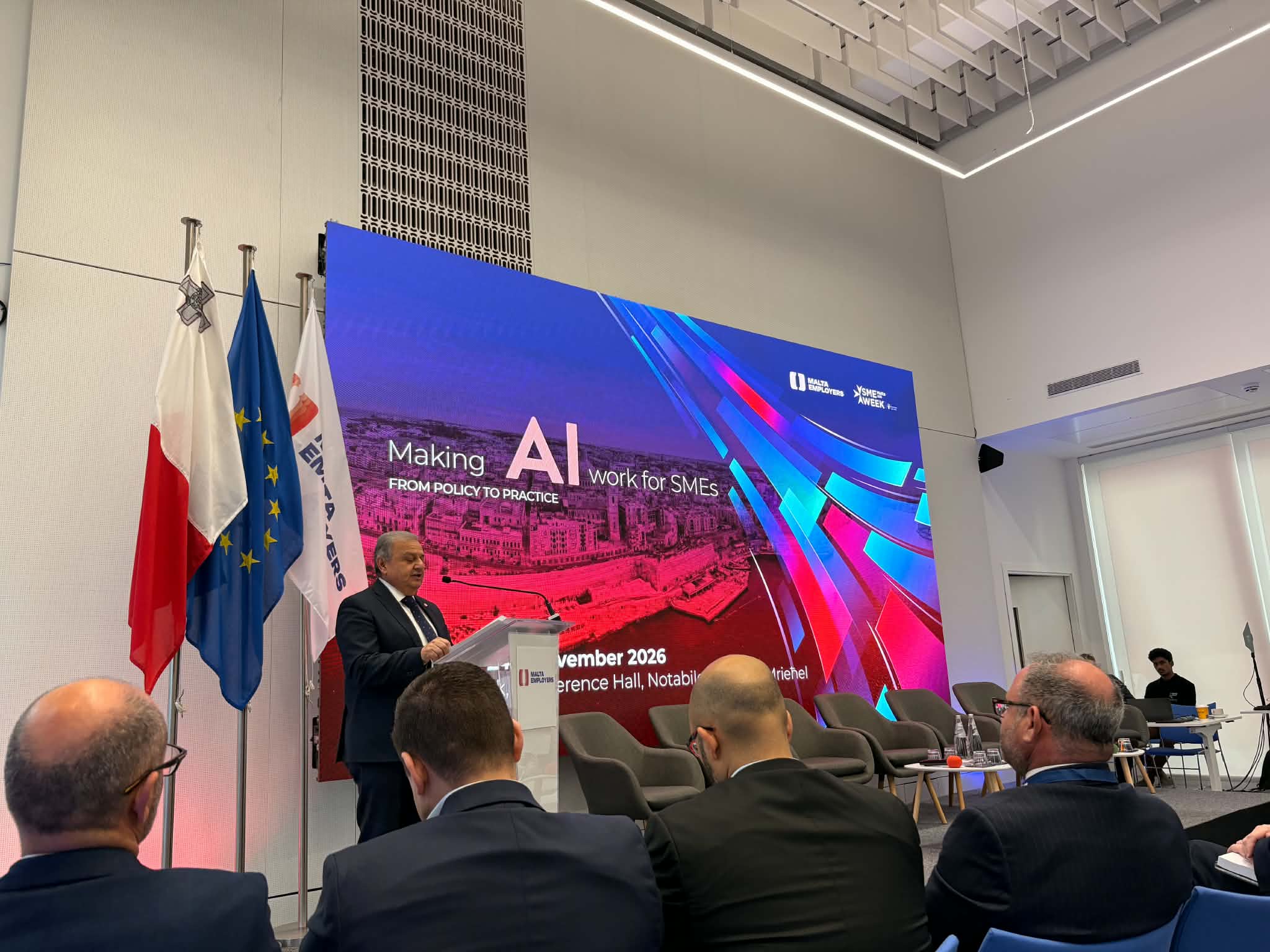
‘Technology alone changes nothing’: Employers urged to embrace AI with human oversight
The opportunities and challenges presented by AI, the importance of workforce upskilling and Malta’s transition towards a more productivity-driven economy ...
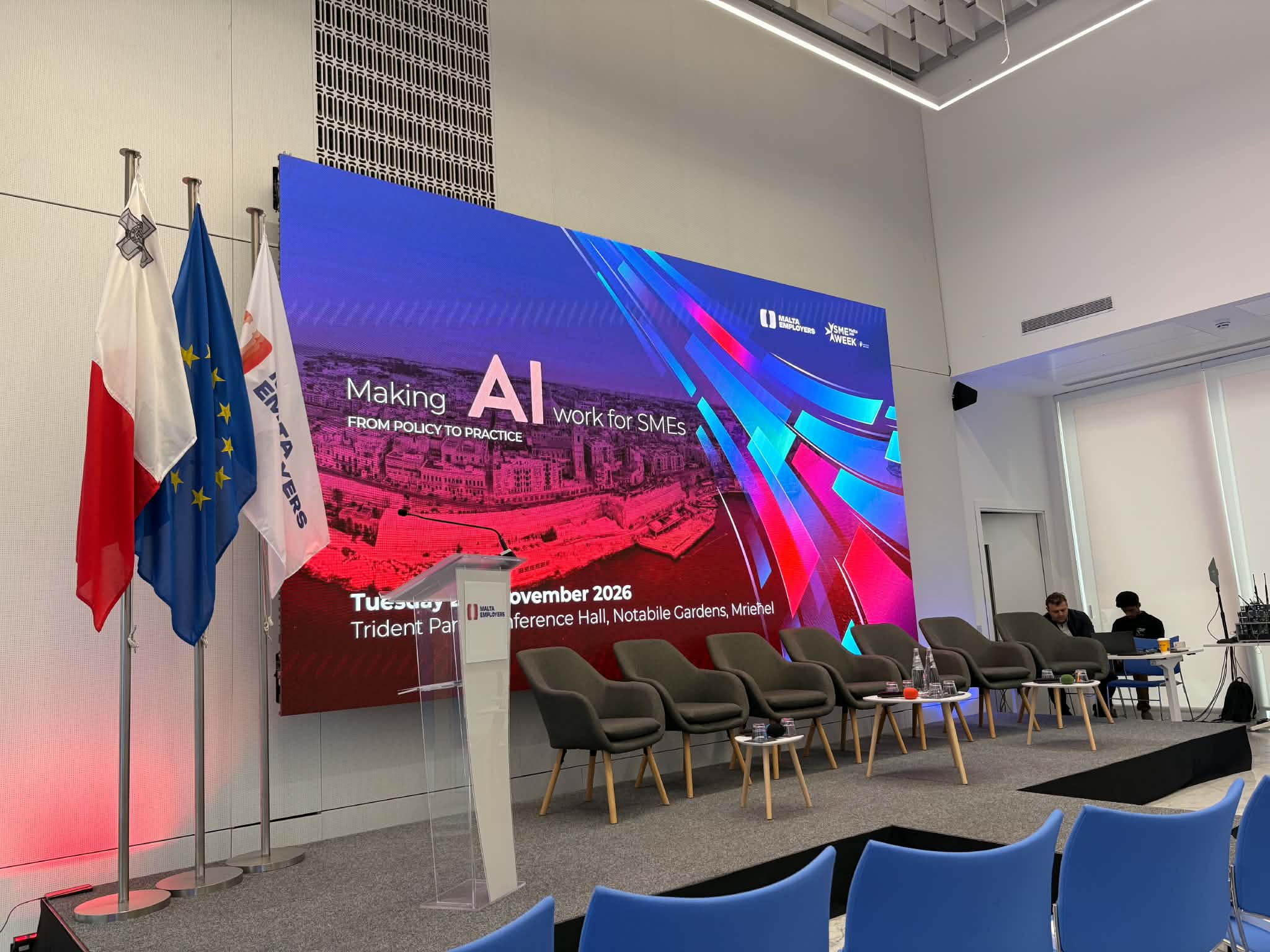
From missed calls to robotic dogs: How Maltese businesses are putting AI to work
Three business leaders share how artificial intelligence is transforming their operations, recovering lost revenue and freeing employees from repetitive tasks.
