



The Nationalist Party’s proposal to invest €12 million over five years into developing an AI, data and new space sector in Malta is broadly welcomed by stakeholders, who say the country has the potential to carve out specialised niches in the growing global market, provided the initiative is backed by long-term execution, talent development and regulatory clarity.
The proposal, unveiled by PN Leader Alex Borg and PN MP Jerome Caruana Cilia, aims to position Malta as a hub for companies using satellite data, AI, navigation systems and geospatial technologies to develop international services.
The PN says the investment could generate around €100 million for the Maltese economy over five years, eventually contributing around €200 million annually. The party also pledges to introduce legislation regulating space activities, establish a dedicated central unit for the sector and work towards Malta obtaining Associate Member status within the European Space Agency.
Speaking to MaltaCEOs.mt, stakeholders agree that Malta’s opportunity lies less in building physical space infrastructure and more in developing downstream services tied to AI, data analysis and commercial applications.
Jack Mizzi, Chief Digital & Market Enablement Officer at BMIT Technologies says Malta historically shows strength in identifying emerging industries and building supportive regulatory frameworks around them, pointing to sectors such as ship registration, financial services and iGaming.

However, Mr Mizzi cautions that the real challenge is ensuring the proposal develops into a commercially viable ecosystem rather than remaining “a concept and possibly a regulatory framework, with no real business case”. He says Malta is unlikely to compete in building satellites, but adds that “the notion of crunching space data and using AI as to create a new industry, merits closer consideration and evaluation”, particularly in areas such as aviation logistics, maritime safety, and climate and weather monitoring.
EBO.ai CEO Gege Gatt echoes similar sentiments, arguing that Malta’s opportunity lies in tactical niches connected to the downstream space economy, including satellite data, analytics, cybersecurity, compliance and AI-driven services.
Dr Gatt notes that the global space market is already worth more than €400 billion, with Europe accounting for around €78 billion, arguing that Malta “does not need to capture a large share to make this meaningful”. Instead, he says the country should focus on building “a focused, credible niche” connected to AI and data-driven services.
Meanwhile, AI Professor at the University of Malta Alexiei Dingli says Malta should focus on the intelligent application of technology rather than attempting to compete with larger countries on scale.

Professor Dingli says “such data on its own has limited value unless we can turn it into useful insights”. He explains that when combined with AI, it can support areas such as “maritime monitoring, environmental protection, urban planning, traffic management, agriculture, insurance, financial services, security and climate resilience”, creating opportunities for Malta to build niche expertise and exportable solutions.
The three stakeholders also agree that proposals such as these can help Malta attract higher-quality investment and create specialised employment opportunities, though they stress that success depends on wider ecosystem development.
Mr Mizzi says “serious investors look for regulatory peace of mind and track record”, but also expect to find “the incentives, infrastructure, talent and systems readily available”, stressing that Malta needs to build a wider ecosystem around the sector rather than relying on regulation alone. He also argues that Malta’s early adopter advantage in iGaming was weakened because operators were not required to be physically anchored in the country.
He adds that the proposal for Malta to obtain European Space Agency associate membership is “solid since it opens up a more structured opportunity and also survives electoral cycles”.
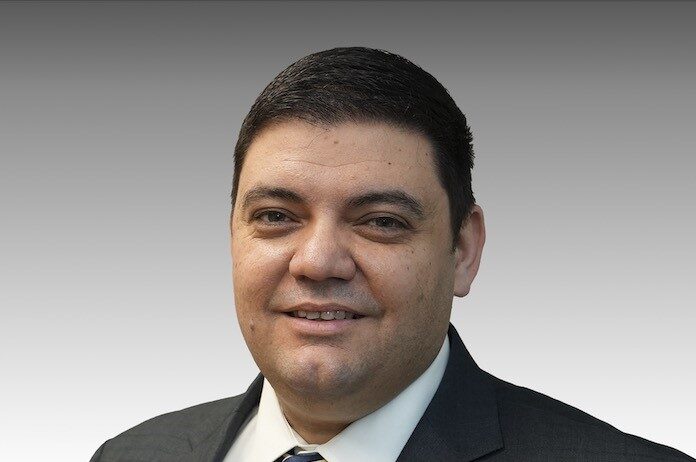
Dr Gatt similarly says quality investment follows regulatory clarity, reliable talent pipelines and a credible national vision. He argues that sectors such as AI and space-related services can help Malta move away from volume-based economic growth towards a more knowledge-driven economy, creating demand for engineers, AI specialists, cybersecurity experts, lawyers and compliance professionals.
Professor Dingli also says Malta’s small size can become an advantage, allowing the country to act as a testbed for AI and data-driven solutions before scaling them internationally. He notes that this aligns with the existing Malta.AI national strategy.
On funding, stakeholders generally view the proposed €12 million as a useful starting point rather than a complete solution.
Mr Mizzi says the key issue is not the headline figure itself, but whether the investment is backed by governance, accountability and measurable outcomes. He warns that if funds are used primarily for promotional purposes, the result could simply be “conferences and reports” rather than a sustainable industry.
Dr Gatt describes the proposed €12 million investment as enough to “kick-start the process”, arguing that while it is “not enough to build an entire sector”, it can still create “the right foundations” if focused on institutional capability, regulatory infrastructure, international partnerships and attracting serious operators.
Meanwhile, Professor Dingli says the investment should be viewed as “catalytic funding rather than the full amount required to transform the sector”, adding that its success will depend on “the speed, focus and ambition with which Malta acts” to unlock European funding, private investment and international opportunities.
He also argues Malta should pursue more ambitious AI initiatives, including “a sovereign Maltese-language model, a federated national data platform, AI literacy programmes across education”, and stronger regulatory sandboxes to help companies comply with the EU AI Act while safely testing new products.
Additionally, concerns are raised over talent shortages and long-term political continuity.
Mr Mizzi warns that Malta’s technology labour market is already stretched and cautions against simply reshuffling talent from existing sectors such as fintech and tech. Mr Mizzi also stresses that serious AI and space-related infrastructure require long-term commitment beyond annual budget cycles.
Overall, stakeholders agree the proposal moves Malta in the right direction, but stress that execution, coordination and sustained investment in people will ultimately determine whether the sector succeeds.

‘We need to break the cycle’: MHRA CEO calls for rethink of Malta’s tourism growth model
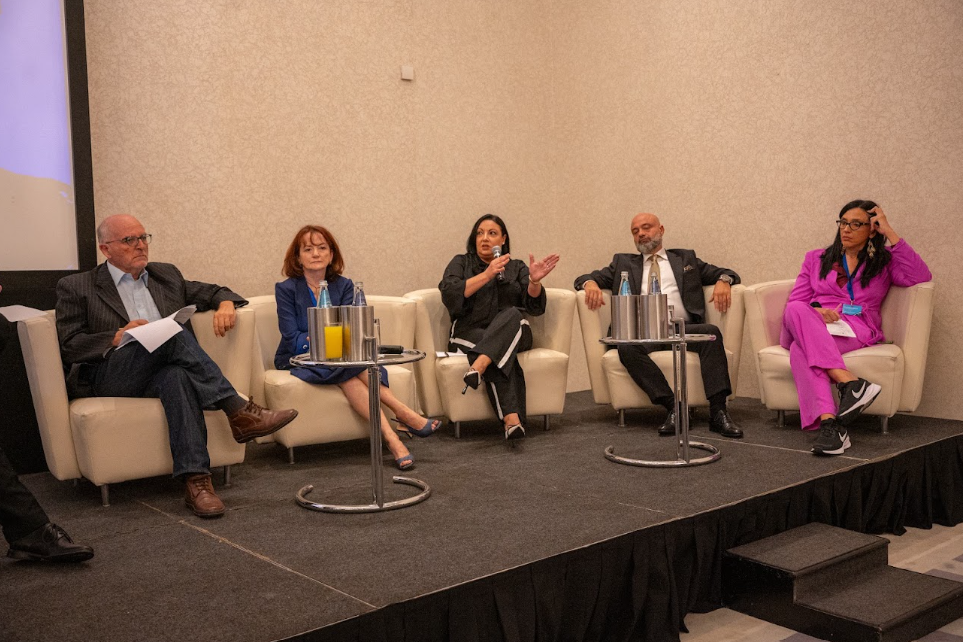
The MHRA CEO joined four other stakeholders in a much-needed conversation on tourism development.
‘Value is about much more than competitive prices’ – The Convenience Shop CEO
The CEO believes value is also delivered through ‘the overall shopping experience, product quality, location, and trust.’
Emanuele Grimaldi takes the helm at the Malta International Shipowners Association
A founding member of MISA, he has extensive experience in leading other shipping bodies.

Izola Bank appoints Edward Grech as new Head of Finance and Treasury
The bank said that the appointment is effective from 14th October.
