


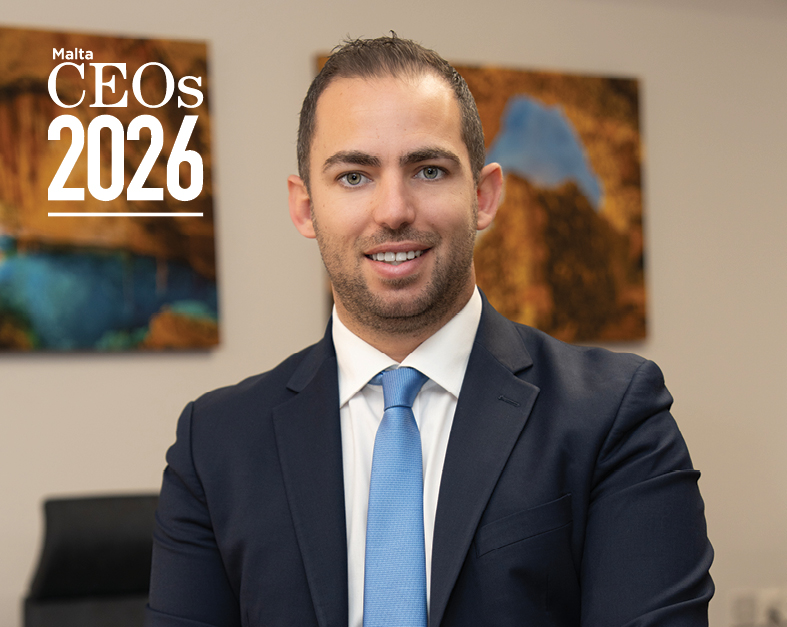
Momentum has continued to grow at the Water Services Corporation (WSC) over the past year, as an ongoing transformation under CEO Karl Cilia’s leadership keeps delivering record results – from improved efficiencies and better financial performance to stronger water quality and innovative green investment, all of which is earning international approval. For the CEO, this is only the beginning of what he intends to achieve at WSC.
When Karl Cilia joined the Water Services Corporation (WSC) as CEO in 2022, he saw it as an opportunity to do more than simply keep the taps running. He wanted to rethink how one of Malta’s most essential and most taken-for-granted services could leave a greater impact. As he reflects: “When I stepped into this role, I was determined to be a leader that took WSC to another level, beyond the core business of producing and delivering water.”
Backed by a career rooted in utilities, including a significant stint with Enemalta, Karl had gained a deep understanding of how complex infrastructure systems function, and how small efficiencies across all levels can lead to meaningful gains. At WSC, he has brought that perspective to an organisation responsible for the entire life cycle of water, which collects, treats, polishes, and redistributes water across Malta and Gozo, and is supported by a workforce of over 1,200 people, including structural engineers, architects, chemists, technicians, and tunnel crews, all of whom play their part in keeping our water system running.
“To achieve the results we have, you need good people around you,” he says. “I rely on a very strong top management team. In fact, every morning, with my coffee in hand, I go around their offices to stay on top of things and give them the support they need to get on with their duties with as few obstacles as possible.”
This focus on collaboration has helped deliver what Karl describes as a “perfect cycle” for the organisation. “We are now producing water with record efficiency, with the reverse osmosis (RO) plant in Ħondoq ir-Rummien, Gozo, winning the Energy Globe Award as the most energy-efficient plant in the world. Moreover, we’ve reduced network losses to record EU levels, which means we’re reducing our energy footprint,” he explains. “That allows us to bill more, bring in more revenue, and reinvest it into the system.”
The bedrock of this new and improved cycle is arguably the significant reduction in water losses. Through sustained investment in leak detection, smart metering and artificial intelligence (AI)-driven analysis, WSC can now pinpoint leaks faster and with remarkable accuracy. “We are able to inform people of leakages behind the meter,” Karl says. “The team is so accurate that we can tell whether a leak is coming from a ball valve in a tank or from a toilet flushing.”
The result is less water lost in transit and less energy wasted producing water that never reaches a tap. The impact has meant that Malta’s Infrastructure Leakage Index now stands at 1.7, placing it among the best-performing water utilities in the EU.
The corporation has also transformed how water is produced and treated. RO plants and treatment processes have been upgraded to reduce energy use across the board. The Ħondoq ir-Rummien plant in Gozo uses just 2.8 kilowatt hours to produce one cubic metre of water, a figure that compares favourably with the three to seven kilowatt hours typically required by similar plants internationally.
Similar energy-recovery technologies are now being rolled out across Malta’s other RO plants in Pembroke, Ċirkewwa and Għar Lapsi, further cutting consumption at source. “Malta is considered one of the best countries in the world when it comes to water management,” the CEO shares with pride.
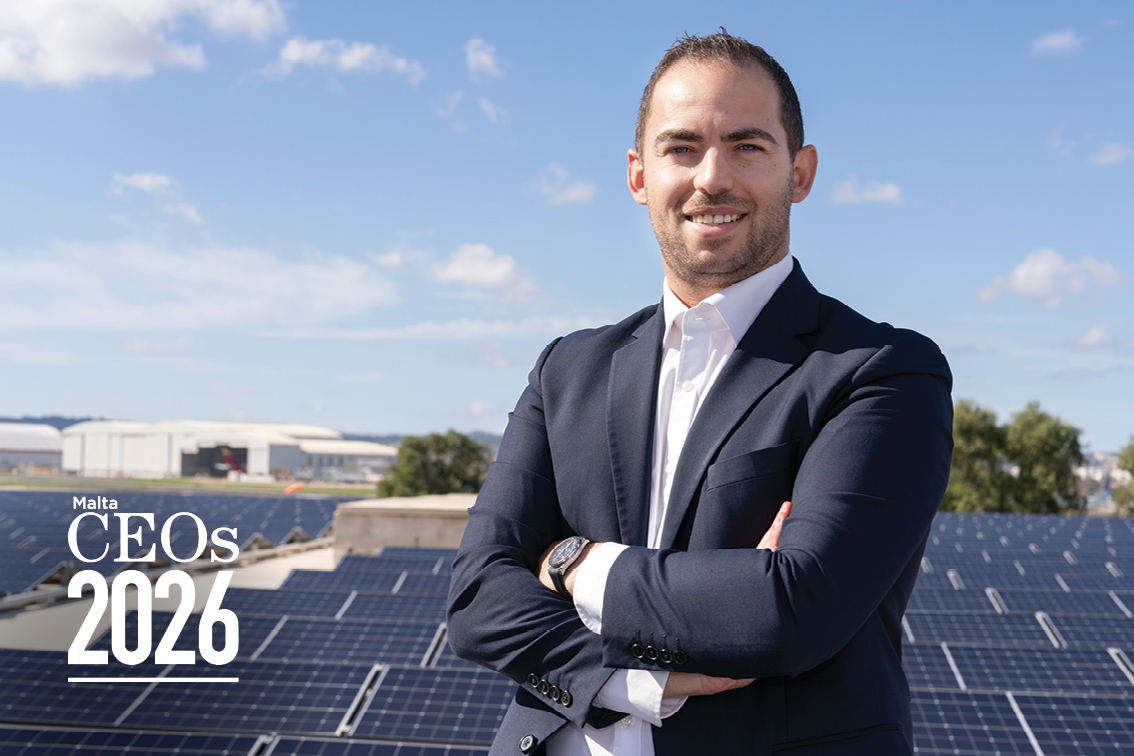
Additionally, 2025 saw WSC open Malta’s first net-zero carbon warehouse in Bulebel. The facility, which was inaugurated by the Prime Minister, is equipped with over 500 photovoltaic (PV) panels that generate up to 450,000 kWh of clean energy annually – enough to power around 100 homes and fully offset the building’s operational energy consumption. “This is a major stride in our mission to become the pioneering entity in Malta when it comes to sustainability,” Karl says.
These efficiencies have also strengthened cash flow and created more room for reinvestment. “In the past year, we achieved 14 per cent financial growth and a record net profit of €21 million,” Karl states, explaining that the corporation also fully disbursed over €50 million in capital investment, which was channelled into network upgrades, quality improvements and sustainability initiatives.
“We’re not here to make money. We’re here to offer the best quality of service possible,” he says. “But by generating more revenue through better efficiency, we can reinvest where it matters without putting the burden of additional tariffs on people.”
Beyond these measurable operational gains, the past year has seen WSC’s Iftaħ u Ixrob campaign take on a long-standing negative perception of tap water in Malta. As Karl points out, Malta’s water has always been safe to drink, meeting World Health Organisation guidelines and in line with the EU Drinking Water Directive. However, Malta’s geography – featuring no rivers or mountains and being entirely surrounded by sea – has long influenced the taste of its water.
To address this, WSC adjusted its blending strategy, increasing the proportion of reverse osmosis water by 10 per cent and reducing groundwater abstraction by the same amount, lowering salinity and improving taste. The corporation has also introduced better water harmonisation, blending water centrally at Ta’ Qali and Qrendi before distribution, ensuring the same quality of water is delivered to people wherever they are located.
Karl says this approach is beginning to show results, with more restaurants and hotels increasingly offering tap water, and more households relying on it. “This is a cultural change that will take time,” he says, “but we’re getting there.”
Another major win for WSC in 2025 was the successful negotiation of a collective agreement with the General Workers’ Union, covering around 900 technical employees and representing an investment of over €36 million in improved salaries, job stability and skills development.
Faced with a workforce landscape where manual and technical roles are increasingly hard to fill and retain, WSC is using these agreements to ring-fence essential technical grades and strengthen career progression and training opportunities. Moreover, WSC is taking a proactive approach by engaging early with schools, MCAST and universities to attract new talent.
Looking ahead, Karl is clear that the biggest test facing Malta’s water system will be climate change. He notes that seawater rise is causing ingress into the wastewater network, affecting both the volume and quality of the effluent. Increased salinity, in turn, raises the energy required for treatment at sewage treatment plant level. Hotter summers are also driving higher demand, placing further pressure on production and distribution.
With this in mind, WSC has mapped out a €370 million National Investment Plan for upgrades across the network over the next decade, supported by forecasting that identifies where reinforcements are most urgently needed. An additional €86 million EU grant is expected to further accelerate these efforts.
This long-term approach also underpinned the issuance of the WSC Green Bonds in 2024 on the Malta Stock Exchange – the first of their kind in Malta. As Karl explains, the decision followed an independent external review, which confirmed the strength of the corporation’s existing environmental initiatives and highlighted the importance of structuring and communicating these efforts through a formal green finance framework. By structuring the WSC’s core projects within a green finance framework, the corporation was able to make that impact open to public participation, turning essential infrastructure upgrades into a shared investment in Malta’s future. The response was a great success, with the €25 million bond fully subscribed within hours.
Karl’s hope for all these projects, investments and initiatives is that WSC can show that it is more than a utility services provider, but a direct force for change in Malta – introducing impactful innovations, actively demonstrating what a corporation can achieve and encouraging the public to share responsibility for creating a more sustainable Malta.
“Water is one of our most precious resources,” he says. “We’ve reduced losses and energy consumption while improving the quality and taste of our water. If we prepare properly today and work collaboratively, we’ll be far better equipped for whatever the future brings.”
This article is part of the serialisation of 50 interviews featured in MaltaCEOs 2026 – the sister brand to MaltaCEOs.mt and an annual high-end publication bringing together some of the country’s most influential business leaders.
‘Greed harms businesses more than anything else’ – Wolfgang Tweraser
The TW Consulting & Trade Ltd CEO believes Malta has much more to offer: ‘It could be like a little ...
‘We can’t promote tourism without agriculture’ – Malta Food Agency CEO Brian Vella
‘I envision having fewer farmers, but more productive ones.’
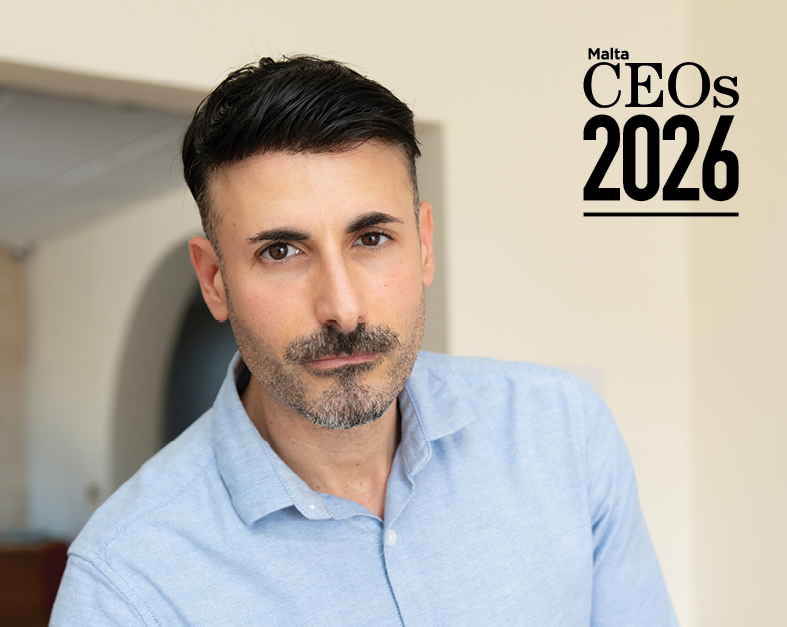
‘Not everything can be taught through textbooks’ – MUHC CEO Chris Schinas
‘I see my role as using the university’s name, its facilities and its resources to build a successful commercial arm.’
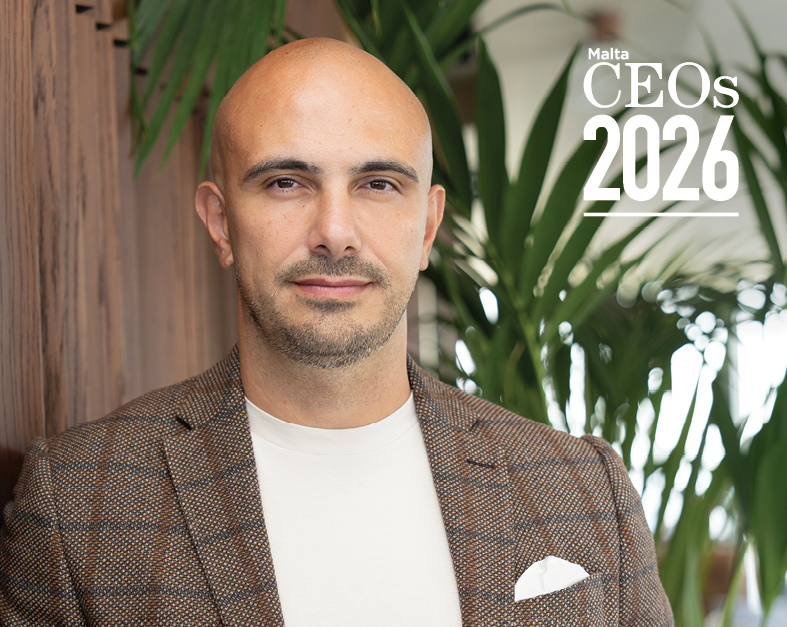
‘Retention is the new recruitment’ – HR Plus Managing Director Adrian Buttigieg
‘Starting from the ground up teaches you to value every team player.’
