

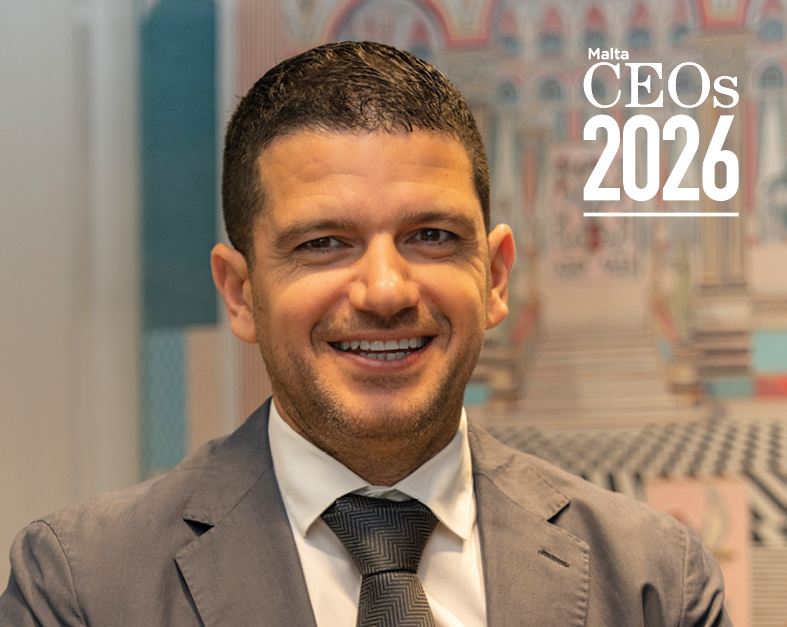
In 2025, after 15 years as a supplier of turnkey solutions and building materials, Project Technik shifted focus to the commercial market, with Managing Director Kurt Abela redefining the company’s focus to cater specifically to larger clients and the installation of non-structural components. The need to adapt to evolving market realities is central to the firm’s longevity, Kurt says, emphasising the importance of innovation in methods, materials and operational processes within the construction industry.
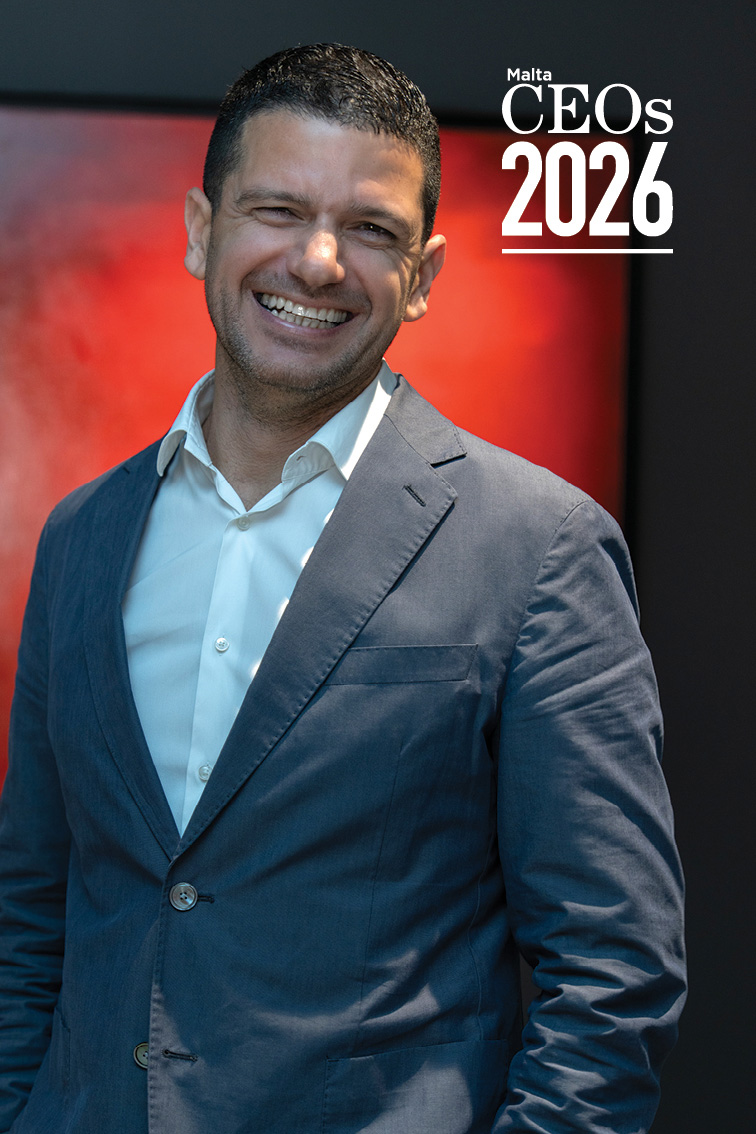
As a young man, Kurt Abela aspired to become an architect. The building industry ran in his blood, shaped in part by the family business that was already involved in this sector years earlier. Though architecture is no longer his path, Kurt – now Managing Director of Project Technik, a firm that imports and resells building materials – is trusted with the contracting of big commercial projects and, through a sister company, KA Holdings Ltd, invests in property development. Kurt remains passionate about shaping and finishing the spaces where people live and work.
“I continue to be inspired by this sector,” Kurt says. “Watching a project evolve is immensely satisfying. A plan on paper is like a skeleton; we work hard to see it completed and come alive, observing people enjoying the space we helped create.”
He is equally captivated by the industry’s continuous evolution. “The construction sector is always changing, which means there is constant room for improvement and innovation,” he says.
Project Technik began as Kurt’s sole-trader venture. “I started working in my family’s contracting business and, in 2006, decided to set up on my own,” he recalls. By 2010, he established the company, initially focusing on materials supply and turnkey projects. Following a shift in strategy in 2023, the firm now primarily services larger commercial clients, such as hotels, shopping centres and schools, providing distribution and installation of non-structural components, including flooring and partitions, with all material directly imported through its trusted suppliers.
The company’s most significant recent decision has been to streamline operations and focus on the commercial market. “We are also more selective in our choice of materials, aligning ourselves with strategic local and foreign suppliers, and partnering with local clients to whom we aim to provide high-quality service and products,” Kurt continues. “We have a clear strategy for what we want to achieve and with whom we want to work.” This approach contributed to a very strong 2025, “marked by repeat business, high-value projects and an enhanced reputation in the market,” he says.
Kurt attributes this growth to Project Technik’s commitment to quality, transparency and responsibility, particularly in a sector that has often been criticised for lacking these qualities. “We focus on what we do best – using high-quality materials and providing clients with peace of mind that all materials we supply are certified to their requirements. When I first started in this industry, the norm was to use the cheapest components. Internationally, however, the industry is moving towards stricter regulations and environmentally conscious practices,” he says.
Building on this commitment, “we must also reduce our projects’ carbon footprint, adopt modular construction and perform more work off-site, with installation on-site occurring later. We stay abreast of EU regulations – and locally, we work to ensure our final products meet these criteria,” he explains.
Innovation is also central to adapting to market changes. Kurt observes that construction is “one of the least digitally adaptable sectors,” due to its reliance on manual processes. “This must change. Companies that transform their operations will gain a significant market advantage,” he asserts. He identifies opportunities in “smart technologies”, combining digital, data-driven methods with hardware and software applications to make buildings energy-efficient and future-proof.
Efficiency is critical, he stresses, because success in the construction industry is “all about time”. Material supply, particularly imported goods, often causes delays. “This is where innovation, including artificial intelligence (AI), can streamline coordination, particularly when multiple firms are involved on the same site,” he notes.
To prepare for such shifts in the industry, Kurt has recently expanded the firm’s investment in staff training and new equipment, ensuring that the team has both the knowledge and the tools required to deliver work at a higher level of precision. He explains that the company will soon be investing in new premises to allow for further expansion. This, he notes, is part of a broader effort to consolidate the business while maintaining sustainable long-term growth.
“While we take pride in the present staff retention, this development will also aim to ease recruitment difficulties and create a better work environment – challenges that our company, like many others in the construction sector and beyond, has encountered,” he says. “There is a shortage of labour. This is an increasingly pressing issue and it’s getting worse; it affects all roles, whether in management or in skilled positions.”
He explains that the situation is even more acute with respect to tradespeople, noting that “skilled labourers are scarce”. This, he says, has pushed the Maltese construction sector towards an over-reliance on foreign workers – a model that can create vulnerabilities. “I understand that such foreign employees leave their family in their home country and if there is an opportunity for them to return home and find work there, they will take it. If a worker wants to leave, you cannot stop them. On the other hand, the company would have invested heavily in training and will depend on their contribution, so the resulting shortage is not easy to fill.”
Despite these challenges, Kurt emphasises the importance of creating an environment where people feel valued. “We want every employee to feel part of the team, not just a number. Ultimately, they should feel a genuine sense of belonging within the company,” he says.
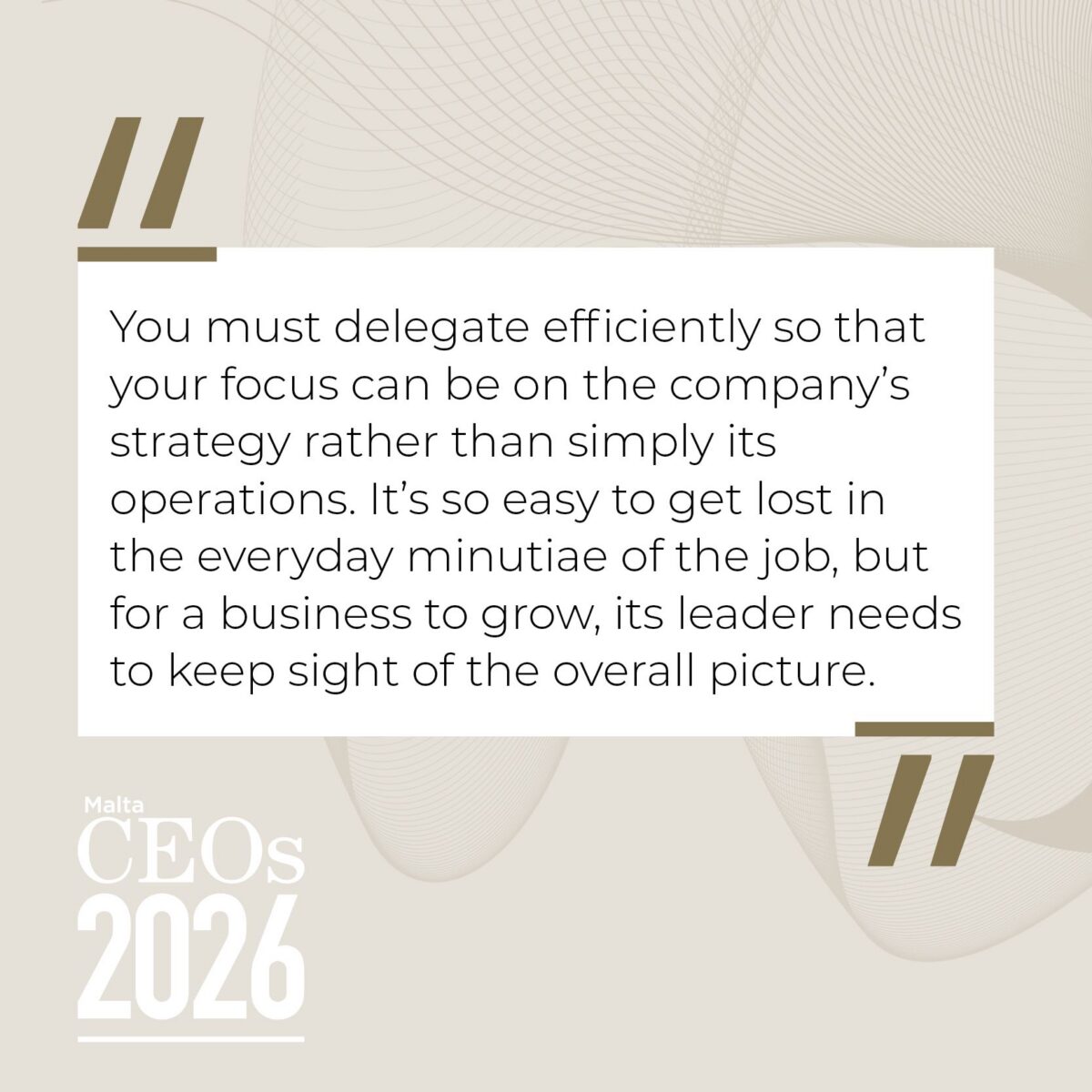
Kurt’s understanding of the team’s needs stems from his commitment to remaining closely connected to the day-to-day operations of the company. “I like to stay close to the action, to understand what’s happening in the company, on site and in the wider market,” he says. This, however, does not translate into micro-management. Instead, he believes that empowering people is essential for the company’s development. “When you first launch a business, you tend to resist delegation. But as you grow, you learn that you must delegate efficiently so that your focus can be on the company’s strategy rather than simply its operations. It’s so easy to get lost in the everyday minutiae of the job, but for a business to grow, its leader needs to keep sight of the overall picture.”
Ultimately, “staying adaptable is a priority. Coupled with rigorous quality control and ethical business practices, it ensures we remain sustainable and competitive. We do not cut corners,” he insists. “We must stay ethical and invest in sustainability – as a company and as a country in order to remain competitive.
This article is part of the serialisation of 50 interviews featured in MaltaCEOs 2026 – the sister brand to MaltaCEOs.mt and an annual high-end publication bringing together some of the country’s most influential business leaders.
‘Greed harms businesses more than anything else’ – Wolfgang Tweraser
The TW Consulting & Trade Ltd CEO believes Malta has much more to offer: ‘It could be like a little ...
‘We can’t promote tourism without agriculture’ – Malta Food Agency CEO Brian Vella
‘I envision having fewer farmers, but more productive ones.’
‘Not everything can be taught through textbooks’ – MUHC CEO Chris Schinas
‘I see my role as using the university’s name, its facilities and its resources to build a successful commercial arm.’
‘Retention is the new recruitment’ – HR Plus Managing Director Adrian Buttigieg
‘Starting from the ground up teaches you to value every team player.’
