


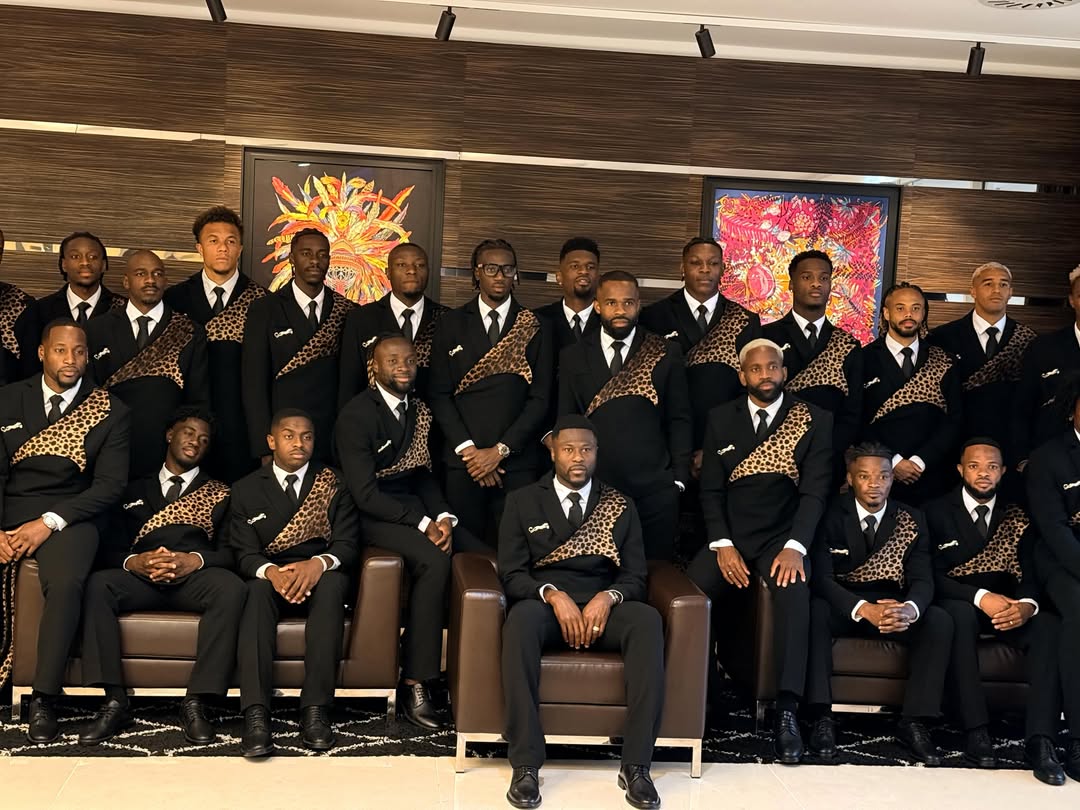
As football fans around the world turn their attention to the FIFA World Cup, one team has already managed to capture headlines before kicking a ball.
No, it isn't Portugal. It isn't Argentina. And it certainly isn't one of the tournament favourites.
It's Democratic Republic of the Congo.
The African nation arrived at the tournament wearing striking leopard-print suits designed by Designer and Creative Director of JMAKxPARIS Alvin J. Mak, instantly becoming one of the most talked-about teams on social media and in sports coverage worldwide.
For many observers, it was a fashion statement. For business leaders, however, it may have been something else entirely, a masterclass in strategic positioning.
When you can't own the main story, create a different one
DR Congo enters the tournament as one of the underdogs in its group. Their opening match against Portugal is already generating enormous attention, partly because it could be the final World Cup appearance of football icon Cristiano Ronaldo.
Most media coverage surrounding that fixture is likely to focus on Ronaldo, Portugal's ambitions, and the legacy of one of football's greatest players.
DR Congo could have accepted being a footnote in that narrative but instead, they changed the conversation.
By embracing a distinctive visual identity, the team created a parallel story that journalists, photographers and social media users couldn't ignore (including us). Suddenly, people who may not have known much about DR Congo were searching for photos, sharing articles, and discussing the team's unique arrival.
The lesson for leaders is that when a larger competitor is dominating the spotlight, competing directly is not always the smartest move. Sometimes the better strategy is to find a different angle altogether.
The power of being memorable
Business history is full of companies that succeeded not because they were the biggest player in the room, but because they were the most memorable.
Consumers are exposed to thousands of messages every day. Investors hear countless pitches. Employees are constantly bombarded with information.
Attention has become one of the world's most valuable currencies.
DR Congo's suits achieved something many marketing campaigns struggle to do: they made people stop scrolling.
In leadership, being remembered often matters more than being noticed. The companies and individuals who leave a lasting impression tend to be the ones who tell a story people want to repeat.
Curiosity can open unexpected doors
The most interesting aspect of DR Congo's fashion statement is what happens next.
Someone sees a photograph of the team, they wonder why leopard print was chosen, they start reading about the country's culture, traditions, history, music or cuisine, and then a moment of curiosity becomes a gateway to discovering an entire nation. The same principle applies to brands.
Many successful companies use a distinctive campaign, product launch or leadership decision as an entry point. The initial attention may focus on one unusual element, but it often leads audiences to explore the broader story behind it.
In other words, attention is not the end goal. It is the invitation.
A lesson Dan Price understood well
The strategy is reminiscent of the publicity generated by former CEO Dan Price when he announced that employees at his company would receive a minimum salary of $70,000.
Whether one agreed with the move or not, the announcement generated global headlines.
The story wasn't simply about salaries. It sparked conversations about workplace culture, inequality, leadership and the future of work.
More importantly, it transformed a relatively unknown payments company into a globally recognised brand overnight.
Like DR Congo's leopard-print suits, the move worked because it was unexpected. It gave people something worth talking about.
Featured Image:
The Congo football team / Facebook


Malta Ship Registry’s positive reputation ‘stood out’ at Monaco Yacht Show – TM CEO
Leonid McKay said the Monaco Yacht Show highlighted the strong regard for the Malta Ship Registry.
What can business leaders wear this autumn? 10 workplace trends for autumn 2026
For Fall/Winter 2026 old trends are being re-imagined.
Turks and Caicos marks ‘important step’ in growth, says Corinthia Group CEO
This development on Grace Bay in Turks and Caicos is in partnership with Carolina Partners Ltd.

MACM President Charles Xuereb urges companies to report payment defaults as uncertainty increases
His comments come as the Malta Association for Credit Management marks its 25th anniversary.
