


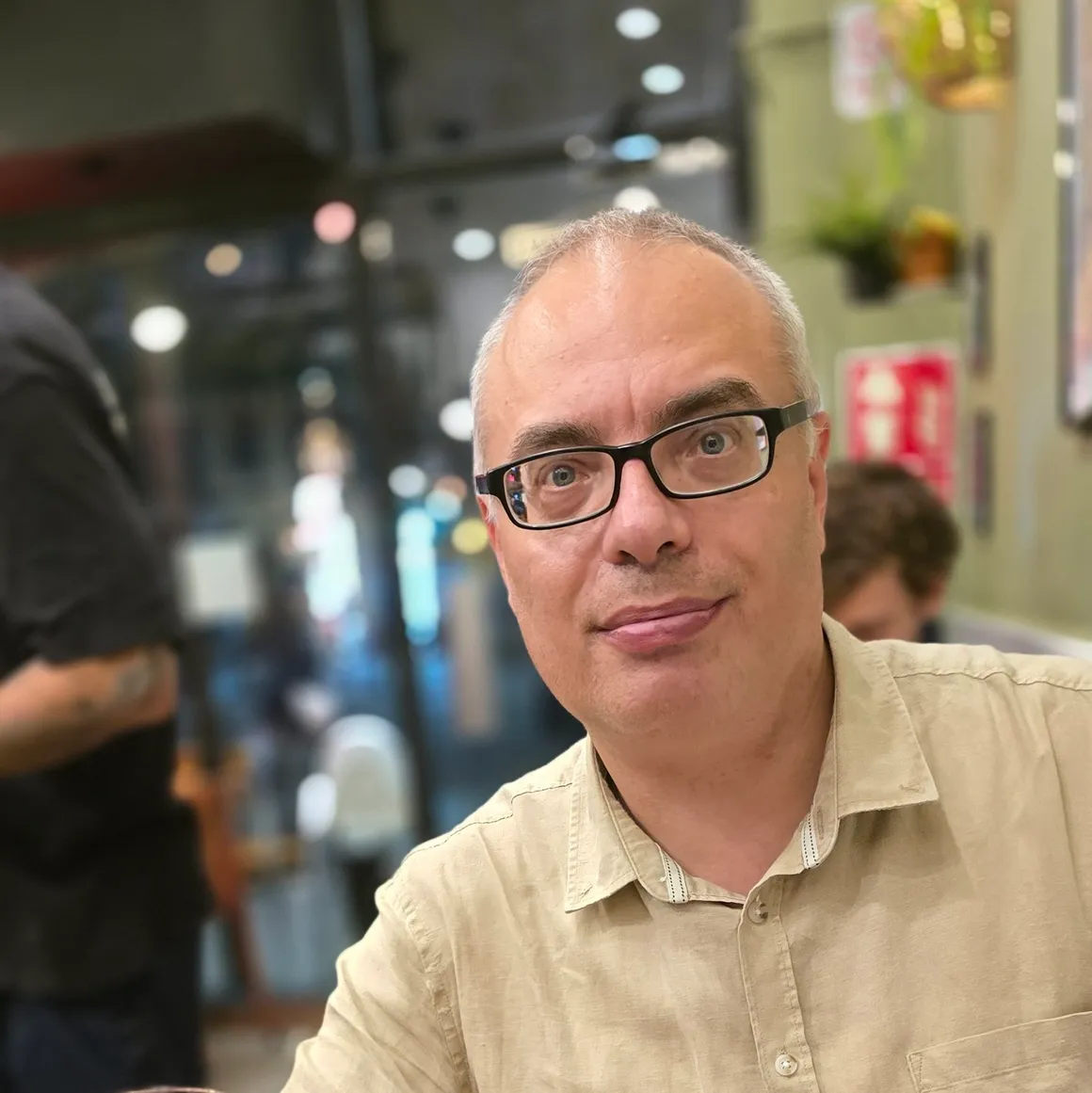
For years, conversations around artificial intelligence have been dominated by fear: jobs replaced, skills made redundant, entire professions erased.
Adrian Mizzi, veteran CTO and Senior Partner at QP, flips the script. What if AI doesn’t take your job, but saves your sanity?
That question sits at the heart of Diary of an IT Madman, Mr Mizzi’s darkly humorous and brutally honest memoir about life inside corporate IT. Part workplace confessional, part survival manual, the book dissects the dysfunctions that push smart people to burnout – especially within Malta’s tech sector.
Mr Mizzi describes the book to MaltaCEOs.mt as such: “It’s essentially Black Mirror meets The Office (Malta edition).”
At its core, Diary of an IT Madman explores the collision between two radically different speeds.
“Black Mirror’ is the tech,” Mr Mizzi explains. “It’s supersonic, invasive, and moving at the speed of light: AI, cyber, 24/7 connectivity. ‘The Office’ is the human reality: absurd bureaucracy, ego battles in the boardroom, and the fact that we’re trying to manage 2026 problems with 1990s thinking.”
The result is a constant state of friction. “The ‘madness’ happens in the gap between those two speeds,” he says.
That gap, Mr Mizzi argues, is also where mental health erodes.
“Burnout in IT doesn’t come from the work itself. It comes from the friction. I call it ‘Human Latency.’ It’s the existential exhaustion of having the tools to solve a problem in minutes, but being forced to wait months for a decision. That friction destroys smart people.”
The book, he adds, is “a field manual on how to survive that without losing your mind.”
Writing with an 'exoskeleton'
What makes Diary of an IT Madman particularly distinctive is how it was written. This is, Mr Mizzi claims, the first Maltese business memoir co-authored with artificial intelligence – though Mr Mizzi is careful about how that collaboration is framed.
“It wasn’t like ‘writing’ in the traditional sense,” he says. “It was more like conducting an orchestra at 100mph.”
Rather than using AI as a simple chatbot, he treated it as a cognitive extension.
“Most people use AI like a chatbot – question, answer. I used it as an exoskeleton. It doesn’t replace the author; it amplifies the author. I provided the memories, the scars, and the technical logic. The AI handled the structure and the expansion.”
Crucially, for him, it removed the paralysis familiar to many writers.
“It eliminates the ‘blank page’ problem entirely. I was asking it to ask me. I got the AI in my head.”
At peak intensity, Mr Mizzi estimates he was operating at “90 events per minute.”
“That’s the heartbeat of the session,” he explains. “I wasn’t just waiting for text. I was prompting, cutting, refining, redirecting the model in real time.”
He likens the process to the military decision-making framework known as the OODA loop – Observe, Orient, Decide, Act.
“With a human co-author, that speed is impossible. They need to think, type, sleep. The AI hits back instantly. It allows you to write at the speed of thought.”
Mr Mizzi points to Bill Gates’ 1999 book Business @ the Speed of Thought as a prescient reference. “He predicted the need for this velocity. Twenty-five years later, AI finally gives us the engine – but most companies are still driving it like a horse cart.”
Ironically, for a book so embedded in AI culture, Mr Mizzi never intended it to exist as a physical object.
“I assumed the market wanted e-books and audio,” he admits.
The pivot came during a job interview with QP CEO Reuben Xuereb.
“He pointed to a hardbound autobiography on his shelf,” Mr Mizzi recalls. “I realised that if I wanted to play at that level, I needed a physical artefact.”
What followed was a self-described “publication sprint” to have the paperback ready by Christmas Eve. If the production was pragmatic, the public response came as a surprise.
“I underestimated it completely,” Mr Mizzi says. “The first ‘author’s batch’ of 30 copies was taken before the cargo flight even landed in Malta.”
In an age of infinite digital content, the appetite for something tangible caught him off guard.
“It seems that in a world of digital noise, people are actually hungry for something they can hold.”
The book is currently sold out in print until the next shipment clears customs .
Despite this, Mr Mizzi remains ambivalent about the physical format.
“I’d rather people purchase the e-book, to be honest. I was almost coerced by friends into printing copies.”
Staying true to his philosophy, he opted for choice. Diary of an IT Madman is available in paperback, e-book, and audiobook formats. (Spotify audiobooks, he notes wryly, are banned in Malta - prompting him to sell the audio edition directly through his own platform, Mnemosyne.)
After 25 years in IT, from bank server rooms to corporate boardrooms, Mr Mizzi is clear about what really breaks organisations.
“Most companies don’t die because of bad technology. They die because of Human Latency,” he says. “We hire brilliant people and turn them into data-entry robots. We buy million-euro software and run it like a paper ledger.”
Diary of an IT Madman can be seen as a plea against the way humans misuse AI.
“I don’t just write code,” the CTO says. “I rewrite the operating system of the business itself." In that sense, the book is less about madness, and more about clarity, arrived at just in time.



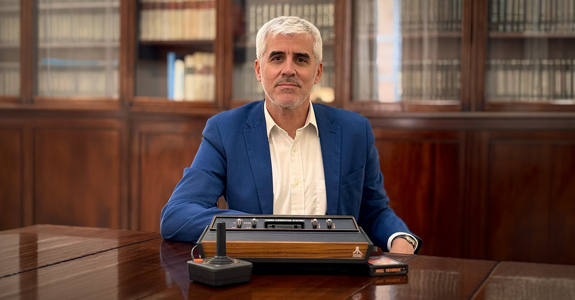
Fenech & Fenech Advocates appoints Antonio Ghio as Chief Innovation and Technology Officer
Antonio Ghio is an IT Law expert and has been with the firm for the past 25 years.
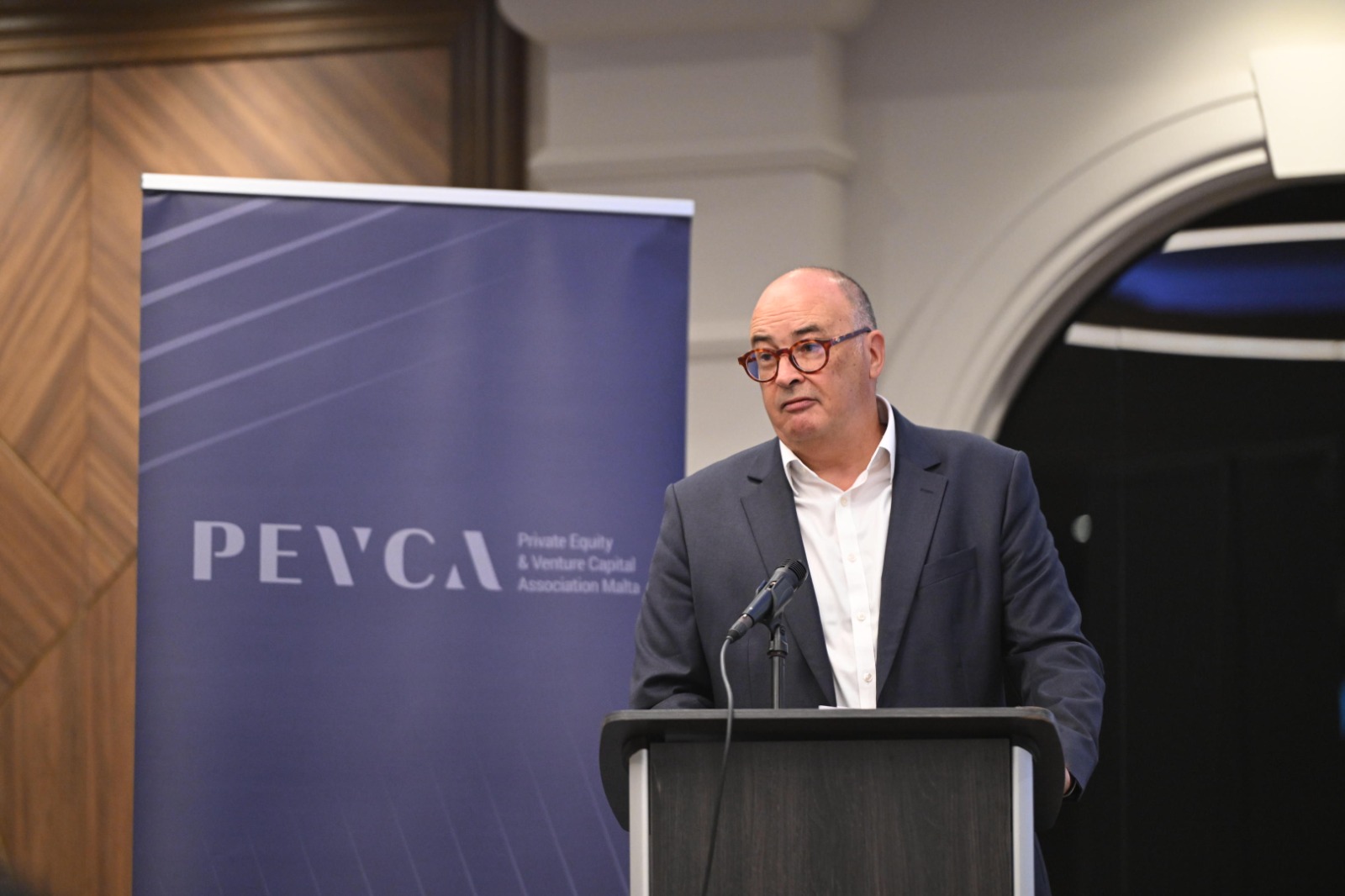
‘Considerable potential’ for Malta to develop as a private equity and venture capital hub – PEVCA head
He said that private equity and venture capital play a vital role in modern, innovation-driven economies.

Nancy Pavlaki appointed Chief Financial Officer at Ramla Bay Resort
Prior to taking up the post, she worked in a number of financial positions in the hospitality industry.

Kyle Antoni Pace Cumbo appointed Chief Commercial Officer at Iniala
'I’m incredibly excited about what comes next,' he said.
