


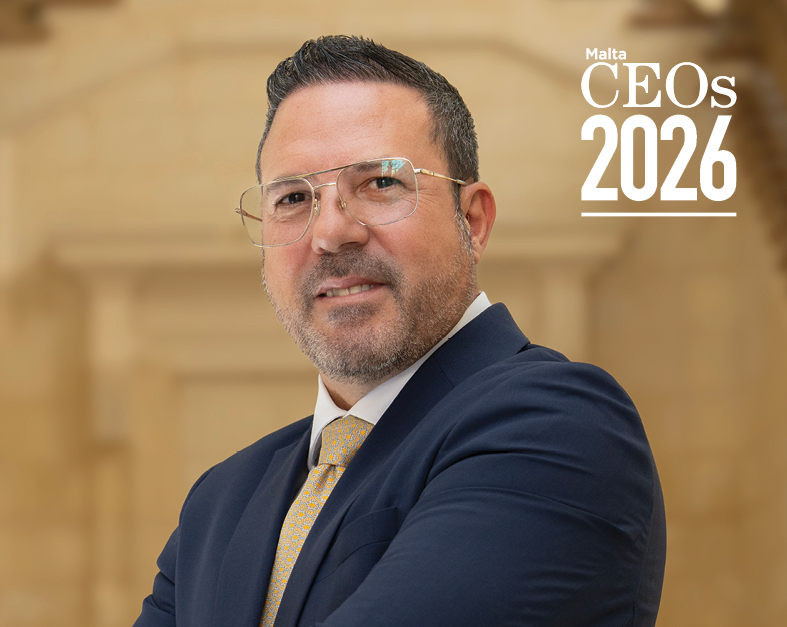
In his eight years as CEO, Noel Zammit has steered Heritage Malta through several major projects, most recently the €40 million restoration of the Grand Master’s Palace in Valletta. As the agency enters a new phase of modernisation, Noel spearheads its transformation, redefining how the island connects with its past and how culture can power Malta’s future – across identity, education, tourism, and diplomacy.
Rather than a leap, Noel Zammit frames his career shift from technology to heritage as a logical next step. “My move from the digital and corporate world into heritage was a natural progression,” he recalls. “Throughout my career in information technology (IT) and business development, I wanted to use innovation and strategic alignment to make things more efficient and meaningful. When the opportunity arose to apply that mindset to Malta’s cultural heritage, it felt like a calling rather than a career move.”
Noel’s appointment as CEO of Heritage Malta in 2017 marked both the start of a new era for the agency and an opportunity for him to keep the national story relevant in a fast-changing world. He channels decades of cross-disciplinary experience in software engineering, finance, marketing, and business development to drive his purpose-led approach.
“Each discipline taught me to think in systems – how strategy, people and technology must align to achieve sustainable growth,” he explains. “From IT, I developed an appreciation for data-driven decision-making; finance grounded me in accountability; marketing taught me the importance of building meaningful connections; and business development sharpened my focus on opportunity and collaboration.”
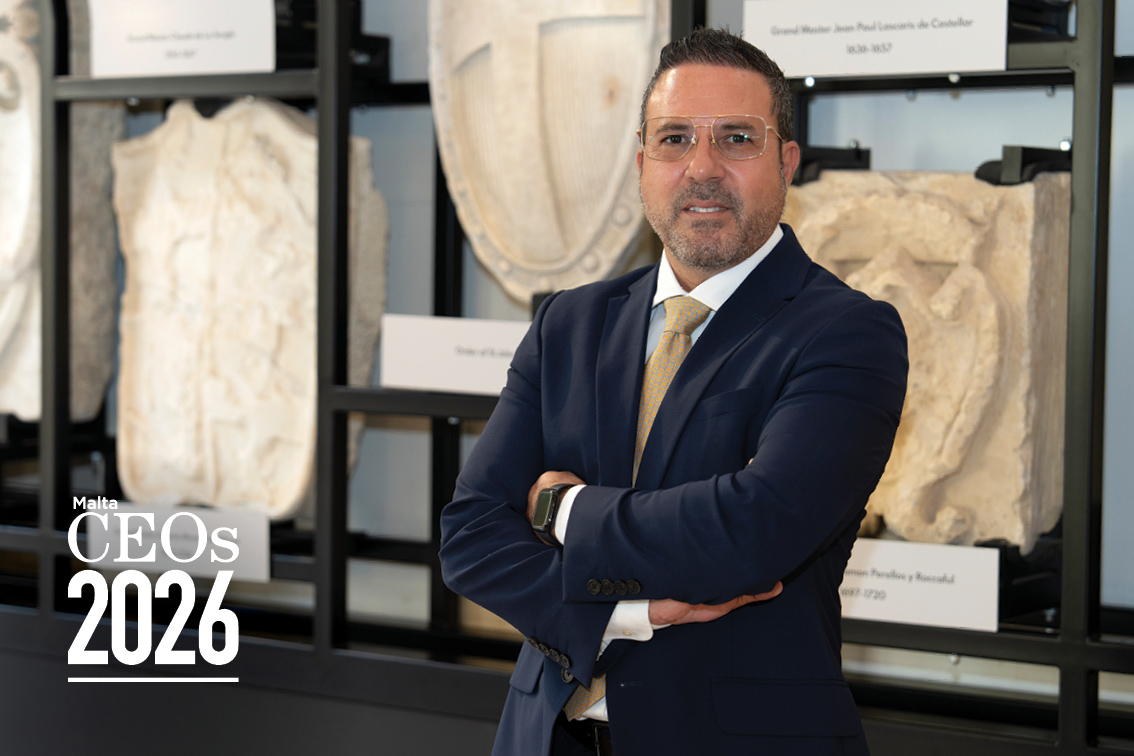
Three words fuel Noel’s work ethos as CEO: “Everything centres on integrity, curiosity and purpose. Integrity has always been my compass – it builds trust within a team and with the public. Curiosity reminds me there’s always something new to learn. And purpose underpins everything, as it’s what turns effort into impact.”
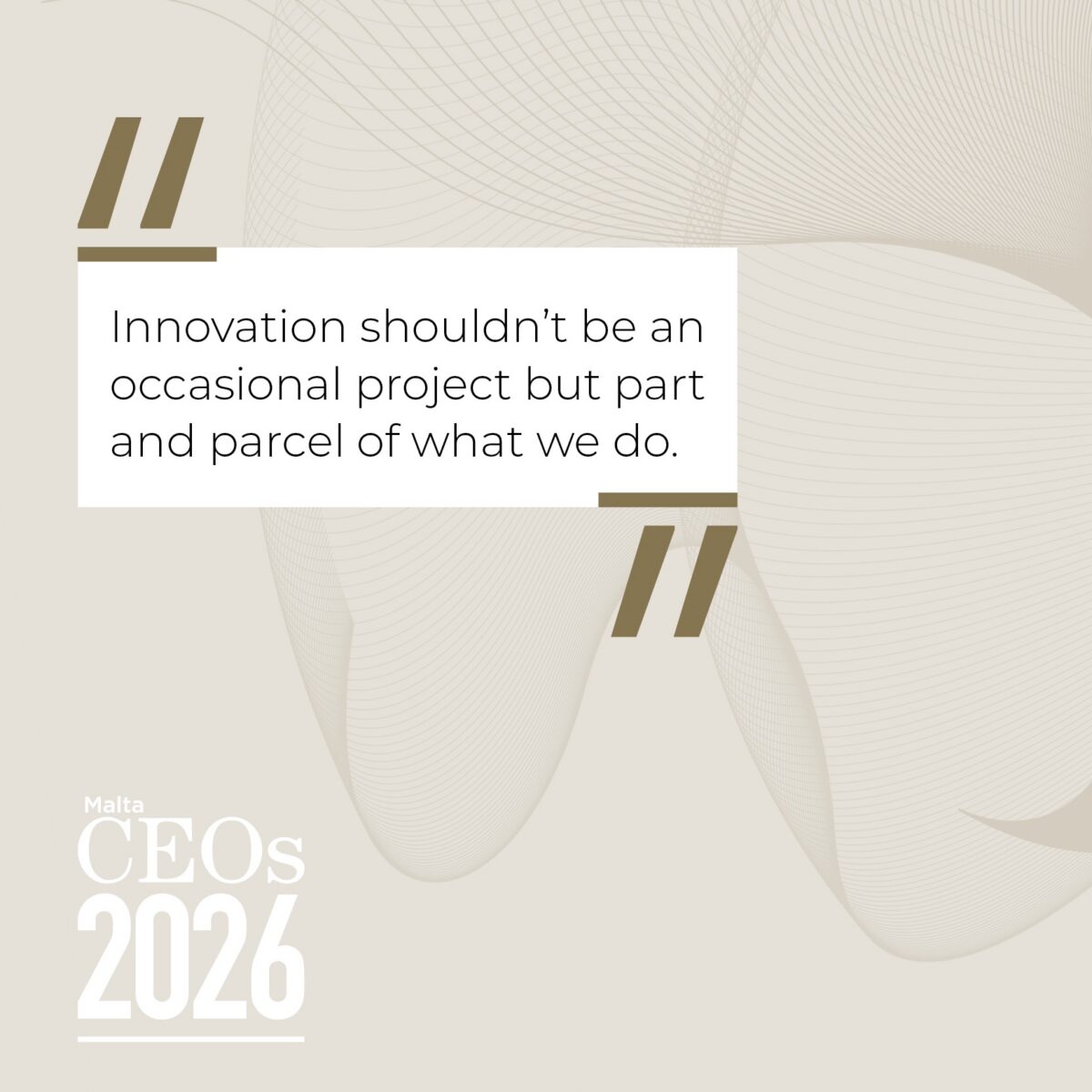
Empowerment and listening then follow. “Our best asset at Heritage Malta is our people,” Noel contends. “My role is to create an environment where the team feels free to experiment, bring fresh ideas to the table, learn, research, and grow. It’s important that we learn from others and align with international best practice. Innovation shouldn’t be an occasional project but part and parcel of what we do.”
Noel’s forward-thinking approach mirrors Heritage Malta’s mission. As the national agency for museums, conservation and cultural heritage, it manages over 90 museums and sites – including seven UNESCO World Heritage Sites – which welcomed more than 1.9 million paying visitors in 2025 – a record number of admissions for Heritage Malta since its inception.
“Our work goes beyond conservation,” Noel clarifies. “We are reimagining cultural heritage as a strategic national asset that shapes identity, strengthens the economy, supports education, and advances international diplomacy. On average, we hold one event every three days, and they are usually fully booked.”
An internal culture shift has driven additional growth. “Our rebrand gave us a renewed sense of purpose: to engage visitors and show we’re not just a museum network but a vital part of Malta’s identity.” The restoration of the Grand Master’s Palace in Valletta – Heritage Malta’s largest-ever project – epitomises that evolution. Co-financed through EU and national funds with an investment of around €40 million, the project opened the historic seat of power to all as a distinctly Maltese cultural destination.
The project also inspired an unexpected wave of public donations of artefacts. “It shows that when people feel that they are part of our heritage, they contribute to it.”
The project’s success speaks for itself. In 2023, it won a Public Vote award at the Malta Architecture and Spatial Awards (MASP), and the Best Visitor Attraction 2024 award at the first-ever Malta Tourism Awards. In 2025, the site attracted record-breaking footfall and international interest with 260,000 visitors, signalling strong public interest in the palace and its restoration.
Heritage Malta’s reach extends through cultural diplomacy, broadening Malta’s international profile ever further. In 2025, three sets of Japanese Samurai armour, originally gifted to Malta in 1862 as part of a diplomatic mission, were meticulously restored and reassembled by expert conservators in Japan – thanks to a collaborative initiative between Heritage Malta, the Ministry for Foreign Affairs and Tourism, and the Embassy of Malta in Japan. One of the restored Samurai armours – along with a historically significant suit of armour of the Order of St John – was on display at the Malta Pavilion at Expo 2025 Osaka Kansai. All three Samurai armours were later exhibited together for the first time in Japan, at the iconic Himeji Castle, a UNESCO World Heritage Site. “Heritage is a powerful tool of diplomacy,” underlines Noel. “Projects like this show Malta as a bridge between cultures and a steward of shared human history.”
The island also solidified its position at the heart of Europe’s digital cultural ecosystem when in 2025 Heritage Malta was officially certified as Europeana’s 44th Aggregator and Malta’s National Aggregator for Cultural Heritage, allowing Maltese collections to be viewed on Europeana, the European Union’s main cultural heritage platform.
The milestone supports Heritage Malta’s broader modernisation and digital transformation agenda. “Modernisation helps us reach new audiences, especially the younger generations who are Malta’s heritage future,” Noel says. “Digital transformation is key, but for us it’s more than technology. We want to effect culture change, both to improve our operations and enhance how the public engages with heritage.”
Two initiatives anchor Noel’s digital vision – one outward-facing, the other internal. “The eMuseum platform is Heritage Malta’s digital solution that provides public online access to Malta’s national collection of cultural heritage,” he explains, adding that the platform allows users to explore and learn about exhibits from the comfort of their home. “It promotes discovery and sparks curiosity about Malta’s cultural heritage – which can inspire physical, on-site visits. The eMuseum platform is a promise that we will continue to preserve, share and promote our cultural heritage in an inclusive, innovative and sustainable way. This forms part of a larger chain of initiatives, including the Memory Twin concept, a more advanced method of digitising than the Digital Twin, being developed in unison with the UNESCO Chair for Digital Cultural Heritage, which ensures that what we digitally collect represents our cultural heritage fully, not only its visual form.”
Behind the scenes, a new Enterprise Resource Planning (ERP) system will transform how the agency operates. “It will replace outdated manual processes with automation and integration, providing real-time data for faster decision-making while eliminating silos between departments. It will keep us efficient and sustainable so our people can focus on what matters most – our visitors and heritage.”
This holistic outlook is a core aspect of achieving Malta Vision 2050: the country’s long-term strategy. “Malta is one of the few countries in Europe to embed cultural heritage into its national development strategy,” Noel shares, also pointing towards another key factor in realising the national vision. “Sustainability is nothing new for us, but the approach is now more structured. For example, sustainable tourism must be about quality over quantity – we’d rather welcome fewer visitors who engage and contribute meaningfully while still balancing financial viability with cultural integrity.”
Looking ahead, Noel sees Heritage Malta moving from custodianship to leadership. “Our mission is to safeguard the past and ensure it continues to inspire the present and shape the future,” he says. “This is why we’re organising the Malta Biennale 2026, which will bring contemporary art into historic spaces. This is where history meets modern creativity.”
Within this context, talent retention remains a critical factor in safeguarding Malta’s cultural future. “Finding the right people has been a challenge for years,” Noel admits. “We employ conservators, IT engineers, carpenters, electricians, marketing professionals, and more. Whatever the role, specialists are scarce. To address this, we’ve partnered with MCAST to reinstate the conservation degree course and offer paid study schemes that guarantee full-time jobs on completion. We’re also developing a cultural heritage informatics course to attract engineers to this field.”
As Malta’s heritage and cultural sector enters another era of reinvention with Heritage Malta at its helm, Noel’s focus for 2026 centres, as ever, on people. “For me, success is not just about projects completed,” he says. “It is the momentum we created in how people experience and value Malta’s heritage. If more Maltese families feel proud of what we have, and more young people see it as part of their identity, we will have succeeded.”
This article is part of the serialisation of 50 interviews featured in MaltaCEOs 2026 – the sister brand to MaltaCEOs.mt and an annual high-end publication bringing together some of the country’s most influential business leaders.
‘Greed harms businesses more than anything else’ – Wolfgang Tweraser
The TW Consulting & Trade Ltd CEO believes Malta has much more to offer: ‘It could be like a little ...
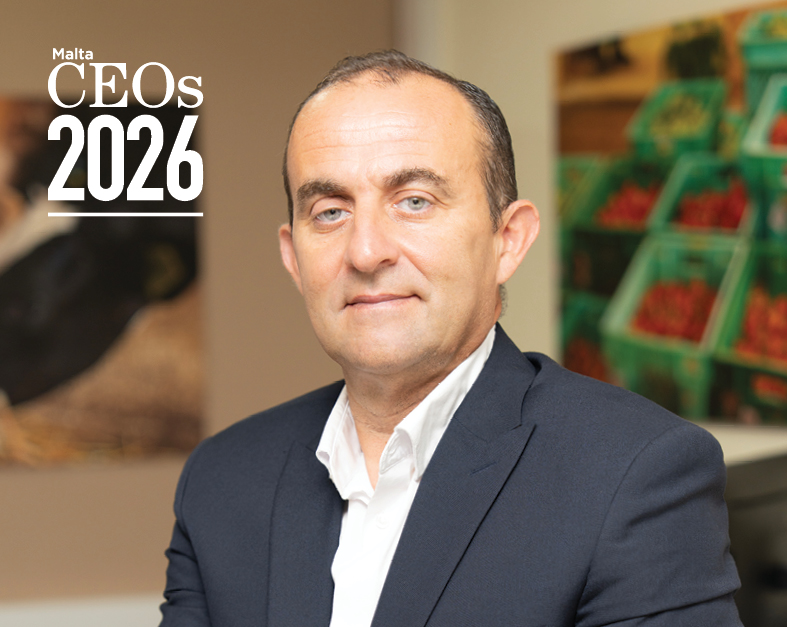
‘We can’t promote tourism without agriculture’ – Malta Food Agency CEO Brian Vella
‘I envision having fewer farmers, but more productive ones.’
‘Not everything can be taught through textbooks’ – MUHC CEO Chris Schinas
‘I see my role as using the university’s name, its facilities and its resources to build a successful commercial arm.’
‘Retention is the new recruitment’ – HR Plus Managing Director Adrian Buttigieg
‘Starting from the ground up teaches you to value every team player.’
