


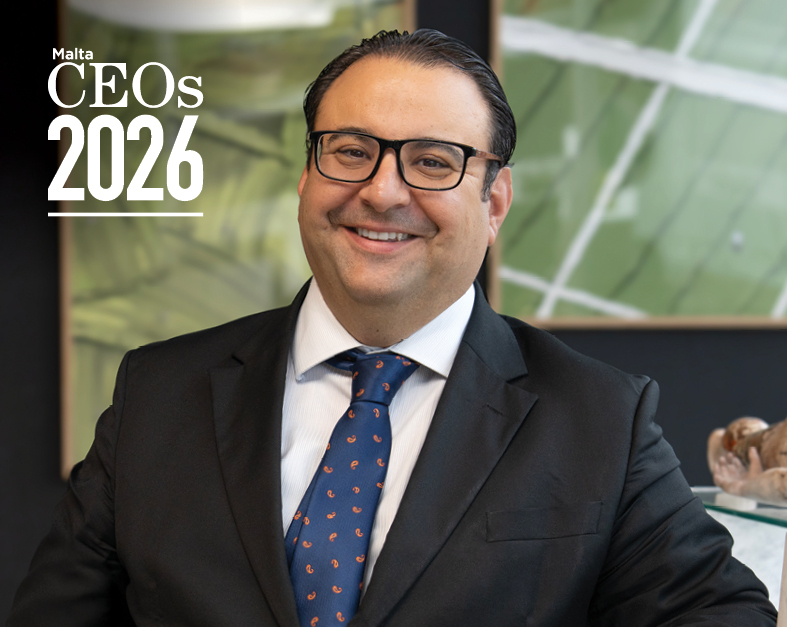
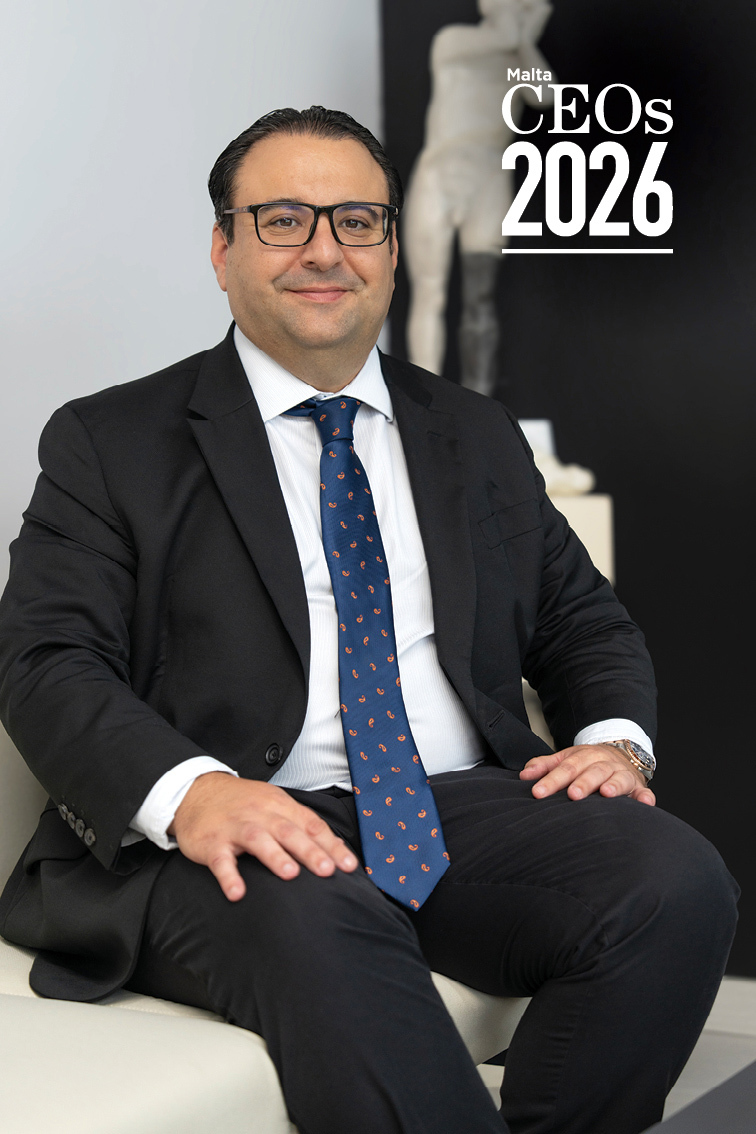
Transitioning from a successful career in accountancy to establishing one of Malta’s fastest-growing boutique law firms, Adrian Sciberras approaches the legal profession with a distinct, multidisciplinary perspective. As CEO of Sciberras Advocates, he is challenging traditional models by prioritising practical resolution and responsiveness, positioning the firm to service overlooked market segments while fostering a culture of ownership and continuous growth.
“We still consider ourselves a startup,” asserts Dr Adrian Sciberras, reflecting on the rapid ascent of Sciberras Advocates. It is a modest assessment for a practice that has seen its staff complement grow by 50 per cent and its billing double in the past year alone, but it speaks to the agility and ambition that define his leadership.
“I started engaging people in July 2023, just over three years ago. Now we have a staff complement of nine, which, for me personally, is a big success,” he smiles.
This growth, Adrian explains, stems from a growing reputation for delivering practical outcomes. “We are getting noticed,” he says. “When we have success stories, referrals follow.” Yet, for Dr Sciberras, success is not synonymous with scorched-earth victories in the courtroom; rather it is measured by a client’s peace of mind.
“It is not always about winning,” he explains, outlining a philosophy that prioritises resolution over prolonged conflict. “We try to resolve our cases. Sometimes it is more practical to seek a resolution than to pursue a win, because a purely adversarial approach is not always in the client’s best interests.”
He is also acutely aware of the human cost of legal disputes. “At the end of the day, it is not just about billing and money; it is also about the wellbeing of our clients. Some clients lose sleep because they are so worried about a case. We aim to find the best solution. While we do engage in litigation, we remain practical and, where possible, seek compromise.”
Adrian’s pragmatic outlook is perhaps shaped by his unconventional route into the legal profession. Before taking the oath, he had already built a successful accounting practice, growing it to 25 employees. It was during this period that the foundations of his legal career were laid.
“When I had my own accounting practice, many clients became friends and would confide in me about personal financial issues or problems with creditors,” he recalls. He would often offer informal advice, explaining what he would do in their position. “They would later come back and say, ‘I went to a lawyer, and he told me exactly the same thing you did’.”
Despite the pressures of family life and running a business, Adrian enrolled at University as a mature student, relying on his management team to keep the accounting firm thriving while he studied. By 2021, the transition was complete, and he orchestrated a management buyout of the accounting practice to focus entirely on law. “I don’t regret it at all,” he says. “I have a new challenge.”
This dual professional background has proven invaluable. “Coming from a numbers-driven environment gives me an advantage in structuring things. Accountants are trained to organise, plan and map processes. That discipline helped me build the firm effectively. I made mistakes in my previous business because I didn’t have guidance. This time, as we grow, I make fewer mistakes.”

Building a firm for the second time has also allowed the CEO to refine his leadership style, particularly when it comes to delegation. “One thing I learnt from my previous practice was not to become a bottleneck,” he admits. “I give the lawyers who work with me a fairly loose rein – the freedom to engage and take ownership.”
He also encourages a culture in which both successes and setbacks are shared collectively. “We are developing an incentive-based reward system,” he notes. “When we win a case, we celebrate it together. When we lose, we share that too, so we can learn from it. We don’t reprimand anyone. If we gave it our best, we focus on what we can improve next time.”
Looking at the market landscape for 2026, Adrian has positioned the firm to address gaps in the market, most notably in immigration law – an area he believes many traditional firms overlook. “If 30 per cent of the population consists of immigrants, you have to serve them,” he says. “They are human beings with real challenges. They should be treated on the same footing as Maltese citizens because their needs and demands are the same.”
By servicing this demographic with the same rigour applied to commercial clients, the firm has secured a ‘first-mover advantage’ in a bustling market. The firm has also successfully expanded into areas such as arbitration and financial services tribunals, often taking on cases that initially lay outside its core expertise at the direct request of clients. “Clients trust us,” he says. “I am always honest and tell them if we have not handled a particular type of case before, but if they believe in me, I will take it on for them.”
This trust is reinforced through a strict commitment to responsiveness. “When you receive a lead or referral, you must respond within 48 hours,” he continues. “Going to a lawyer is like going to a doctor – you go because something is wrong. If the doctor does not respond, you will keep looking until you find one who does. The same applies in law. People want reassurance; they want someone to listen.”
Ultimately, Adrian’s vision for Sciberras Advocates is rooted in sustainability and legacy. “My goal is for the firm to grow and become an established player in the market,” he concludes. “It’s not about making money – I want to build something that endures as a legacy.”
This article is part of the serialisation of 50 interviews featured in MaltaCEOs 2026 – the sister brand to MaltaCEOs.mt and an annual high-end publication bringing together some of the country’s most influential business leaders.

‘Greed harms businesses more than anything else’ – Wolfgang Tweraser
The TW Consulting & Trade Ltd CEO believes Malta has much more to offer: ‘It could be like a little ...
‘We can’t promote tourism without agriculture’ – Malta Food Agency CEO Brian Vella
‘I envision having fewer farmers, but more productive ones.’
‘Not everything can be taught through textbooks’ – MUHC CEO Chris Schinas
‘I see my role as using the university’s name, its facilities and its resources to build a successful commercial arm.’
‘Retention is the new recruitment’ – HR Plus Managing Director Adrian Buttigieg
‘Starting from the ground up teaches you to value every team player.’
