



C-level Executives are leading by example when it comes to hybrid working, with the vast majority stating that they have personally taken on flexible working arrangements, according to a recent study by International Workplace Group.
The study polled over 500 CEOs in the United Kingdom and brought to light a number of interesting insights about the evolving nature of work, particularly at the executive level.
It found that out of the CEOs questioned, 93 per cent said that they now split their working time across different locations.
Interestingly, just seven per cent said that they spend five days a week working from their company’s office.
This highlights a significant discrepancy between what business leaders do, and what they expect from their workforce.
Following the COVID-19 pandemic, there have been several calls from businesses of different sizes urging their employees to return to the office. Some have struggled as employees have grown accustomed to the flexible working arrangements that they enjoyed during the pandemic, including the likes of Google, Amazon, X, and Zoom.
Seven in 10 companies have changed their policies in favour of a return to office, as employees have become less reluctant to do so. In Australia, companies have also pushed for a shift back to physical workplaces by targeting employees’ bonuses.
Unsurprisingly, this has left many employees disgruntled. In fact, companies have started providing more benefits in addition to employees’ basic wage, in a bid to attract talent. These range from private pension schemes and home loan benefits to discounts and gym memberships.
Additionally, International Workplace Group’s survey also found that three in five (62 per cent) of business leaders stated that they are now dividing their working time between a central office, local flexible workspace or office, and home. This indicates a growing preference for decentralised work environments.
Just two per cent of respondents said that they spend most of their time working from home.
Three quarters of business leaders stated that since the adoption of hybrid working, their company culture has improved. 77 per cent also noted widespread improvement in employee engagement, while 75 per cent felt there was more efficient collaboration between teams and colleagues.
73 per cent agreed that hybrid work arrangements have enabled them to attract and hire the best talent. 71 per cent of CEOs stated that allowing employees to have greater autonomy over when and where they work has allowed them to consider and subsequently offer roles to a more diverse range of candidates.
Interestingly, out of the CEOs questioned, 74 per cent of business leaders stated that returning to the office full time “is not a priority” for their business moving forward, particularly since staff retention could be impacted and hybrid work has positively impacted productivity.
65 per cent of respondents remarked that they would end up losing talented employees if they insisted on their workforce to be present in a central office every day.
Additionally, 94 per cent stated that their business had invested in new technology to improve the hybrid experience.

‘We need to break the cycle’: MHRA CEO calls for rethink of Malta’s tourism growth model
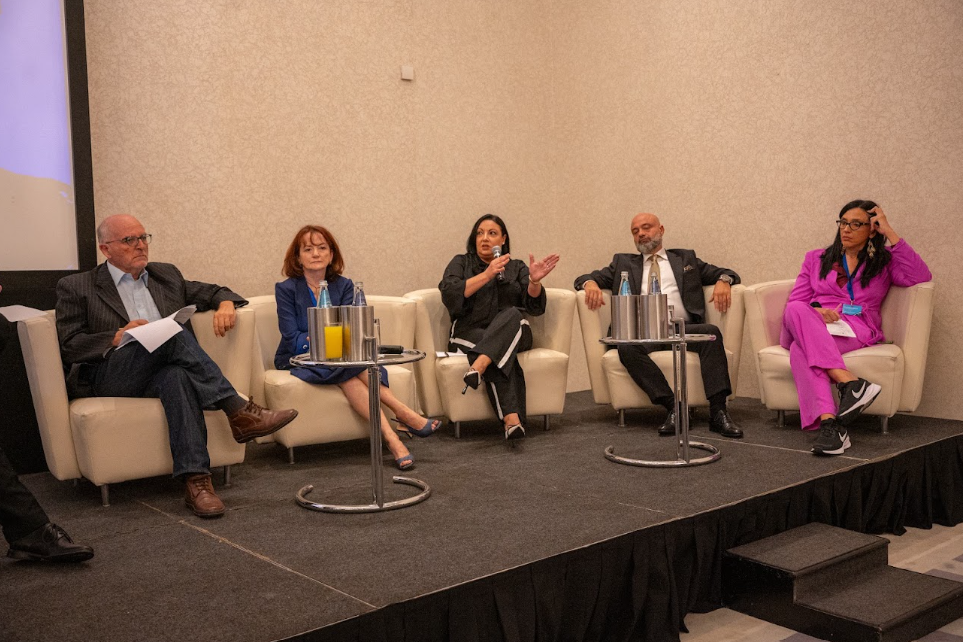
The MHRA CEO joined four other stakeholders in a much-needed conversation on tourism development.
‘Value is about much more than competitive prices’ – The Convenience Shop CEO
The CEO believes value is also delivered through ‘the overall shopping experience, product quality, location, and trust.’

Emanuele Grimaldi takes the helm at the Malta International Shipowners Association
A founding member of MISA, he has extensive experience in leading other shipping bodies.

Izola Bank appoints Edward Grech as new Head of Finance and Treasury
The bank said that the appointment is effective from 14th October.
